
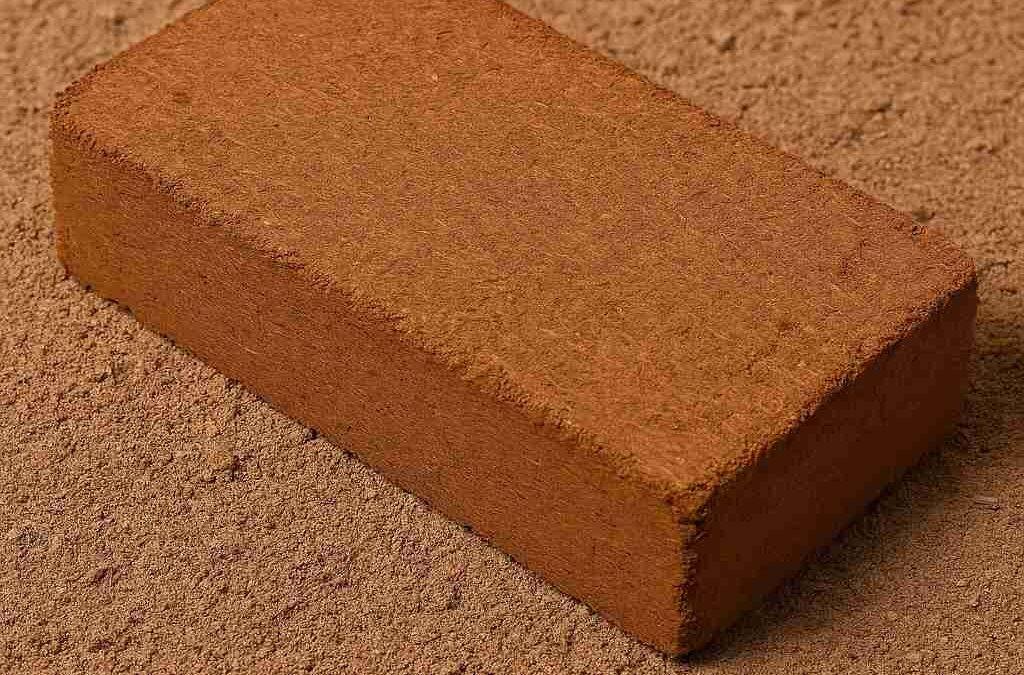
Modern agriculture is undergoing a significant transformation. Farmers, greenhouse operators, and commercial growers are moving away from conventional soil-based methods toward sustainable and high-performance growing media. One of the most trusted solutions in this shift is Cocopeat Brick.
As environmental concerns increase and soil fertility declines in many regions, growers are looking for renewable, efficient, and eco-friendly alternatives. Derived from coconut husk fiber, this compressed growing medium is widely recognized for its sustainability and performance. Instead of allowing coconut by-products to go to waste, they are processed into a valuable agricultural input that supports productivity and environmental responsibility at the same time.
Today, agricultural systems demand consistency, water efficiency, and improved root development. This is where Cocopeat Brick plays a crucial role in supporting modern cultivation methods.
Excellent Water Retention for Efficient Irrigation
Water scarcity is a major concern in agriculture worldwide. Efficient water management directly affects crop health and farm profitability. One of the most important advantages of Cocopeat Brick is its exceptional water retention capacity.
It can hold several times its weight in water while still maintaining adequate drainage. This means plants receive consistent moisture without the risk of waterlogging. In drip irrigation systems and greenhouse environments, maintaining optimal moisture levels is essential for steady plant growth.
By reducing irrigation frequency, farmers can lower water consumption and operational costs. At the same time, crops experience less stress during dry periods. This balance between moisture retention and drainage makes it ideal for modern agricultural systems focused on sustainability and resource conservation.
Improved Soil Aeration and Root Development
Healthy root systems are the foundation of strong plant growth. When soil becomes compacted, roots struggle to expand and absorb nutrients efficiently. Cocopeat Brick improves soil structure by enhancing aeration and maintaining porosity over long periods.
Its fibrous composition creates air pockets within the root zone, ensuring that oxygen reaches plant roots effectively. Proper oxygen availability prevents root diseases and encourages vigorous growth. In container farming, hydroponics, and grow bag cultivation, maintaining a balanced root environment is critical.
Stronger roots translate into better nutrient uptake, improved plant stability, and higher crop yields. This makes it an essential component in high-performance farming systems.
Sustainable and Eco-Friendly Alternative
Sustainability is no longer a choice but a necessity in agriculture. Traditional peat extraction has raised environmental concerns, prompting growers to seek renewable alternatives. Cocopeat Brick provides a sustainable solution because it is derived from coconut processing waste, making it both biodegradable and renewable.
Using coconut-based growing media reduces reliance on non-renewable peat resources and supports eco-conscious farming practices. Its production also contributes to waste management and value addition within the coconut industry.
By integrating environmentally responsible inputs into farming operations, growers can align with global sustainability goals while maintaining high productivity levels.
Consistent Performance in Modern Farming Systems
Uniformity and predictability are essential in commercial agriculture. Inconsistent growing media can lead to uneven crop growth and reduced quality. High-quality Cocopeat Brick ensures consistent texture, balanced pH levels, and low electrical conductivity when processed correctly.
GREGLO focuses on maintaining strict quality standards to meet the needs of international growers. From controlled processing to careful packaging, ensuring uniformity is critical for large-scale farming operations.
In hydroponic systems, greenhouse cultivation, and vertical farming setups, consistency in the growing medium supports predictable results. Reliable performance allows farmers to optimize nutrient management and achieve stable production cycles.
Enhances Nutrient Retention and Efficiency
Modern agriculture depends on precise nutrient management. Fertilizers represent a significant investment, and minimizing nutrient loss is essential for profitability. Cocopeat Brick enhances nutrient retention by holding essential elements near the root zone.
Instead of nutrients leaching away quickly, they remain available for gradual absorption. This improves fertilizer efficiency and supports balanced plant growth. Combined with proper fertigation techniques, it helps create a controlled and optimized feeding environment.
Better nutrient management results in healthier crops, improved fruit size, and higher yields. In commercial farming systems, even small improvements in efficiency can lead to substantial financial gains.
Ideal for Hydroponics and Greenhouse Farming
Hydroponics and greenhouse farming are expanding rapidly due to their ability to maximize production in limited spaces. Cocopeat Brick is widely used in these systems because of its stability and moisture-holding capacity.
In hydroponic cultivation, a growing medium must provide support while allowing nutrient solutions to circulate efficiently. Its structure supports plant roots without restricting water movement. This balance is essential for crops like tomatoes, cucumbers, peppers, strawberries, and ornamental plants.
Greenhouse growers benefit from its lightweight nature and ease of handling. It simplifies transportation, storage, and application, making it practical for large-scale operations.
Supports Climate-Resilient Agriculture
Climate change has introduced new challenges for farmers, including unpredictable rainfall and extreme weather conditions. Cocopeat Brick contributes to climate-resilient farming by helping regulate moisture levels in the root zone.
During dry spells, its water retention properties protect plants from dehydration. During heavy rainfall, proper drainage prevents root rot and fungal infections. This adaptability makes it suitable for diverse climatic regions and soil types.
By stabilizing the root environment, farmers can reduce crop losses caused by environmental stress. This resilience is increasingly important as agriculture faces global climate uncertainties.
Long Shelf Life and Easy Storage
Storage and transportation efficiency are important considerations in commercial agriculture. Cocopeat Brick is compressed into compact blocks, reducing storage space requirements and shipping costs.
When hydrated, it expands significantly, providing a large volume of growing medium from a small block. This feature makes it economically attractive for both domestic and international buyers.
Its long shelf life also ensures that farmers can store it without losing quality, provided it is kept in dry conditions. This reliability supports efficient supply chain management.
Trusted Quality from GREGLO
Quality assurance plays a vital role in agricultural success. GREGLO is committed to delivering premium-grade products that meet international standards. From sourcing raw materials to final processing, every step is carefully monitored to ensure consistency and performance.
Export-grade production, proper washing, buffering, and grading processes ensure low salinity and balanced pH levels. These factors are critical for commercial growers who demand reliable and high-performing growing media.
By focusing on innovation and sustainability, GREGLO supports farmers, greenhouse operators, and distributors worldwide. Reliable supply and strict quality control strengthen trust and long-term partnerships in global markets.
Conclusion
The evolution of modern agriculture demands efficient, sustainable, and high-performing growing media. Cocopeat Brick offers a comprehensive solution that supports water conservation, root health, nutrient efficiency, and climate resilience.
Its renewable origin and eco-friendly properties align perfectly with the global movement toward sustainable farming practices. Whether used in open-field cultivation, greenhouse systems, or hydroponics, it enhances crop performance and operational efficiency.
With trusted suppliers like GREGLO delivering consistent and export-quality products, growers can confidently integrate this advanced growing medium into their agricultural systems. As farming continues to modernize, adopting reliable and sustainable inputs will remain essential for long-term productivity and environmental responsibility.
Frequently Asked Questions
1. What crops grow best in this growing medium?
It is suitable for vegetables, fruits, flowers, and plantation crops, especially in greenhouse and hydroponic systems.
2. How should it be prepared before use?
The compressed block should be soaked in water until fully expanded, then loosened before mixing or direct planting.
3. Is it better than traditional soil?
It offers superior water retention, improved aeration, and better nutrient management compared to many conventional soil types.