
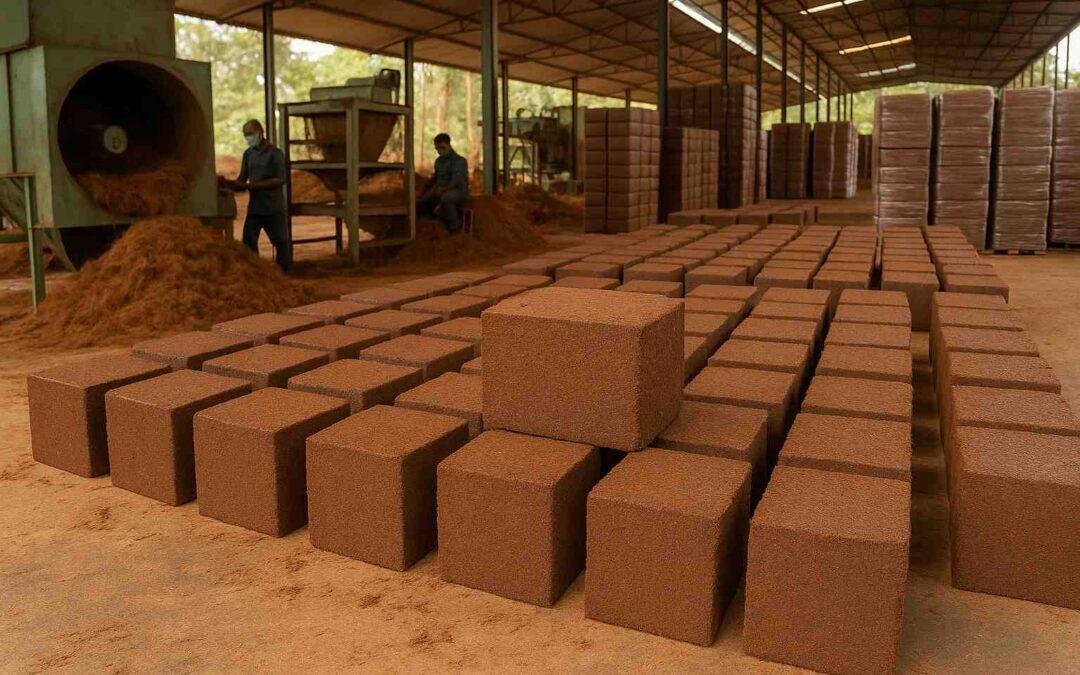
India's agricultural supply chain is heavily reliant on natural growing media such as cocopeat bricks. These are compressed blocks that are highly appreciated for their excellent water retention, aeration, and environmentally friendly nature. However, while the Cocopeat brick manufacturers in India mainly produce export grade quality, the commitment to that quality remains post production. Storage notably determines the role, especially considering the varied climatic conditions of India.
GREGLO with a lot of experience in supplying cocopeat bricks to both domestic and international markets has realized that proper storage has a direct influence on the performance of the crops in farming and horticulture. This blog is going to describe the practical, region, specific storage practices that are adaptation to Indian conditions.
Why Storage Quality Matters After Manufacturing
Cocopeat bricks are compressed organic materials made from coconut husk fiber. Their structure is designed to expand when water is added. If exposed to uncontrolled moisture before use, the bricks can lose compression strength and consistency.
Even when sourced from trusted Cocopeat brick manufacturers in India, poor storage may lead to:
- Premature expansion
- Fungal or bacterial contamination
- Reduced shelf life
- Uneven rehydration during use
Proper storage protects the physical structure and ensures consistent expansion ratios.
Indian Climate Patterns and Their Impact on Cocopeat
India experiences multiple climate zones, each influencing cocopeat storage differently.
Tropical and Coastal Conditions
High humidity levels in coastal regions increase moisture absorption risk. Cocopeat bricks can absorb atmospheric moisture even when packed, making climate-controlled storage essential.
Semi-Arid and Dry Zones
Low humidity reduces moisture-related issues, but excessive heat may weaken packaging and cause deformation if bricks are stacked improperly.
Seasonal Monsoon Variations
Monsoon months introduce sudden humidity spikes and water seepage risks. Storage systems must adapt quickly during this season.
Professional Cocopeat brick manufacturers in India design products for export, but regional climate awareness ensures better post-purchase handling.
Choosing the Right Indoor Storage Infrastructure
Indoor storage is always recommended over open or semi-covered areas. A suitable storage facility should provide protection from moisture, pests, and direct sunlight.
Key features include:
- Concrete or raised flooring
- Leak-proof roofing
- Natural or mechanical ventilation
- Clean, dust-free environment
Distributors working with Cocopeat brick manufacturers in India should avoid storing bricks near damp walls or water sources. Elevation from the ground is essential to prevent moisture transfer.
Managing Humidity Without Advanced Equipment
Not all storage facilities can afford industrial dehumidifiers. Fortunately, practical alternatives exist.
Simple humidity management practices:
- Cross-ventilation using exhaust fans
- Moisture-absorbing materials placed between stacks
- Maintaining open aisle spaces
- Avoiding airtight sealing in humid environments
Even basic airflow improvements help preserve bricks sourced from Cocopeat brick manufacturers in India, especially in high-humidity regions.
Scientific Stacking Methods for Long-Term Storage
Stacking affects both airflow and compression stability. Poor stacking leads to crushed bricks and uneven expansion later.
Recommended practices:
- Use pallets made of wood or plastic
- Keep stack height within manufacturer limits
- Maintain uniform alignment
- Leave gaps between stacks for inspection
Leading Cocopeat brick manufacturers in India recommend avoiding direct floor stacking, particularly during monsoon months.
Packaging Inspection and Protection Techniques
Packaging is the first line of defense against moisture. Before storage, every batch should be inspected for:
- Torn wrapping
- Loose seals
- Punctures from handling
High-quality suppliers like GREGLO use export-grade packaging, but additional outer covers can be used during long-term storage.
Never remove original packing until the time of application. Repacking into inferior materials increases contamination risk.
Preventing Biological Contamination in Warehouses
Because cocopeat is organic, it can attract insects if stored near food grains or waste materials.
Preventive actions include:
- Regular cleaning schedules
- Pest control measures
- Sealed warehouse entry points
- Separate storage from fertilizers or chemicals
Maintaining hygiene standards similar to those followed by Cocopeat brick manufacturers in India helps preserve product integrity throughout storage.
Stock Rotation for Consistent Product Performance
Although cocopeat bricks have a long shelf life, proper stock rotation avoids unnecessary exposure to environmental fluctuations.
FIFO (First In, First Out) systems ensure:
- Uniform quality across batches
- Better moisture consistency
- Easier tracking
Bulk buyers sourcing regularly from Cocopeat brick manufacturers in India benefit from clear labeling with manufacturing and arrival dates.
Special Storage Care During Monsoon Season
Monsoon is the most critical period for cocopeat storage in India.
Additional precautions include:
- Raising pallet height
- Using waterproof floor sheets
- Daily inspection for leaks
- Quick drying of damp areas
Demand for cocopeat increases during cultivation seasons, and reliable Cocopeat brick manufacturers in India often see higher order volumes. Safe storage ensures uninterrupted supply during this peak time.
Handling Temporary Storage and Transit Delays
Cocopeat bricks are sometimes stored temporarily at transport hubs or distribution centers.
Best practices during transit storage:
- Avoid exposure during unloading
- Cover pallets immediately
- Keep away from open drainage
- Inspect packaging before redistribution
Logistics guidance provided by experienced Cocopeat brick manufacturers in India minimizes losses and quality complaints.
GREGLO’s Commitment Beyond Manufacturing
At GREGLO, quality responsibility does not end at production. Our approach covers the entire lifecycle—from sourcing coconut husks to advising customers on safe storage practices.
As one of the dependable Cocopeat brick manufacturers in India, GREGLO ensures:
- Controlled moisture levels at dispatch
- Strong compression standards
- Export-ready packaging
- Practical storage recommendations
This end-to-end focus helps customers maintain consistent agricultural performance.
Conclusion: Storage as a Quality Multiplier
Cocopeat bricks deliver maximum value only when their structure and purity are preserved. India’s climate demands thoughtful storage planning that adapts to humidity, heat, and seasonal changes. While Cocopeat brick manufacturers in India supply high-grade products, effective storage safeguards that investment.
By following disciplined storage methods—right infrastructure, moisture control, proper stacking, hygiene, and rotation—buyers can ensure cocopeat bricks remain reliable, efficient, and ready for use. With expertise-driven support from GREGLO, storage challenges can be transformed into long-term quality assurance.