
Growing vegetables at home becomes much easier when you know what to plant and when to plant it. India has different climates across regions, so a vegetable that grows well in North India during winter may need a different planting window in South India.
The good news is that you do not need a large backyard. A balcony garden, terrace garden, pots, or grow bags can provide enough space for many vegetables, especially leafy greens and quick-growing crops.
This vegetable growing calendar for India helps you choose suitable crops month by month, while considering sunlight, container size, watering and expected harvest time.
Why Should You Follow a Monthly Vegetable Growing Calendar?
Vegetables have different temperature, sunlight and moisture requirements. Choosing the right planting time can improve germination and reduce problems caused by excessive heat, cold or rain.
A month-wise plan can help you:
-
- Choose seasonal vegetables in India
- Reduce seed-germination problems
- Select vegetables suitable for pots and grow bags
- Plan your terrace or balcony garden
- Grow quick-harvest vegetables
- Avoid unnecessary watering and fertilizing
- Maintain a continuous supply of fresh vegetables
India can broadly be divided into cooler winter, hotter summer and monsoon growing periods, but local conditions still matter.
For example, gardeners in Chennai, Bengaluru or other parts of South India may have different planting opportunities from gardeners in Delhi or other parts of North India.
What Vegetables Can You Grow in Different Months in India?
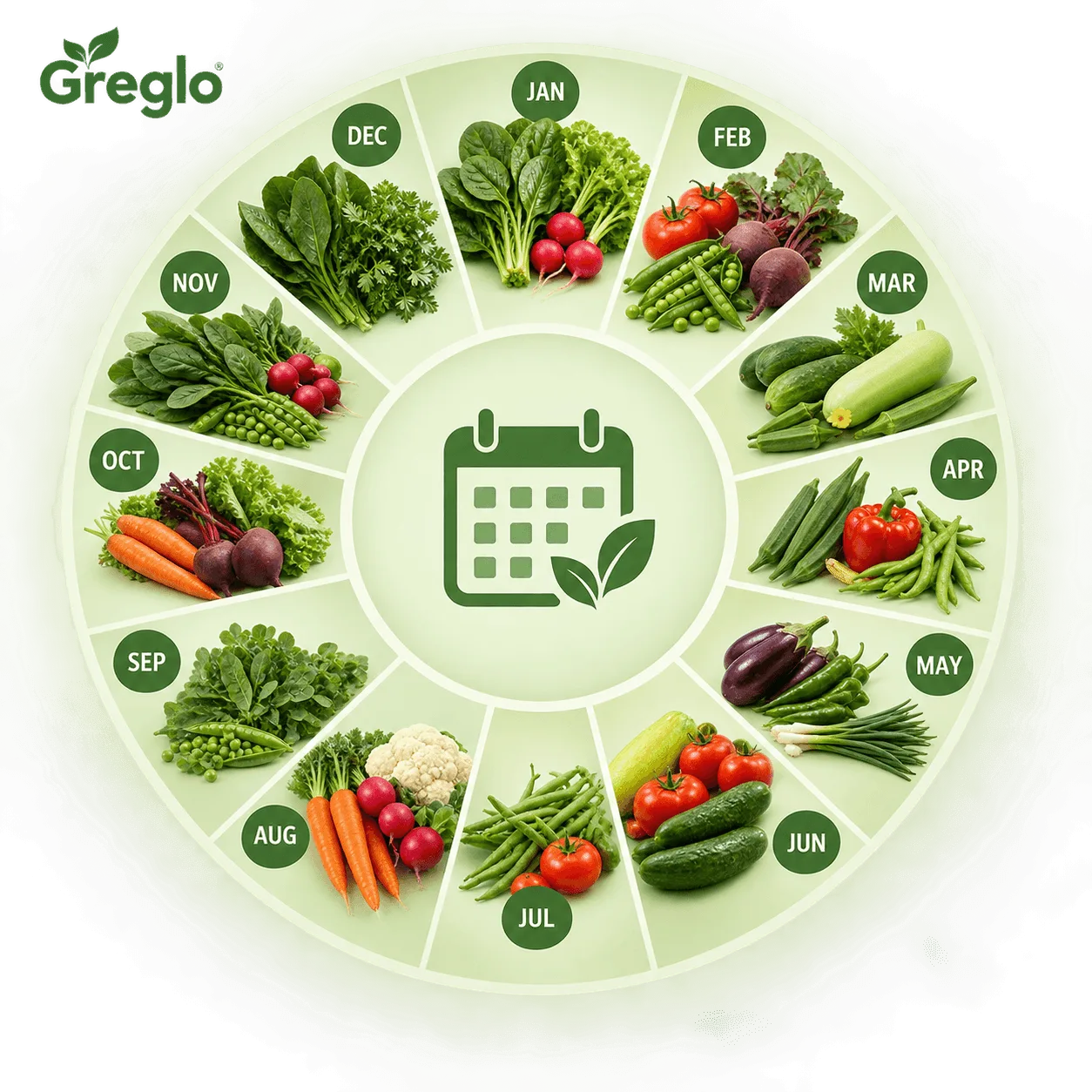
The following calendar provides a practical starting point for vegetables to grow each month in India.
|
Month |
North India |
South India |
Quick Harvest Choice |
Typical Container |
|
January |
Spinach, methi, radish, lettuce |
Spinach, amaranth, coriander |
Spinach |
6–8 inch |
|
February |
Tomato, peas, beetroot, radish |
Okra, chilli, spinach |
Radish |
8–10 inch |
|
March |
Cucumber, bottle gourd, okra |
Amaranth, cucumber, okra |
Amaranth |
8–12 inch |
|
April |
Okra, capsicum, cluster beans |
Tomato, chilli, okra |
Okra |
10–12 inch |
|
May |
Brinjal, chilli, green onion |
Okra, chilli, onion |
Green onion |
6–10 inch |
|
June |
Tomato, brinjal, gourds |
Tomato, gourds, okra |
Cucumber |
10–14 inch |
|
July |
Okra, beans, tomato |
Okra, beans, cucumber |
Beans |
8–12 inch |
|
August |
Carrot, radish, cauliflower |
Beans, beetroot, carrot |
Radish |
8–12 inch |
|
September |
Spinach, methi, peas |
Spinach, coriander, lettuce |
Methi |
6–8 inch |
|
October |
Carrot, beetroot, lettuce |
Spinach, beans, tomato |
Lettuce |
8–10 inch |
|
November |
Spinach, radish, peas |
Spinach, coriander, beans |
Spinach |
6–10 inch |
|
December |
Methi, spinach, lettuce |
Lettuce, spinach, tomato |
Leafy greens |
6–10 inch |
1. January: Vegetables to Grow in India
January is suitable for several cool-season vegetables, particularly in North India.
North India
-
- Spinach
- Methi
- Radish
- Lettuce
- Spring onion
- Peas
South India
-
- Spinach
- Amaranth
- Coriander
- Tomato
- Beans
Beginner Pick: Spinach
Spinach is a good choice for a home garden because it can be grown in relatively shallow containers and harvested as young leaves.
Give the plants a bright location with suitable morning sunlight and keep the growing medium evenly moist without creating waterlogging.
Tip: If your balcony receives limited sunlight, leafy greens can be easier to manage than fruiting vegetables.
2. February: Vegetables to Grow in India
February can be a productive month for both cool-season and early warm-season crops, depending on your location.
North India
-
- Tomato
- Peas
- Beetroot
- Radish
- Lettuce
South India
- Okra
- Chilli
- Spinach
- Coriander
- Beans
Beginner Pick: Radish
Radish grows relatively quickly and works well in containers and grow bags.
Choose a container deep enough for the variety you are growing and avoid overcrowding seedlings.
Tip: Thin young seedlings early so the roots have enough room to develop.
3. March: Vegetables to Grow in India
As temperatures begin to rise, gardeners can move toward warm-season vegetables.
North India
- Cucumber
- Bottle gourd
- Okra
- Beans
- Other suitable gourds
South India
- Amaranth
- Cucumber
- Okra
- Coriander
Beginner Pick: Amaranath
Amaranth is a useful choice for warm conditions and can provide young leaves relatively quickly.
Use a well-draining growing medium and provide adequate light.
Tip: In warmer weather, check container moisture more frequently because pots can dry faster.
4. April: Vegetables to Grow in India
April can become hot in many parts of India, so heat-tolerant vegetables are useful.
North India
- Okra
- Capsicum
- Cluster beans
South India
- Tomato
- Chilli
- Okra
Beginner Pick: Okra
Okra is well suited to warm conditions and can perform well in a sufficiently large container.
Use a container with good drainage and place it where the plant receives plenty of sunlight.
Tip: Avoid keeping containers in places where rainwater or irrigation water collects around the roots.
5. May: Vegetables to Grow in India
May is often hot, particularly in many inland regions. Choose crops that can tolerate warm conditions.
North India
- Brinjal
- Chilli
- Green onion
South India
- Okra
- Chilli
- Onion
- Suitable leafy greens
Beginner Pick: Green onion
Green onions are convenient for small gardens because they do not require a very large container.
They can also provide usable green tops before the bulbs fully mature.
Tip: Protect smaller containers from intense afternoon heat if the growing medium dries too quickly.
6. June: Vegetables to Grow in India
June marks the beginning of the monsoon period in many parts of India, although rainfall patterns vary considerably by region.
Suitable Choices
-
- Tomato
- Brinjal
- Bottle gourd
- Ridge gourd
- Cucumber
- Okra
Beginner Pick: cucucmber
Cucumber can grow vigorously when temperatures and moisture conditions are suitable.
Because it is a climbing plant, provide a trellis or sturdy support.
Tip: Good drainage becomes especially important during rainy weather. Do not allow water to remain around the roots.
7. July: Vegetables to Grow in India
July can be productive for vegetables that benefit from warm temperatures and moisture.
Suitable Choices
-
- Okra
- Beans
- Cucumber
- Tomato
- Gourds
Beginner Pick: Beans
Beans are particularly useful for small gardens when climbing varieties are grown vertically.
Tip: Add support early rather than waiting until the vines become heavy.
This allows you to use balcony and terrace space more efficiently.
8. August: Vegetables to Grow in India
As conditions begin changing toward the cooler growing period in many regions, gardeners can start preparing for root and cool-season crops.
North India
- Carrot
- Radish
- Cauliflower
South India
- Beans
- Beetroot
- Carrot
Beginner Pick: Radish
Radish is one of the practical transition crops for container gardens because many varieties mature relatively quickly.
Tip: Use loose, well-draining growing media so developing roots can expand without becoming heavily restricted.
9. September: Vegetables to Grow in India
September can be a good month for restarting leafy vegetables in many areas.
North India
- Spinach
- Methi
- Peas
South India
- Spinach
- Coriander
- Lettuce
Beginner Pick: Methi
Methi is one of the easiest leafy crops for many home gardeners.
It can be grown in shallow containers and harvested as young leaves.
Tip: Soaking suitable seeds before sowing may help with faster and more uniform germination, depending on the seed type.
10. October: Vegetables to Grow in India
October is an important transition month, particularly for cool-season gardening in North India.
North India
- Carrot
- Beetroot
- Lettuce
- Radish
South India
- Spinach
- Beans
- Tomato
- Coriander
Lettuce can work well in containers where temperatures are suitable.
Instead of removing the entire plant at once, gardeners can harvest outer leaves progressively when appropriate.
Tip: Monitor watering as temperatures change. Containers generally need less water when evaporation slows.
11. November: Vegetables to Grow in India
November is suitable for many leafy and cool-season crops.
North India
- Spinach
- Radish
- Peas
- Methi
South India
- Spinach
- Coriander
- Beans
- Lettuce
Beginner Pick: Spinach
Spinach is a practical choice for beginners because it can be grown in containers and harvested as young leaves.
Tip: Sow small batches at intervals rather than planting everything at once. This can help provide a more continuous supply.
12. December: Vegetables to Grow in India
December is a good time to focus on leafy greens and other cool-season crops, particularly in North India.
North India
- Methi
- Spinach
- Lettuce
- Radish
South India
- Lettuce
- Spinach
- Tomato
- Coriander
Beginner Pick: Leafy greens
Leafy vegetables are often easier to manage than long-duration fruiting crops when you have limited space.
Tip: Place containers where plants receive sufficient sunlight while protecting them from unusually cold winds where necessary.
When Should You Start Harvesting?
Harvest time depends on the variety, weather, container size, sunlight, growing medium and care.
Some quick-growing vegetables can provide young leaves within a few weeks, while fruiting vegetables generally take longer.
For example:
|
Vegetable |
Approximate Early Harvest |
|
Methi |
20–30 days |
|
Amaranth |
20–35 days |
|
Spinach |
25–40 days |
|
Radish |
25–45 days |
|
Green onion |
20–40 days |
|
Coriander |
Around 30–45 days for leaf harvest |
|
Beans |
Around 45–60+ days |
|
Cucumber |
Around 45–60+ days |
|
Okra |
Around 50–65+ days |
How to Maintain a Vegetable Garden Throughout the Year
Instead of planting a large number of vegetables at once, use a simple rotation system.
For example:
Month 1 → Sow leafy greens
Month 2 → Add radish or another root crop
Month 3 → Start a warm-season crop
Month 4 → Add climbing vegetables
Month 5 → Repeat quick-growing greens
This approach makes gardening easier and gives you opportunities to learn which vegetables perform best in your specific location.
Common Mistakes to Avoid
- Overwatering: Can damage roots.
- Small Containers: Limit root growth.
- Poor Drainage: Causes waterlogging.
- Wrong Season: Slows plant growth.
- Crowded Seedlings: Reduce healthy growth.
- Low Sunlight: Leads to weak plants.
- Late Harvesting: Reduces crop quality.
Conclusion
The best way to grow vegetables at home is not to plant everything at once. Choose crops according to your month, local climate, available sunlight and container space.
For beginners, start with easy vegetables such as spinach, methi, amaranth, radish and green onions. Once you understand watering, sunlight, soil preparation and harvesting, move on to crops such as okra, beans, cucumber, chilli and tomato.
Use this vegetable growing calendar for India as a starting point, then adjust your planting schedule according to your city and actual weather conditions.
Start with two or three suitable vegetables this month, prepare your pots or grow bags with a well-draining growing medium, and build your home garden gradually.