
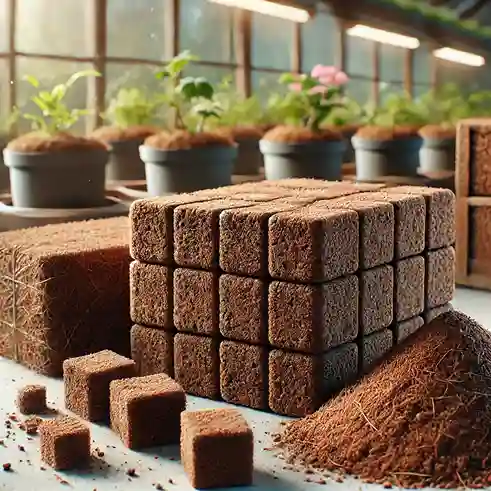
Good coco peat starts with good processing. Growers need a growing medium that holds moisture, allows air around roots, and stays consistent from batch to batch.
This is why choosing reliable Coco peat manufacturers in coimbatore matters. The quality of coco peat depends on many steps. These include raw material selection, washing, screening, buffering, drying, testing, and packing.
GREGLO produces coco products for agriculture and horticulture. The focus is on clean processing and consistent product quality. This helps growers and buyers choose coco peat that fits their growing needs.
Why Coco Peat Quality Matters for Growers
Coco peat is widely used as a growing medium. It can hold water while leaving space for air around plant roots.
But not all coco peat performs in the same way. Poor processing can change its performance.
Low-quality material may have:
- High salt levels
- Uneven particle sizes
- Too much dust
- Poor water movement
- Foreign materials
- Inconsistent batches
These issues can make crop management harder. Growers may need to change their watering or nutrient plans.
Good quality coco peat gives growers a more stable growing medium. This makes it easier to manage crops with confidence.
Quality Starts With Good Coconut Husk
The first step is choosing suitable coconut husk. Coco peat comes from the pith found inside coconut husks.
Manufacturers process the husk to separate the long coir fibre from the finer coir pith. The pith then goes through more steps before it becomes a finished growing medium.
Good raw material can help create a better final product.
Manufacturers should check the husk for:
- Cleanliness
- Moisture
- Fibre quality
- Pith quality
- Foreign materials
- Suitability for processing
Careful raw material selection gives the production proce
How Coco Peat Is Processed
The production process has several stages. Each stage can affect the final quality.
A simple view of the process is:
Husk → Fibre separation → Pith collection → Screening → Washing → Buffering → Drying → Compression → Packing
The exact process can change based on the product and its intended use.
Manufacturers need to control each stage. This helps reduce differences between batches.
Good processing also helps create coco peat with a more suitable texture. This is important for growers who need predictable moisture and air movement.
Particle Size Changes How Coco Peat Performs
Coco peat can have different particle sizes. The size affects how the growing medium holds water and allows air to move.
Fine coco peat can hold more moisture. Coarser material can create more air spaces.
Manufacturers can control the texture through screening and processing.
| Quality Factor | What It Can Affect |
|---|---|
| Fine particles | Moisture retention |
| Coarse particles | Air movement and drainage |
| Fibre content | Structure of the medium |
| Moisture | Storage and handling |
| Cleanliness | Overall product quality |
The best texture depends on the crop. It also depends on the growing system.
Testing Helps Manufacturers Maintain Quality
A product can look good and still have quality issues. Testing gives manufacturers more useful information.
Common checks may include:
- pH
- Electrical conductivity
- Moisture
- Particle size
- Expansion
- Cleanliness
- Foreign material
Electrical conductivity (EC) is useful for checking soluble salt levels. pH is also important because it can affect nutrient availability.
Testing helps manufacturers identify problems before the product reaches customers.
For buyers, product specifications can make supplier comparisons easier. They can also help growers select coco peat for a specific crop.
Reliable Coco peat manufacturers in coimbatore should be able to explain the main specifications of their products.
Good Compression Makes Transport Easier
Many buyers choose coco peat blocks because they are easy to store and transport.
Compression reduces the volume of the product. Once water is added, the block expands and becomes loose.
Manufacturers need to control the compression process carefully.
Important factors include:
- Block weight
- Block size
- Compression level
- Moisture
- Packaging
- Expansion after hydration
A good block should expand properly when prepared for use.
This is especially useful for buyers who transport coco peat over long distances. Compact packaging can make storage and shipping more efficient.
Clean Packaging Protects the Final Product
Quality control does not stop after production. Packaging also matters.
The package should protect the coco peat from dirt, excess moisture, and damage during handling.
Clear product information is also useful. Depending on the product, the package may include:
- Product name
- Net weight
- Batch details
- Product specifications
- Manufacturer information
- Handling details
Good packaging helps buyers store the product properly. It also makes batch tracking easier for commercial users.
How GREGLO Focuses on Product Quality
GREGLO works with coco products for agriculture and horticulture. The focus is on producing material that meets practical growing needs.
The production approach includes several important areas.
Raw material: Suitable coconut husk is selected for processing.
Processing: The material is prepared to achieve the required product structure.
Washing: Washing helps manage unwanted soluble salts.
Buffering: Buffered products can support applications that need greater control.
Compression: Coco peat can be supplied in compact blocks for easier handling.
Quality checks: Product properties are checked during the production process.
This approach helps GREGLO serve growers, nurseries, distributors, and agricultural buyers.
What Buyers Should Check Before Ordering
Choosing a supplier should not be based only on price. Buyers should understand the product before placing a bulk order.
Ask the manufacturer these questions:
- Where does the coconut husk come from?
- Is the coco peat washed?
- Is it buffered?
- What is the pH?
- What is the EC?
- What particle size is available?
- What is the expansion ratio?
- What packaging options are available?
- Can you provide product specifications?
- Can I test a sample first?
These questions can help buyers avoid unwanted surprises.
They also make it easier to compare different suppliers on quality rather than price alone.
Why Coimbatore Is Important for Coco Peat
Coimbatore has a strong connection with the coconut and coir industry. The region has access to coconut-based raw materials and established processing knowledge.
This creates a strong base for coco peat production.
However, being located in Coimbatore does not automatically mean that every supplier offers the same quality.
Buyers should still check:
- Processing methods
- Washing practices
- Buffering
- Product testing
- Packaging
- Batch consistency
- Supply capacity
Choosing based on these factors can lead to better buying decisions.
How Growers Can Test Coco Peat Before Bulk Orders
A sample test is a simple way to reduce buying risks.
Start with a small quantity. Hydrate the coco peat and observe how it expands.
Then check:
Texture: Is the material reasonably consistent?
Water: Does it hold moisture without becoming overly wet?
Drainage: Does excess water move through the medium?
Cleanliness: Is there visible dirt or unwanted material?
Plant response: If possible, test it with the intended crop.
A small trial can provide useful information before a large order.
This is especially important for commercial growers. Their irrigation and nutrient plans often depend on the growing medium.
Frequently Asked Questions
⤵
1. How do Coco Peat Manufacturers in Coimbatore maintain quality?
They can maintain quality by controlling raw materials and every major processing stage. Washing, screening, buffering, drying, testing, compression, and packing all play a role. Regular quality checks also help reduce batch differences.
2. What should I check before buying coco peat in bulk?
Check the pH, EC, moisture, particle size, washing, buffering, expansion, and packaging. You can also ask for product specifications and a sample. A small trial can help you check the product before a large purchase.
3. Is washed and buffered coco peat suitable for commercial growing?
Washed and buffered coco peat can be suitable for many commercial growing systems. However, the right product depends on the crop, irrigation method, and nutrient plan. Always match the product specifications to your growing needs.
Conclusion
Quality coco peat does not come from one step. It comes from careful work throughout the production process.
Raw material selection, screening, washing, buffering, testing, compression, and packaging all matter. When these steps are managed well, growers can get a more consistent growing medium.
Working with reliable Coco peat manufacturers in coimbatore can also make product selection easier. Buyers should check product specifications and test samples before placing large orders.
GREGLO focuses on quality-processed coco products for agricultural and horticultural applications. By following controlled processing practices, GREGLO aims to provide dependable coco peat for growers, nurseries, and agricultural buyers.