
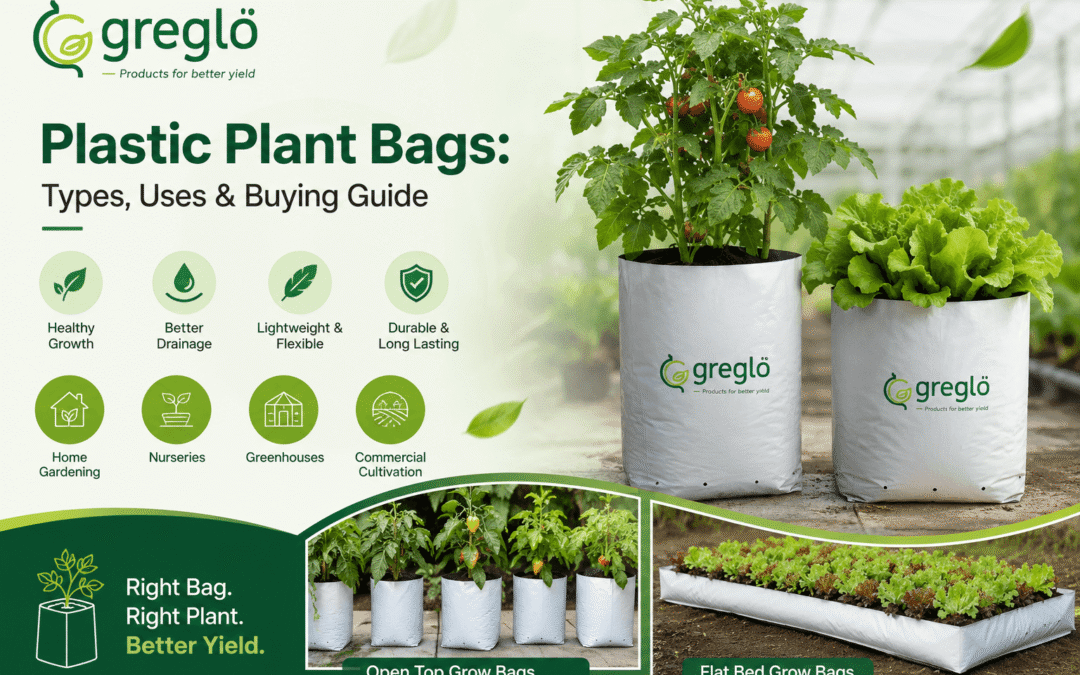
Why Plastic Plant Bags Are Used for Growing Plants
Plastic plant bags are flexible containers used for growing plants in home gardens, nurseries, greenhouses and commercial cultivation systems. They are available in different sizes, materials, thicknesses and designs depending on the intended application.
For a home gardener, plastic plant bags may be selected for a terrace or balcony garden. A nursery may require consistent bags for hundreds of plants, while commercial growers may need specific dimensions, drainage arrangements and large quantities.
Because the term plastic plant bags can describe different products, buyers should look beyond the name and check the actual material, dimensions, thickness, drainage and intended use.
This guide explains the common types of plastic plant bags, their applications, what can be grown in them, and what buyers should check before purchasing.
What Are Plastic Plant Bags?
Plastic plant bags are flexible containers designed to hold a growing medium and support plant growth.
Depending on their specifications, they can be used for:
- Home gardening
- Terrace and balcony gardening
- Plant nurseries
- Vegetable cultivation
- Greenhouse growing
- Horticultural applications
- Commercial cultivation
However, not every plant bag is suitable for every crop. The required specification depends on the plant, root system, growing medium and growing environment.
Are Plastic Plant Bags the Same as Grow Bags?
Plastic plant bags is a broad term that can refer to flexible plastic containers used for growing plants.
Grow bags for plants generally refers to containers designed specifically to hold a growing medium and support plant cultivation.
The important factor for buyers is to check the actual product specification rather than relying only on the product name.
Before purchasing, confirm:
- Material
- Dimensions
- Thickness
- Growing volume
- Drainage
- Construction
- Intended application
This is particularly important when comparing products from different suppliers.
Types of Plastic Plant Bags
Different types of plastic plant bags can be used depending on the cultivation method and plant requirements.
1. Open Top Plant Grow Bags
Open top grow bags have an accessible upper opening where the growing medium and plant can be placed.
They may be suitable for:
- Individual plants
- Home gardening
- Plant nurseries
- Greenhouse cultivation
- Horticultural applications
The required size should be selected according to the expected root-space and growing-volume requirements of the plant.
2. Flat Bed Grow Bags
Flat bed grow bags use a horizontal format and can be considered for cultivation systems where plants are arranged along a defined growing area.
They may be suitable for certain:
- Greenhouse systems
- Commercial growing layouts
- Horizontal cultivation arrangements
- Planned crop-spacing systems
The required dimensions depend on the crop and overall cultivation layout.
What Can You Grow in Plastic Plant Bags?
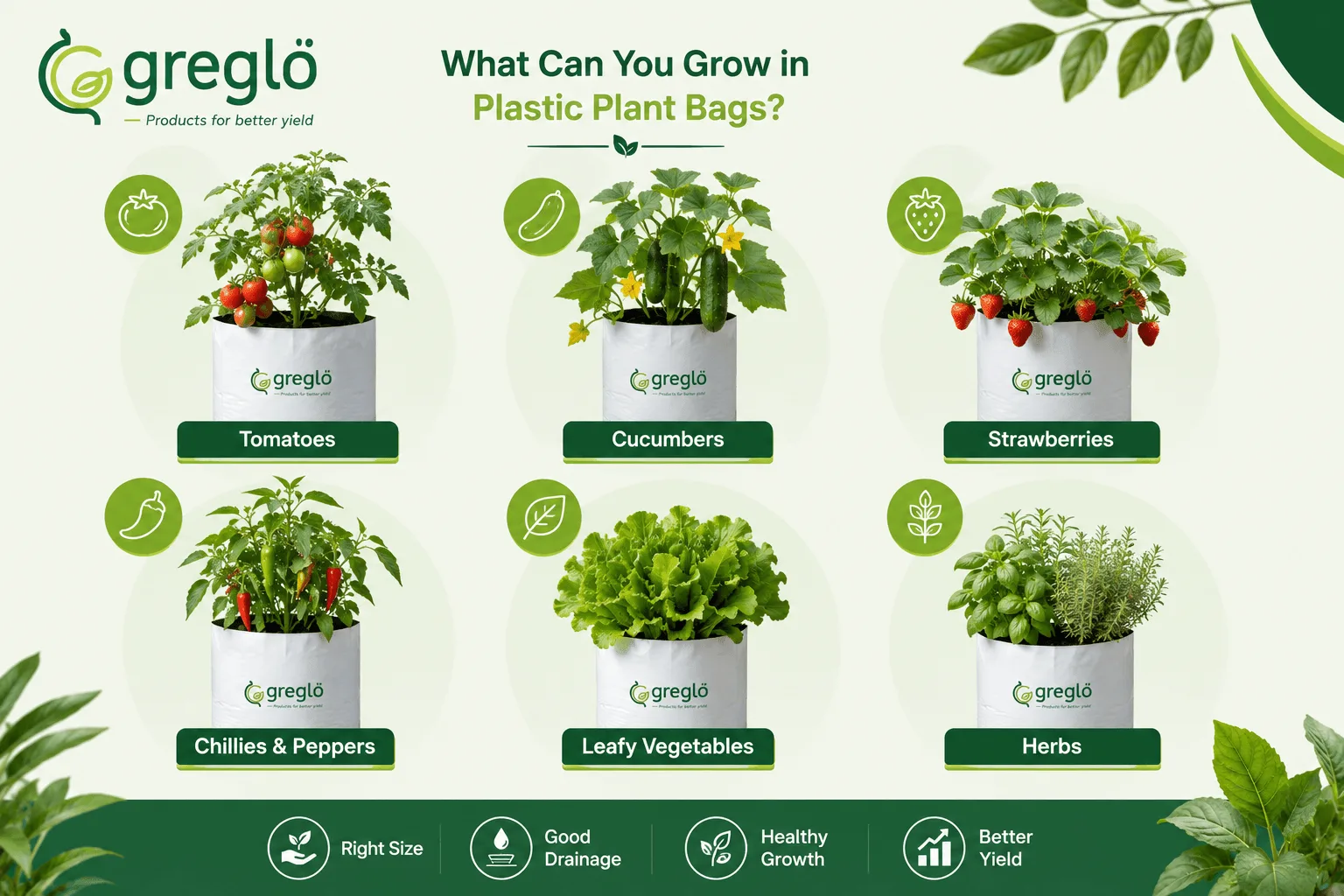
One of the main advantages of using plastic plant bags is that they can be selected in different sizes according to the type of plant being grown.
The correct bag size should be selected based on the plant's root system, expected mature size and growing-medium requirements.
Tomatoes
Tomatoes can be grown in suitable grow bags for plants when the growing container provides sufficient volume for root development.
When selecting a bag, consider:
- Expected plant size
- Root-space requirement
- Growing-medium volume
- Drainage
- Plant support requirements
The exact bag size should be selected according to the tomato variety and cultivation method.
Cucumbers
Cucumbers can also be grown in suitable container systems.
Because cucumber plants can develop rapidly and require adequate growing conditions, growers should consider:
- Growing volume
- Plant spacing
- Support arrangements
- Irrigation
- Drainage
For greenhouse or commercial cultivation, the grow bag should be compatible with the complete growing system.
Strawberries
Strawberries may be grown in container-based cultivation systems depending on the growing method.
Important considerations include:
- Available growing area
- Growing-medium requirements
- Irrigation
- Drainage
- Plant spacing
The appropriate bag format should be selected according to the planned cultivation layout.
Chillies and Peppers
Chillies and peppers can be grown in suitable plastic plant bags when the growing volume and drainage are appropriate for the crop.
Before selecting a bag, consider the expected plant size and growing duration.
Leafy Vegetables
Leafy vegetables can be suitable for smaller or shallower container-growing systems depending on the crop.
The selected bag dimensions should match the crop's root depth and spacing requirements.
Herbs
Herbs can also be grown using appropriately sized gardening bags.
The required bag size depends on the herb variety, root system and number of plants being grown.
How to Choose the Right Plastic Plant Bags
Choosing plastic plant bags should begin with the crop rather than simply selecting the lowest-priced option.
1. Consider the Plant Type
Different plants have different root systems.
Consider:
- Root depth
- Expected plant size
- Growing period
- Number of plants
- Growing-medium requirements
2. Select the Right Size
The dimensions should provide suitable growing volume without unnecessarily increasing the amount of growing medium required.
For commercial cultivation, confirm the exact dimensions with the supplier.
3. Check the Material
Ask the supplier about the material used and whether it is suitable for the intended growing environment.
For outdoor or greenhouse applications, consider expected exposure to sunlight, moisture and handling.
4. Check Thickness or GSM
Where applicable, confirm the thickness or GSM.
This makes it easier to compare products using measurable specifications.
5. Check Drainage
Drainage is an important consideration because excess water needs to move away from the growing zone.
Ask about:
- Number of drainage openings
- Hole placement
- Drainage arrangement
- Compatibility with the growing medium
- Compatibility with the irrigation system
Plastic Plant Bag Size Considerations
There is no single bag size that is suitable for every crop.
Instead, consider:
| Factor | Why It Matters |
| Plant type | Determines general growing requirements |
| Root system | Influences required growing volume |
| Mature plant size | Helps determine long-term space |
| Growing medium | Influences volume requirements |
| Available space | Determines the practical bag footprint |
| Growing layout | Important for greenhouse and commercial systems |
A small nursery plant may require a different bag from a mature vegetable or horticultural crop.
Plastic Plant Bags for Home Gardening and Nurseries
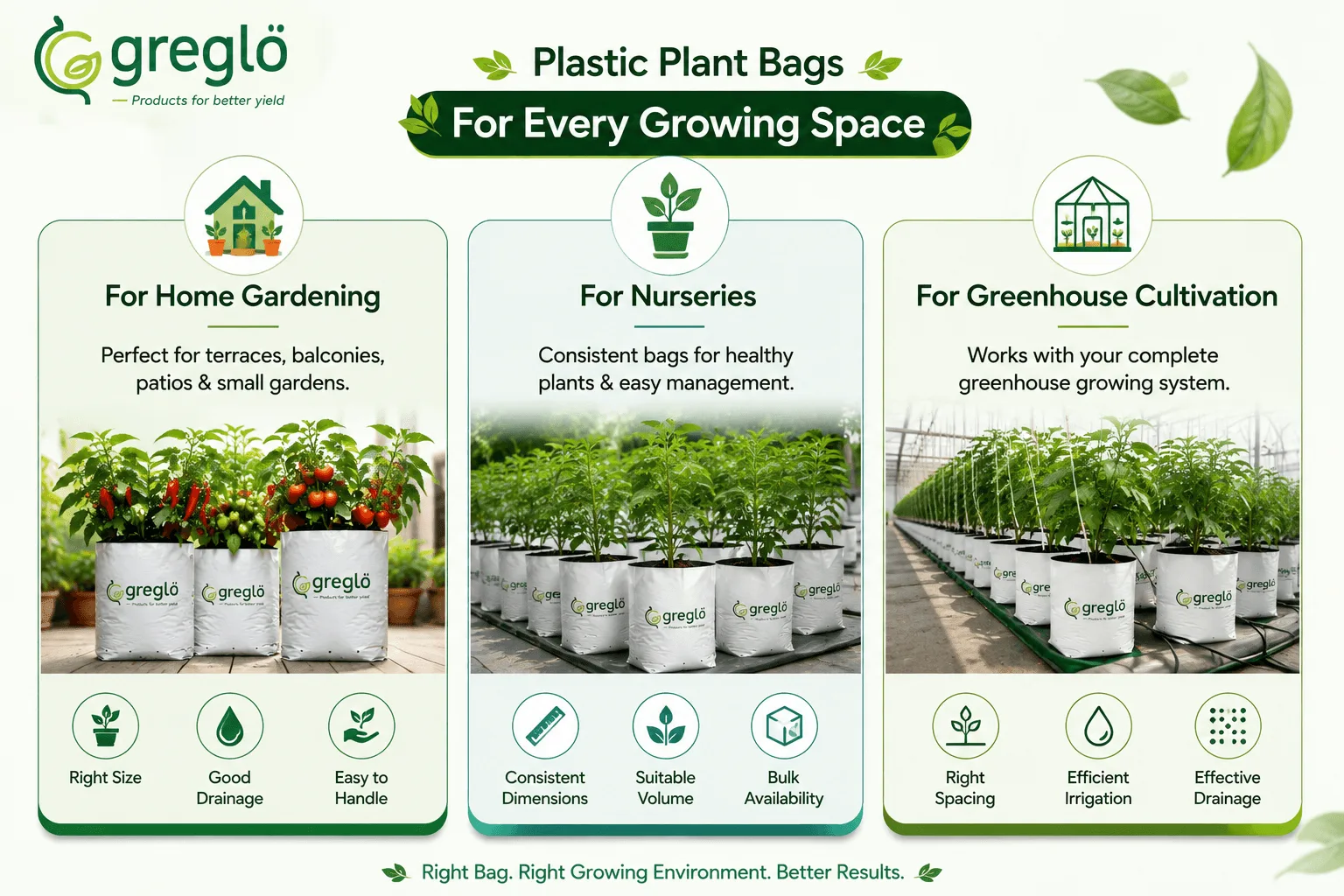
Plastic Plant Bags for Home Gardening
They may be used on:
- Terraces
- Balconies
- Patios
- Small gardens
- Outdoor growing areas
When selecting bags for home gardening, consider:
- Available space
- Plant type
- Bag dimensions
- Growing-medium requirement
- Drainage
- Ease of handling
Plastic Plant Bags for Nurseries
Plant bags for nursery applications may require greater consistency because multiple plants are often grown using the same specifications.
Important considerations include:
- Consistent dimensions
- Suitable growing volume
- Drainage
- Handling requirements
- Quantity availability
Plastic Plant Bags for Greenhouse Cultivation
Greenhouse growers should consider the plant bag as part of the complete cultivation system.
The bag should work with:
- Crop spacing
- Growing medium
- Irrigation
- Drainage
- Greenhouse layout
Buying Plastic Plant Bags for Commercial Use
Commercial buyers should approach purchasing differently from home gardeners.
Before requesting a quotation, prepare a specification sheet containing:
Bag Type
+
Dimensions
+
Material
+
Thickness/GSM
+
Drainage
+
Quantity
+
Customization Requirements
+
Delivery Location
This makes it easier to compare products fairly.
For a new supplier, consider evaluating a sample or smaller quantity before committing to a large order.
Plastic Plant Bag Buying Checklist
🌱 Plant Type
📏 Required Bag Dimensions
🪴 Growing Volume
🧵 Material
⚖️ Thickness / GSM
💧 Drainage
📦 Quantity
🛠️ Customization
📋 Packaging
🚚 Transportation
💰 Total Delivered Cost
Frequently Asked Questions
1. What are plastic plant bags used for?
Plastic plant bags are used for growing plants in home gardens, nurseries, greenhouses and commercial cultivation systems. Their suitability depends on the bag specification and the plant being grown.
2. What can be grown in plastic plant bags?
Depending on the bag size and growing system, they may be used for vegetables, herbs, nursery plants and other horticultural crops.
3. Are plastic plant bags suitable for nurseries?
Suitable plant bags for nursery applications can be used to grow and manage plants. Consistent dimensions, growing volume and drainage are important factors.
4. What size plastic plant bag should I choose?
Choose the size according to the plant type, root-space requirements, mature size, growing medium and available growing area.
5. What affects the price of plastic plant bags?
Material, dimensions, thickness, design, quantity, customization, packaging and transportation can affect the final grow bag price.
Conclusion
Plastic plant bags can provide a flexible growing-container option for home gardens, nurseries, greenhouses and commercial cultivation.
The right product should be selected based on the plant, root-space requirement, dimensions, material, thickness, growing medium and drainage—not simply the lowest price.
For buyers comparing gardening bags or grow bags for plants, it is important to compare equivalent specifications when evaluating suppliers.
Looking for the right grow bag for your cultivation requirements? Explore Greglo's Open Top Grow Bags and Flat Bed Grow Bags to compare suitable options for individual plants, nursery cultivation and commercial growing systems.
Before purchasing, confirm the product specification, quantity, delivery requirements and total cost so that the selected bag matches your intended growing system.