
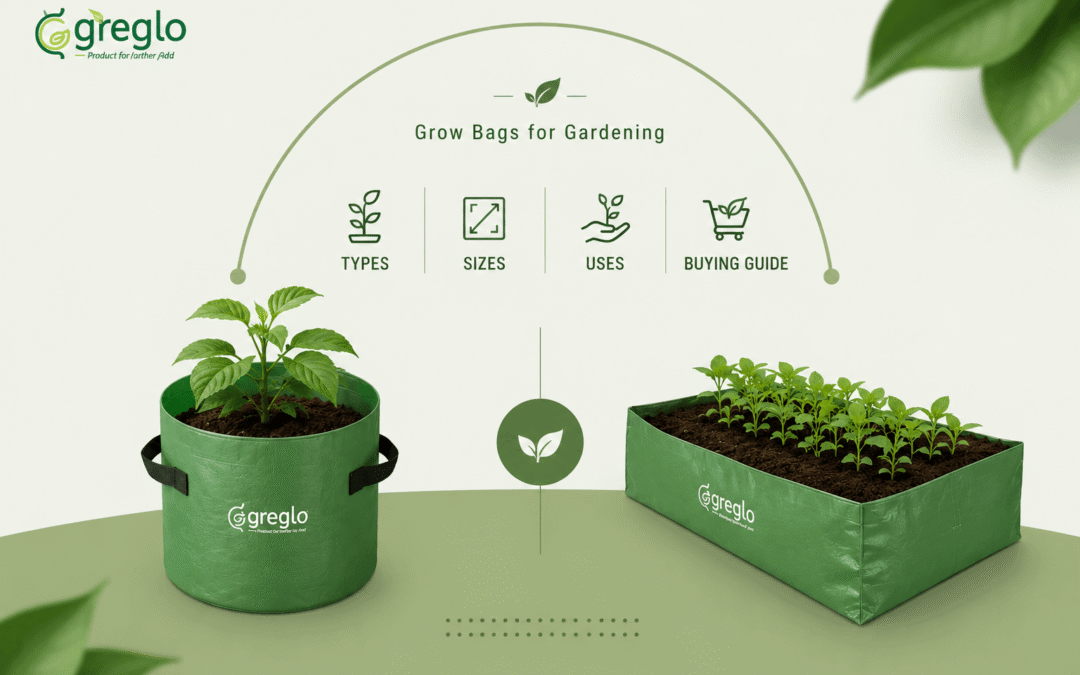
What Are Grow Bags and Why Are They Used for Gardening?
Grow bags are flexible growing containers used for cultivating plants in homes, nurseries, greenhouses and commercial growing environments.
Compared with traditional rigid pots, they offer a lightweight and adaptable option for growers working with different spaces and cultivation systems.
The right grow bag depends on several factors, including the type of plant, root-space requirement, growing medium, drainage, bag size and growing environment. For this reason, choosing grow bags for plants should involve more than simply selecting a bag based on its size or price.
This guide explains the different types of grow bags, their common uses, how to select the right size, and what to check before purchasing gardening bags for home or commercial cultivation.
What Are Grow Bags?
Grow bags can be used with different growing media depending on the crop and cultivation method. Coco peat and other soilless growing media are commonly used in controlled cultivation systems.
For home gardeners, grow bags provide a practical way to grow plants where conventional garden space is limited. For nurseries and commercial growers, they can form part of a more organized cultivation system.
When selecting a grow bag, the important question is not simply "Which bag is largest?" or "Which bag is cheapest?" Instead, the bag should be matched to the plant, growing medium and cultivation environment.
What Are Grow Bags Used For?
One of the main advantages of grow bags is their versatility. Gardening bags can be used in several growing environments, from small home gardens to larger commercial cultivation operations.
1. Home Gardening
Grow bags are useful for growing plants on terraces, balconies, patios and other areas where garden beds may not be available.
They can be arranged individually and moved when necessary, making them suitable for gardeners who want flexibility in how they use their available space.
Depending on the plant and bag size, they can be used for vegetables, herbs, flowers and other container-grown plants.
2. Plant Nurseries
Nurseries often need containers that are consistent in size, easy to handle and suitable for different stages of plant growth.
When selecting grow bags for nursery use, buyers should consider:
- Plant size
- Root-space requirements
- Bag dimensions
- Drainage
- Material quality
- Ease of handling
- Quantity requirements
Consistency is particularly important for commercial nursery operations where many plants may be grown at the same time.
3. Greenhouse Cultivation
Greenhouse growers need to consider the entire growing system when selecting grow bags for plants.
The bag should work with the crop layout, irrigation system, growing medium and available floor space.
The choice between individual bags and longer growing formats can depend on the crop and the way plants are arranged inside the greenhouse.
4. Commercial Growing
Grow bags can also be incorporated into commercial horticultural systems.
For commercial buyers, product selection should involve more than comparing unit prices. Material specification, dimensions, drainage, growing volume, order quantity and transportation requirements can all affect the suitability and total cost of the product.
Types of Grow Bags
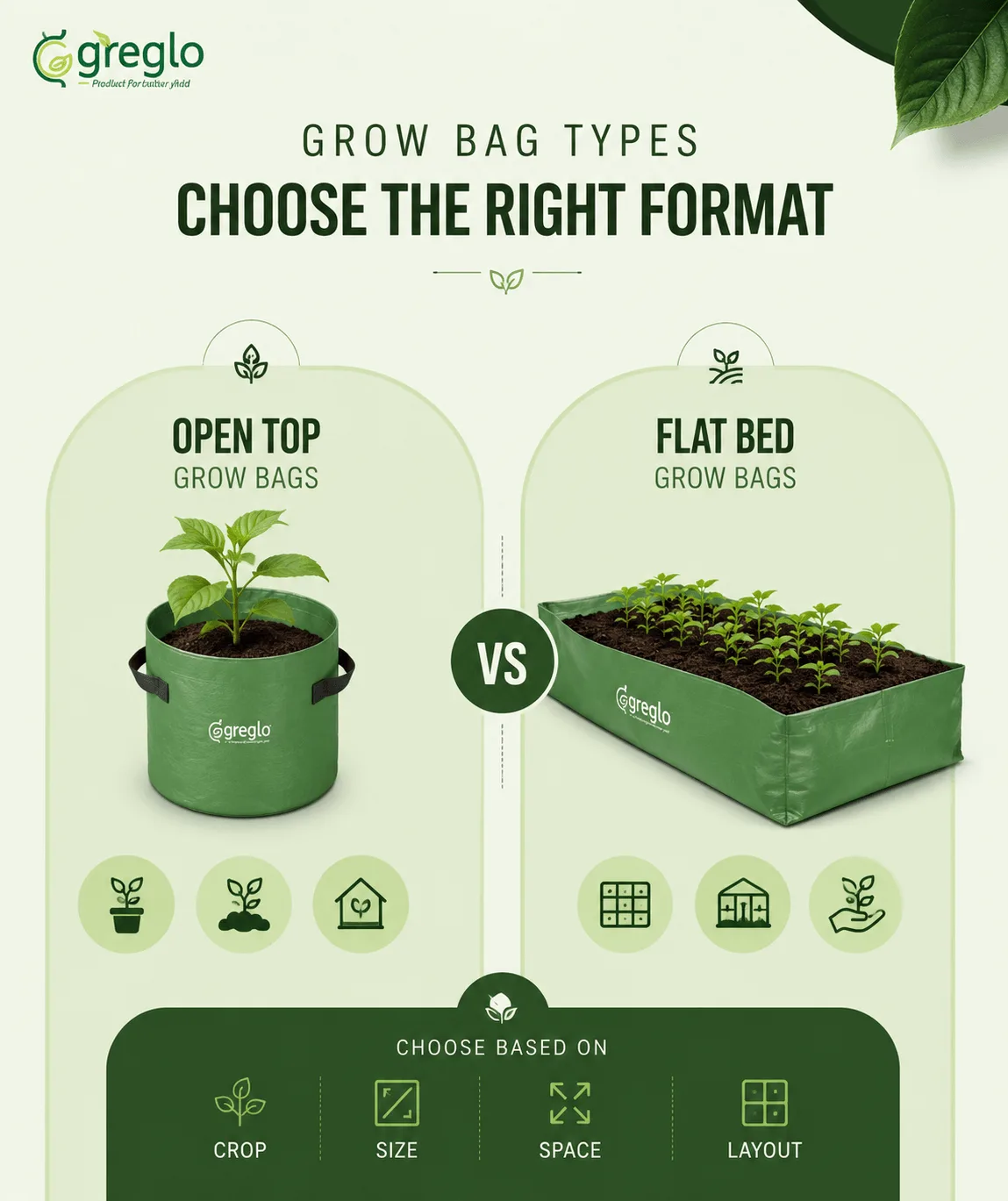
Grow bags are available in different designs. The appropriate type depends on how the plants will be arranged and how the growing system is managed.
Open Top Grow Bags
Open top grow bags are designed with an open upper section where the growing medium and plant are placed.
They are particularly useful when plants need to be cultivated individually in separate growing containers.
Common applications may include:
- Home gardening
- Nursery cultivation
- Greenhouse growing
- Vegetable cultivation
- Horticultural applications
- Individual plant cultivation
Flat Bed Grow Bags
Flat bed grow bags use a horizontal format that can be suitable for growing arrangements where plants are positioned along a defined growing area.
This format can be useful for greenhouse and commercial cultivation.
Before choosing flat bed bags, consider:
- Crop type
- Number of plants
- Plant spacing
- Growing-medium requirement
- Irrigation arrangement
- Available growing area
- Drainage requirements
Choosing Between the Two
There is no single grow bag format that is suitable for every cultivation system.
|
Consideration |
Open Top Grow Bags |
Flat Bed Grow Bags |
|
Growing format |
Individual containers |
Horizontal growing format |
|
Plant arrangement |
Individual placement |
Planned row/bed arrangement |
|
Home gardening |
Suitable |
Application-dependent |
|
Nursery use |
Suitable |
Application-dependent |
|
Greenhouse use |
Suitable |
Suitable for suitable layouts |
|
Commercial use |
Suitable |
Suitable for planned systems |
The best choice depends on the crop, available space and growing method.
How to Choose the Right Grow Bag
Choosing the right grow bags for plants starts with understanding the requirements of the crop.
1. Consider the Plant Type
Different plants have different root systems and space requirements.
A small herb does not necessarily require the same growing volume as a larger vegetable, flowering plant or fruit plant.
Consider both the current plant size and its expected mature size.
2. Check Root-Space Requirements
The bag should provide sufficient growing volume for the plant's root development.
Choosing a bag that is too small can create unnecessary restrictions, while selecting an unnecessarily large bag can increase the amount of growing medium required.
The goal is to match the bag size to the plant and cultivation system.
3. Select the Appropriate Size
Grow bag dimensions should be considered alongside the growing medium volume.
For commercial projects, buyers should ask suppliers about the usable growing volume and not rely only on the external dimensions of the bag.
4. Consider the Growing Medium
The selected growing medium can influence how the grow bag should be used.
Coco peat, coco chips, coco-based mixes and other growing media can have different moisture and drainage characteristics.
Therefore, the bag, growing medium and irrigation system should be considered together.
5. Check Drainage
Drainage is an important consideration when selecting gardening bags.
Excess water needs to move away from the growing zone, while the growing medium must retain appropriate moisture for the plant.
Before purchasing, check:
- Drainage opening design
- Hole placement
- Number of drainage openings
- Compatibility with the growing medium
- Compatibility with the irrigation system
6. Consider the Growing Environment
The right grow bag for a terrace garden may not necessarily be the right choice for a commercial greenhouse.
Consider where the bags will be used and how much handling, sunlight, moisture and movement they are likely to experience.
Grow Bag Sizes: How to Choose the Right Size
Grow bag size should be selected according to the crop rather than using a one-size-fits-all approach.
Consider these factors:
| Factor | Why It Matters |
| Plant type | Determines approximate root-space requirement |
| Mature plant size | Helps avoid selecting an undersized bag |
| Growing medium | Determines required growing volume |
| Available space | Affects the footprint of the growing system |
| Plant spacing | Important for greenhouse and commercial layouts |
| Irrigation | Must work with the bag and growing medium |
For home gardeners, the available terrace or balcony space may be the main limitation.
What to Check Before Buying Grow Bags
Whether you are purchasing a few bags for a home garden or placing a bulk order, product specifications should be checked before buying.
- Material
Ask the supplier what material is used and whether it is suitable for your intended application.
- Dimensions
Confirm the exact length, width and height rather than relying on generic size descriptions.
- Thickness or GSM
Where applicable, ask about material thickness or GSM. This can help you compare products with similar dimensions but different material specifications.
- Drainage
Check the drainage design and confirm whether it is suitable for your growing medium and irrigation method.
- Construction Quality
Inspect stitching, sealing, handles and other construction details where applicable.
- Quantity
Commercial buyers should confirm minimum order quantities and bulk-order requirements before placing an order.
- Customization
If you require specific dimensions, printing or other modifications, confirm whether customization is available.
- Packaging and Delivery
For larger orders, packaging and transportation can affect the final delivered cost.
Grow Bags vs Traditional Pots
Both grow bags and traditional pots can be useful for container cultivation. The right choice depends on the application.
| Feature | Grow Bags | Traditional Pots |
| Construction | Flexible | Rigid |
| Storage when empty | Generally easier to fold/store | Requires more space |
| Weight | Often lightweight | Varies by material |
| Arrangement | Flexible | Fixed shape |
| Sizes | Available in different formats | Wide range of sizes |
| Commercial applications | Commonly considered | Application-dependent |
| Portability | Convenient depending on size | Depends on material and size |
Rather than treating one option as universally better, growers should consider the plant, growing system, available space and handling requirements.
Choosing Grow Bags for Different Growers
For Home Gardeners
Focus on:
- Suitable plant size
- Available space
- Manageable bag size
- Drainage
- Ease of handling
- Growing medium compatibility
For Nurseries
Focus on:
- Consistent dimensions
- Appropriate root space
- Material quality
- Drainage
- Handling
- Quantity availability
For Greenhouse Growers
Focus on:
- Crop layout
- Plant spacing
- Growing medium
- Irrigation
- Drainage
- Bag format
For Commercial Buyers
Focus on:
- Product specifications
- Consistency between batches
- Quantity
- Packaging
- Delivery
- Total delivered cost
Common Mistakes When Buying Grow Bags
Choosing Only by Price
The lowest grow bag price does not necessarily mean the lowest overall cost.
A buyer should compare equivalent specifications before making a decision.
Selecting the Wrong Size
A bag should provide appropriate growing volume for the crop.
Ignoring Drainage
Drainage should be considered together with the growing medium and irrigation method.
Not Checking Specifications
Generic descriptions such as "large" or "heavy-duty" are not enough for commercial purchasing.
Ask for actual dimensions and material specifications.
Ordering in Bulk Without Testing
For a new supplier or specification, consider evaluating a sample or smaller quantity before committing to a large order.
Grow Bag Buying Checklist
Before purchasing gardening bags, check:
🌱 Plant or crop type
📏 Required growing volume & bag dimensions
🧵 Material specification & thickness/GSM
💧 Drainage design
🌿 Growing medium compatibility
🏡 Growing environment
📦 Quantity & packaging
⚙️ Customization requirements
🚚 Delivery terms
For commercial orders, keep the confirmed specifications with the purchase documentation for future reference.
Frequently Asked Questions
1. What are grow bags used for?
Grow bags are used for growing plants in homes, nurseries, greenhouses and commercial horticultural systems. They can accommodate different growing media and are available in different sizes and formats.
2. Which type of grow bag is best?
There is no single best grow bag for every application. Open top grow bags can be suitable for individual plant cultivation, while flat bed grow bags can work well for certain horizontal or row-based growing systems.
3. How do I choose the right grow bag size?
Choose the size based on the plant type, expected mature size, root-space requirement, growing medium volume, available space and cultivation method.
4. What should I check before buying grow bags?
Check the material, dimensions, thickness or GSM where applicable, drainage, construction quality, growing-medium compatibility, quantity and delivery requirements.
5. Are grow bags suitable for commercial cultivation?
Yes. Grow bags can be used in nursery, greenhouse and commercial horticultural applications when their specifications are matched to the crop and cultivation system.
Conclusion
Choosing the right grow bag starts with the growing requirement, not simply the product price.
Consider the crop, root-space requirement, growing medium, bag size, drainage and growing environment before making a purchase. For individual plant cultivation, open top grow bags may be appropriate, while flat bed grow bags can suit certain planned commercial growing layouts.
For home gardeners, nurseries, greenhouse growers and commercial buyers, selecting grow bags for plants based on clear specifications can make purchasing and cultivation planning more straightforward.
If you are evaluating grow bags for your next growing project, compare the available formats and specifications and choose a product that fits your crop and cultivation system.