
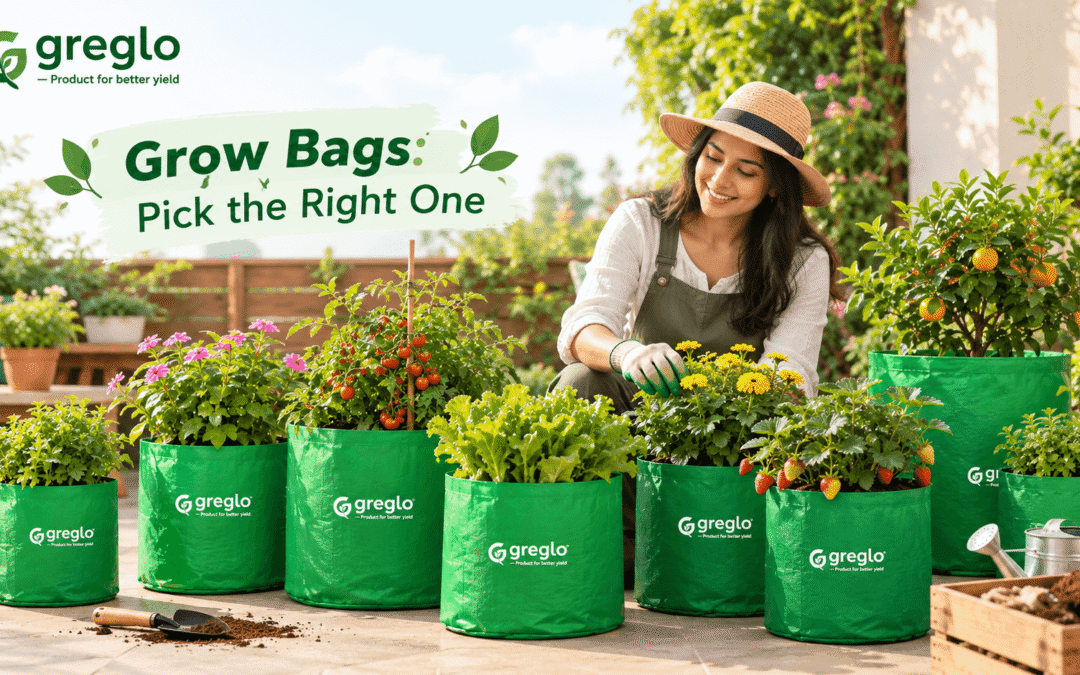
Garden grow bags offer a practical way to grow plants when traditional garden beds or rigid pots are not convenient. They can be used in home gardens, balconies, terraces, patios, nurseries, and other container-growing spaces.
Available in different materials, shapes, sizes, and capacities, grow bags can accommodate everything from herbs and leafy vegetables to larger fruiting plants. However, choosing the right bag requires more than simply selecting the largest or cheapest option.
The plant's root system, growing medium, drainage, growing location, and expected growth period should all be considered.
If you are new to grow bags, start with our complete guide to [Grow Bags for Plants: Types, Sizes & Complete Buying Guide] → /blog/grow-bags-for-plants/
What Are Garden Grow Bags?
Garden grow bags are flexible containers designed to hold a growing medium and support plants. Unlike rigid pots, they can be made from flexible materials and are available in different shapes and sizes.
They are commonly used for:
🥬 Leafy vegetables
🍅 Fruiting vegetables
🌿 Herbs
🌸 Flowers
🌱 Seedlings
🪴 Ornamental plants
Their flexibility makes them useful when gardeners need to arrange plants in limited or changing spaces.
Why Use Grow Bags for Gardening?
Grow bags for gardening can offer several practical advantages for container growers.
Useful for Limited Spaces
Grow bags can be placed on suitable balconies, terraces, patios, and small outdoor areas where conventional garden beds may not be possible.
Easy to Rearrange
Their flexible construction can make it easier to move plants when sunlight, weather, or space requirements change.
Available in Multiple Sizes
Different plant varieties require different amounts of root space. Grow bags are available in various dimensions to accommodate these requirements.
Drainage Can Be Managed
Drainage openings allow excess water to escape. Good drainage is particularly important when growing plants in containers.
Suitable for Multiple Crops
With the right size and growing medium, grow bags can support vegetables, herbs, flowers, and other container plants.
Types of Garden Grow Bags
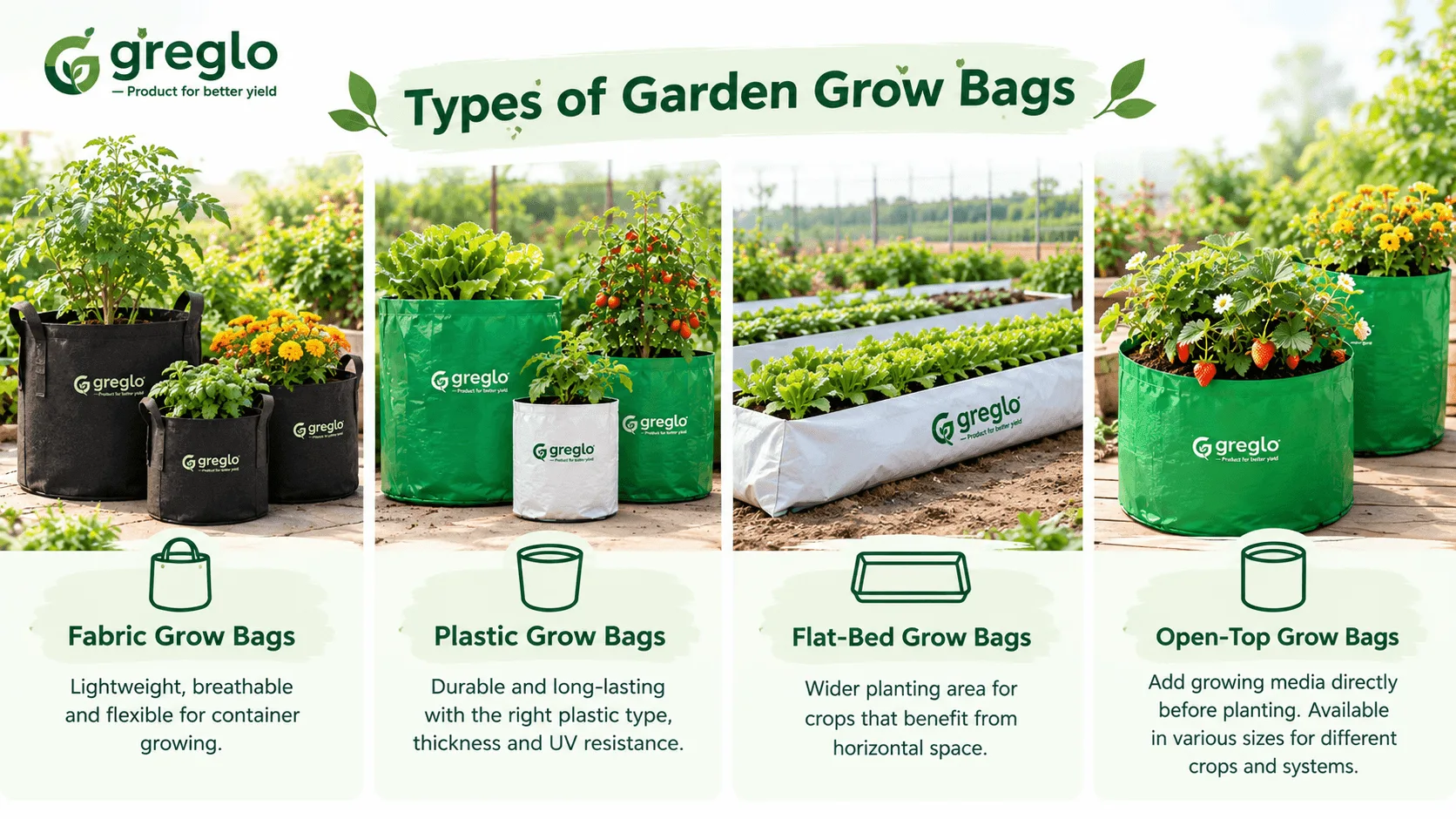
Different garden grow bags are designed for different growing situations.
Fabric Grow Bags
Fabric grow bags are flexible and lightweight. Their breathable construction can make them suitable for many container-growing applications.
When selecting fabric bags, consider material quality, thickness, stitching, handles, and drainage.
Plastic Grow Bags
Plastic grow bags can provide a durable container option. Their performance depends on the plastic type, thickness, UV resistance, construction, and drainage design.
For longer-term outdoor use, check the manufacturer's specifications rather than judging quality by appearance alone.
Flat-Bed Grow Bags
Flat-bed grow bags provide a wider planting area and can be useful for crops that benefit from horizontal growing space.
They can be particularly practical for certain vegetable-growing applications.
Open-Top Grow Bags
Open-top designs allow growing media to be added directly before planting. They are available in different sizes for different crops and growing systems.
How to Choose the Right Size
Choosing the correct size is essential when purchasing plant grow bags.
Use this simple selection process:
🌱 Plant Type → 🌿 Root System → 📏 Mature Size → 🪣 Growing Volume → 🪴 Bag Size
🥬 Small Bags
Can be suitable for:
-
- Herbs
- Seedlings
- Small flowers
- Some leafy vegetables
🍅 Medium Bags
Can be suitable for:
-
- Chillies
- Peppers
- Medium-sized vegetables
- Larger herbs
🌳 Large Bags
Can be suitable for:
-
- Tomatoes
- Larger vegetables
- Fruit-bearing plants
- Plants with larger root systems
Always consider the mature size of the plant rather than choosing a bag based only on the current size of the seedling.
Which Growing Medium Works With Garden Grow Bags?
The container and growing medium should be selected together.
A suitable growing medium should provide an appropriate balance of:
💧 Moisture retention
🌬️ Air space
⬇️ Drainage
🌱 Root support
🧪 Nutrient availability
Coco coir potting mix is one growing-medium option that can be incorporated into container-growing systems.
Coco coir can help manage moisture while maintaining a lightweight structure. Depending on the crop and growing conditions, it can be combined with other components such as compost and aeration materials.
Best Uses for Garden Grow Bags
Garden grow bags can be used for many types of plants.
🥬 Vegetables
Grow bags can be used for leafy greens and many fruiting vegetables when the container size is appropriate.
🌿 Herbs
Herbs often work well in smaller containers because many varieties have relatively compact root systems.
🌸 Flowers
Flowering plants can be grown in grow bags when the container provides sufficient root space and drainage.
🌱 Seedlings
Smaller grow bags can be useful for raising young plants before moving them into larger containers.
What to Check Before Buying Garden Grow Bags
Don't select a grow bag based only on price.
Check these factors:
Size and Capacity
Match the bag to the crop's root requirements and mature plant size.
Material
Consider the material's durability, flexibility, and suitability for your growing environment.
Thickness and Strength
Larger plants and wet growing media can add considerable weight, so the bag should be strong enough for the intended application.
Drainage
Check that the design provides adequate drainage for the growing conditions.
Handles
Handles can make larger bags easier to move, especially when repositioning plants.
Growing Environment
Consider whether the bag will be used indoors, on a balcony, terrace, patio, nursery, or outdoor garden.
Expected Usage
If you plan to reuse the bags, consider their construction and expected service life.
Common Mistakes When Using Grow Bags
Even good-quality grow bags for plants can perform poorly when incorrectly selected or managed.
-
Choosing the Wrong Size
A container that is too small may limit the available root space.
-
Overwatering
More water does not always mean better growth. Water according to the crop, medium, climate, and container conditions.
-
Overcrowding Plants
Putting too many plants in one bag can increase competition for water, nutrients, light, and root space.
-
Ignoring Nutrition
Container-grown plants depend on appropriate nutrient management because they have limited access to nutrients compared with plants growing in open ground.
-
Ignoring Surface Conditions
For balconies and terraces, consider drainage, surface protection, sunlight, and the combined weight of plants, growing media, containers, and water.
How to Set Up Garden Grow Bags
A simple setup can follow this process:
📍 Select Location → 👜 Choose Bag → 🌿 Prepare Medium → 🪣 Fill Bag → 🌱 Plant → 💧 Water → 👀 Monitor
1️⃣ Select the Location
Choose a suitable location based on the plant's sunlight requirements and ensure the surface can safely accommodate the setup.
2️⃣ Choose the Bag
Select the appropriate size, material, and design for the plant.
3️⃣ Prepare the Growing Medium
Use a suitable growing-medium formulation based on the crop and growing environment.
4️⃣ Fill the Bag
Fill the bag without excessively compacting the growing medium. Leave some space at the top for watering.
5️⃣ Plant
Position the seedling or plant at the appropriate depth.
6️⃣ Water
Water according to the crop and environmental conditions while allowing excess water to drain.
7️⃣ Monitor
Regularly check moisture, drainage, plant growth, and nutrient requirements.
Garden Grow Bags Buying Checklist
Before purchasing, check:
☑️ Plant type
☑️ Bag dimensions
☑️ Capacity
☑️ Material
☑️ Thickness/GSM
☑️ Drainage
☑️ Handles
☑️ UV suitability for outdoor use
☑️ Expected usage period
☑️ Growing-medium compatibility
☑️ Quantity and delivery requirements
For bulk requirements, also check product specifications, MOQ, packaging, consistency, and delivery terms.
GREGLO Growing Solutions
GREGLO provides cocopeat and coco coir growing-media solutions for different growing applications.
For container gardening, the performance of garden grow bags depends on more than the bag itself. The container size, growing medium, drainage, watering, and plant requirements should all work together.
When using grow bags with coco coir, check important specifications such as particle size, EC, pH, moisture, expansion volume, and batch consistency.
Frequently Asked Questions
1. Are garden grow bags good for vegetables?
Yes. Garden grow bags can be used for many vegetables when the bag provides adequate root space, drainage, and suitable growing media.
2. What can I grow in grow bags?
You can grow vegetables, herbs, flowers, seedlings, and many ornamental plants. The appropriate bag size depends on the crop.
3. Can I use cocopeat in garden grow bags?
Yes. Cocopeat can be incorporated into a growing medium used in garden grow bags. It should be managed according to the crop's moisture, aeration, and nutrient requirements.