
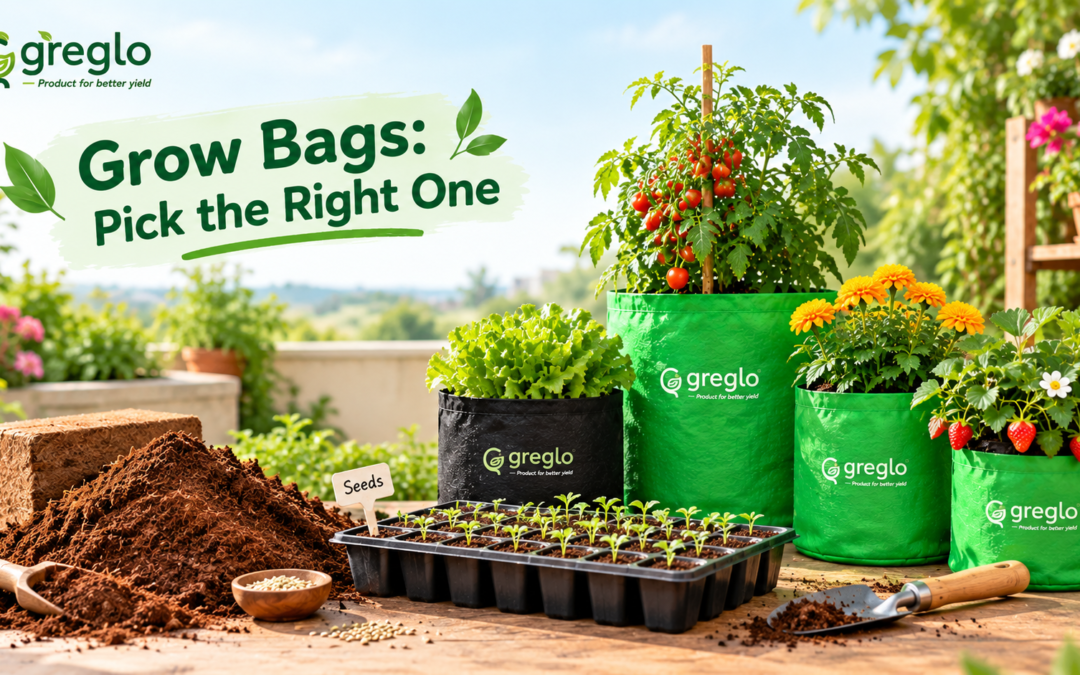
Growing plants in containers is a practical option when you have limited garden space, poor soil, or want greater control over your growing environment. Grow bags for plants provide a flexible alternative to traditional pots and can be used for vegetables, herbs, flowers, seedlings, and many container-grown plants.
Compared with rigid containers, grow bags are lightweight, easy to move, and available in different sizes and materials. However, choosing the right bag is important because plant type, root space, growing medium, drainage, and watering requirements all affect plant performance.
This guide explains the main types of garden grow bags, how to choose the right size, what materials to consider, and how coco coir potting mix can be used as part of a suitable growing medium.
🪴 What Are Grow Bags for Plants?
Grow bags for plants are flexible containers designed to hold growing media and support plants without requiring a traditional garden bed or rigid pot.
They are commonly used for:
-
-
- Vegetables
- Herbs
- Flowers
- Seedlings
- Ornamental plants
- Terrace gardens
- Balcony gardens
- Container gardening
-
Grow bags can be placed on balconies, terraces, patios, gardens, nurseries, and other suitable growing spaces.
Their flexible structure also makes them convenient for moving or rearranging plants when required.
Why Use Garden Grow Bags?
The popularity of garden grow bags comes from their flexibility and suitability for container gardening.
Suitable for Limited Spaces
Grow bags can be used where traditional garden beds are not practical. They are particularly useful for balconies, terraces, patios, and small outdoor spaces.
Easy to Move
Many grow bags are lighter than large rigid containers, making it easier to rearrange plants according to sunlight, weather, or available space.
Different Sizes Are Available
Grow bags come in multiple sizes and capacities. This allows gardeners to select a container according to the plant's root system and expected growth.
Good Drainage Can Be Designed
A properly designed grow bag can provide drainage openings that help excess water leave the container.
Good drainage is important because consistently waterlogged growing media can create unfavorable conditions around plant roots.
Flexible for Different Crops
Depending on their size and depth, grow bags can be used for leafy vegetables, herbs, flowers, fruiting vegetables, and larger plants.
Types of Grow Bags for Plants
Choosing the right type depends on the crop, growing location, material, and expected duration of use.
🧵 Fabric Grow Bags
Fabric grow bags are made from breathable textile materials and are commonly used for container gardening.
They can be useful for gardeners looking for lightweight and flexible containers.
👜 Plastic Grow Bags
Plastic-based grow bags are another common option. Their durability, thickness, drainage design, and UV resistance can vary depending on the product specification.
When choosing plastic potting bags for plants, check the material quality and drainage arrangement rather than focusing only on appearance.
🌿 Flat-Bed Grow Bags
Flat-bed grow bags are designed with a wider growing area and can be suitable for certain vegetables and commercial growing applications.
Their shape can provide more horizontal growing space while remaining relatively easy to position.
🪴 Open-Top Grow Bags
Open-top designs provide a ready container structure for adding growing media and planting directly.
They can be used for vegetables, flowers, and other container-grown plants depending on their dimensions and capacity.
How to Choose the Right Grow Bag Size
ze is one of the most important factors when selecting grow bags for plants.
A bag that is too small can restrict the available root zone, while an unnecessarily large container can require more growing media and occupy additional space.
Consider this flow:
🌱 Plant Type → 🌿 Root Growth → 📏 Mature Plant Size → 🪣 Required Growing Volume → 🪴 Grow Bag Size
🌱 Small Grow Bags
Suitable for:
-
- Herbs
- Small flowers
- Seedlings
- Smaller leafy vegetables
🪴 Medium Grow Bags
Suitable for:
-
- Several vegetables
- Larger herbs
- Bushy flowering plants
- Medium-sized container plants
🌳 Large Grow Bags
Suitable for:
-
- Larger vegetables
- Fruit-bearing plants
- Plants with extensive root systems
- Long-duration crops
Always check the recommended container size for the particular crop instead of selecting a bag based only on its visual dimensions.
What Growing Medium Should You Use in Grow Bags?
The growing medium is just as important as the container itself.
A suitable medium should provide an appropriate balance of:
💧 Moisture retention
💦 Drainage
🌬️ Air space
🌱 Root support
🧪 Nutrient availability
One option commonly used in container growing is coco coir potting mix.
Coco coir is derived from coconut husk and can be incorporated into growing media to help manage moisture while maintaining a lightweight structure.
A basic growing-medium approach can include:
🥥 Coco Coir → 🌱 Compost or Organic Nutrient Source → 🌬️ Aeration Material → 🌿 Balanced Growing Medium
The exact formulation should be adjusted according to the crop, climate, watering method, and nutrient-management approach.
For more information, see Coco Coir Potting Mix for Grow Bags: Easy Guide for Healthy Plants → /blog/coco-coir-potting-mix-for-grow-bags/
How Coco Coir Potting Mix Works in Grow Bags
Coco coir potting mix can be useful in container gardening because coco coir can hold moisture while maintaining air space within the growing medium.
This can make it a useful component for plants grown in containers where moisture and drainage need to be managed carefully.
However, coco coir should not automatically be treated as a complete nutrient source. Plants still require appropriate nutrition, and the final growing-medium formulation should be selected according to crop requirements.
When purchasing coco coir, consider:
🔬 Particle size
🧪 EC level
⚗️ pH
💧 Moisture content
📦 Expansion volume
🧼 Washing or buffering
🔄 Consistency between batches
How to Choose Potting Bags for Plants
When comparing potting bags for plants, don't select them based only on price or appearance.
Check these specifications:
Material
Look for a material appropriate for the intended growing environment and expected usage period.
Size
Match the bag size to the plant's root requirements and mature growth.
Drainage
Adequate drainage openings are essential for managing excess water.
Thickness and Strength
For larger plants, the bag should be capable of supporting the growing medium and plant weight.
Handling
If you regularly move plants, consider the overall weight and whether the bag is easy to handle.
Growing Location
A bag used on a terrace may have different requirements from one used in a nursery or commercial growing system.
For a detailed guide, link to Potting Bags for Plants: How to Choose the Right Size & Type → /blog/potting-bags-for-plants/
Grow Bags vs Traditional Pots
Both grow bags and traditional pots can be useful for container gardening.
|
Feature |
Grow Bags |
Traditional Pots |
|
Weight |
Generally lightweight |
Can be heavier |
|
Flexibility |
Flexible |
Rigid |
|
Storage |
Can often be folded when empty |
Requires storage space |
|
Sizes |
Available in various sizes |
Available in various sizes |
|
Mobility |
Generally easy to move |
Depends on material and size |
|
Growing Medium |
Requires suitable growing medium |
Requires suitable growing medium |
|
Drainage |
Depends on bag design |
Depends on pot design |
The right option depends on your plant, available space, budget, growing conditions, and preferred gardening method.
Common Mistakes to Avoid
Even good-quality garden grow bags can perform poorly if they are used incorrectly.
Choosing a Bag That Is Too Small
A small container may not provide sufficient root space for a mature plant.
Ignoring Drainage
Excess water should have a suitable path out of the container.
Using Poor-Quality Growing Media
The container cannot compensate for a growing medium with poor structure or unsuitable moisture management.
Overwatering
Watering should be based on the plant, growing medium, weather, container size, and growing environment.
Ignoring Nutrient Requirements
Plants grown in containers depend heavily on the nutrients supplied through the growing medium and fertilizer program.
Placing Bags Without Considering the Surface
On balconies and terraces, consider drainage, surface protection, sunlight, and the combined weight of containers, growing media, and water.
How to Set Up Grow Bags for Healthy Plant Growth
A simple setup process can be followed:
🌱 Choose the Plant → 🪴 Select the Grow Bag → 🌿 Prepare the Growing Medium → 🪣 Fill the Bag → 🌱 Plant → 💧 Water → 👀 Monitor Growth
Choose the Plant
Identify the crop and understand its expected root and canopy size.
Select the Grow Bag
Choose a suitable size, material, and drainage design.
Prepare the Growing Medium
Use a suitable combination of coco coir, compost, and other components according to the plant's requirements.
Fill the Bag
Avoid compacting the growing medium excessively. Leave sufficient space near the top for watering.
Plant
Place the seedling or plant at the appropriate depth.
Water
Water according to the plant's requirements and growing conditions while avoiding unnecessary saturation.
Monitor
Observe moisture, drainage, plant growth, nutrient requirements, and root development.
How to Choose Grow Bags for Different Plants
Different plants have different container requirements.
🥬 Leafy Vegetables
Smaller or medium-sized grow bags for plants can work well depending on the crop and number of plants.
🍅 Tomatoes
Tomatoes generally need more root space and support than small leafy vegetables, so choose a suitably sized and stable container.
🌶️ Chillies and Peppers
Medium-sized containers can be suitable, with the final size depending on the variety and growing conditions.
🌿 Herbs
Many herbs can be grown successfully in smaller potting bags for plants, provided they have adequate drainage and growing media.
🌸 Flowers
Container size should be selected according to the mature plant size and root system.
What to Check Before Buying Grow Bags
Use this checklist before purchasing:
☑️ Plant type
📐 Grow bag dimensions
🪣 Growing volume
🧵 Material
💪 Thickness/GSM where applicable
💧 Drainage design
🤲 Handles or portability
⏳ Expected usage period
🌿 Growing medium compatibility
📦 Quantity required
For bulk buyers, also consider MOQ, packaging, specifications, consistency, and delivery requirements.
For more information, link to Garden Grow Bags: Types, Sizes, Uses & Buying Tips → /blog/garden-grow-bags/
GREGLO for Cocopeat and Growing Media
GREGLO supplies cocopeat and coco coir growing-media solutions for different growing applications.
Selecting the right growing medium involves more than simply choosing a product. Factors such as particle size, EC, pH, moisture, expansion, and application requirements should also be considered.
For gardeners and growers using grow bags for plants, the combination of an appropriately sized container and a suitable growing medium can help create a more manageable growing environment.
Explore GREGLO's cocopeat solutions when planning your next container-growing setup.
Frequently Asked Questions
1. Are grow bags good for plants?
Yes. Grow bags for plants can be used for vegetables, herbs, flowers, seedlings, and many other container-grown plants when the bag size, drainage, and growing medium are appropriate.
2. What is the best size grow bag?
There is no single best size. The appropriate size depends on the plant's root system, mature size, and growing duration.
3. Can I use cocopeat in grow bags?
Yes. Cocopeat or coco coir can be used as a component of a growing medium in grow bags. It should be combined and managed according to the crop's moisture, aeration, and nutrient requirements.
4. Are garden grow bags suitable for terrace gardening?
Yes. Garden grow bags can be useful for terrace gardening, provided the terrace can safely support the combined weight of the bags, growing medium, plants, and water.
5. What is the difference between a grow bag and a potting bag?
The terms are often used interchangeably. In practice, the differences depend on the manufacturer's design, material, dimensions, drainage, and intended application.