
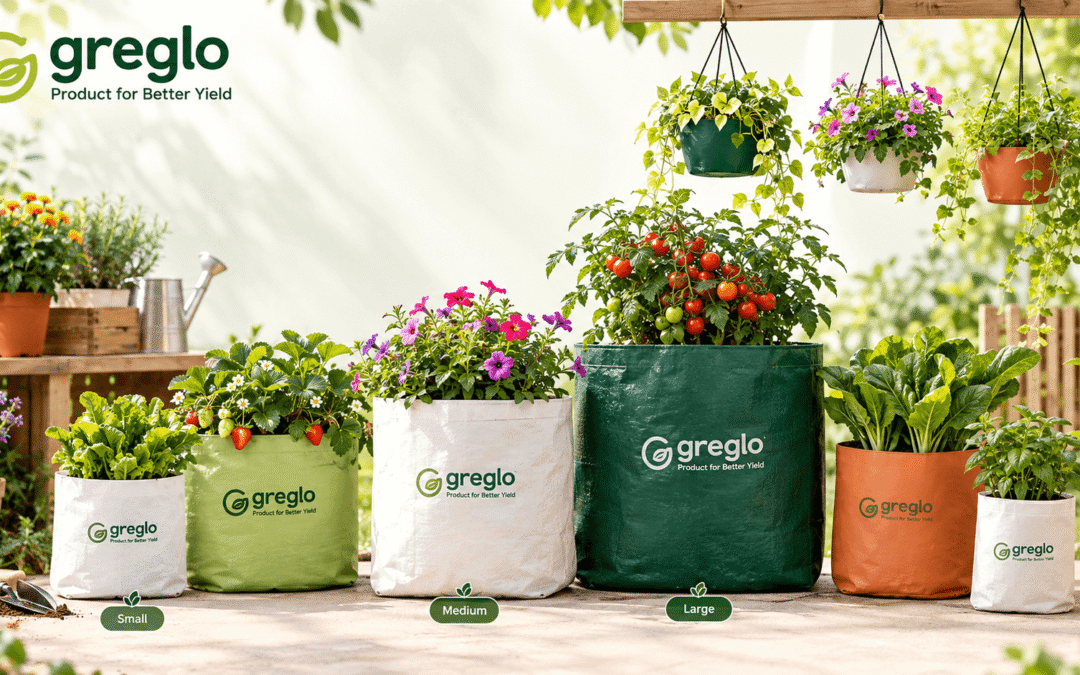
Choosing the right container can make a significant difference when growing plants in limited spaces. Potting bags for plants offer a flexible option for growing vegetables, herbs, flowers, seedlings, and other container plants without relying on traditional rigid pots.
The right bag should match the plant's root space, growing duration, growing medium, drainage needs, and growing location. A small herb may need only a compact bag, while a fruiting vegetable or larger plant may require considerably more growing volume.
This guide explains how to select potting bags for plants, what sizes and materials to consider, and how to pair them with a suitable growing medium.
For the broader topic, see [Grow Bags for Plants: Types, Sizes & Complete Buying Guide] → /blog/grow-bags-for-plants/
What Are Potting Bags for Plants?
Potting bags for plants are flexible containers designed to hold a growing medium and support plant growth.
They can be used in:
🏠 Home gardens
🌿 Balconies
🏡 Terraces
🌱 Nurseries
🌤️ Patios
🥬 Vegetable gardens
Unlike rigid containers, potting bags can be lightweight and flexible, making them convenient for gardeners who need to rearrange their plants.
Their effectiveness depends on selecting the appropriate size, material, drainage design, and growing medium.
Why Potting Bag Size Matters
The size of potting bags for plants should correspond to the plant's root development and mature size.
A useful selection process is:
🌱 Plant Type → 🌿 Root System → 📐 Mature Plant Size → 🪣 Growing Volume → 👜 Potting Bag Size
A bag that is too small may restrict root development, while an unnecessarily large bag requires more growing media and may take up valuable space.
🌿 Small Potting Bags
Small bags can be suitable for:
-
-
- Herbs
- Seedlings
- Small flowering plants
- Some leafy vegetables
-
🪴 Medium Potting Bags
Medium-sized bags can be suitable for:
-
-
- Chillies
- Peppers
- Larger herbs
- Medium-sized vegetables
- Bushy flowering plants
-
🌳 Large Potting Bags
Larger bags can be appropriate for:
-
-
- Tomatoes
- Larger vegetables
- Fruit-bearing plants
- Plants with extensive root systems
-
The exact requirement varies by plant variety and growing conditions..
What Materials Are Used for Potting Bags?
The material affects durability, flexibility, handling, drainage, and expected service life.
Fabric
Fabric potting bags are flexible and lightweight. They are commonly used in container gardening.
When selecting them, check the fabric quality, stitching, handles, thickness, and suitability for outdoor use.
Plastic
Plastic-based potting bags for plants can provide a durable option. Their performance varies depending on plastic quality, thickness, UV resistance, and construction.
For outdoor applications, check the product specifications instead of selecting solely based on appearance.
Why Drainage Is Important
Drainage is essential for container-grown plants.
A potting bag should allow excess water to escape while retaining enough moisture for the plant's requirements.
The basic process is:
💧 Water → 🌿 Growing Medium → ⬇️ Excess Water → 🌱 Root Zone
Poor drainage can result in excessive moisture around the roots. On the other hand, very rapid drainage can increase the frequency of watering in some growing conditions.
The ideal balance depends on the crop, growing medium, weather, and watering method.
Potting Bags for Different Plants
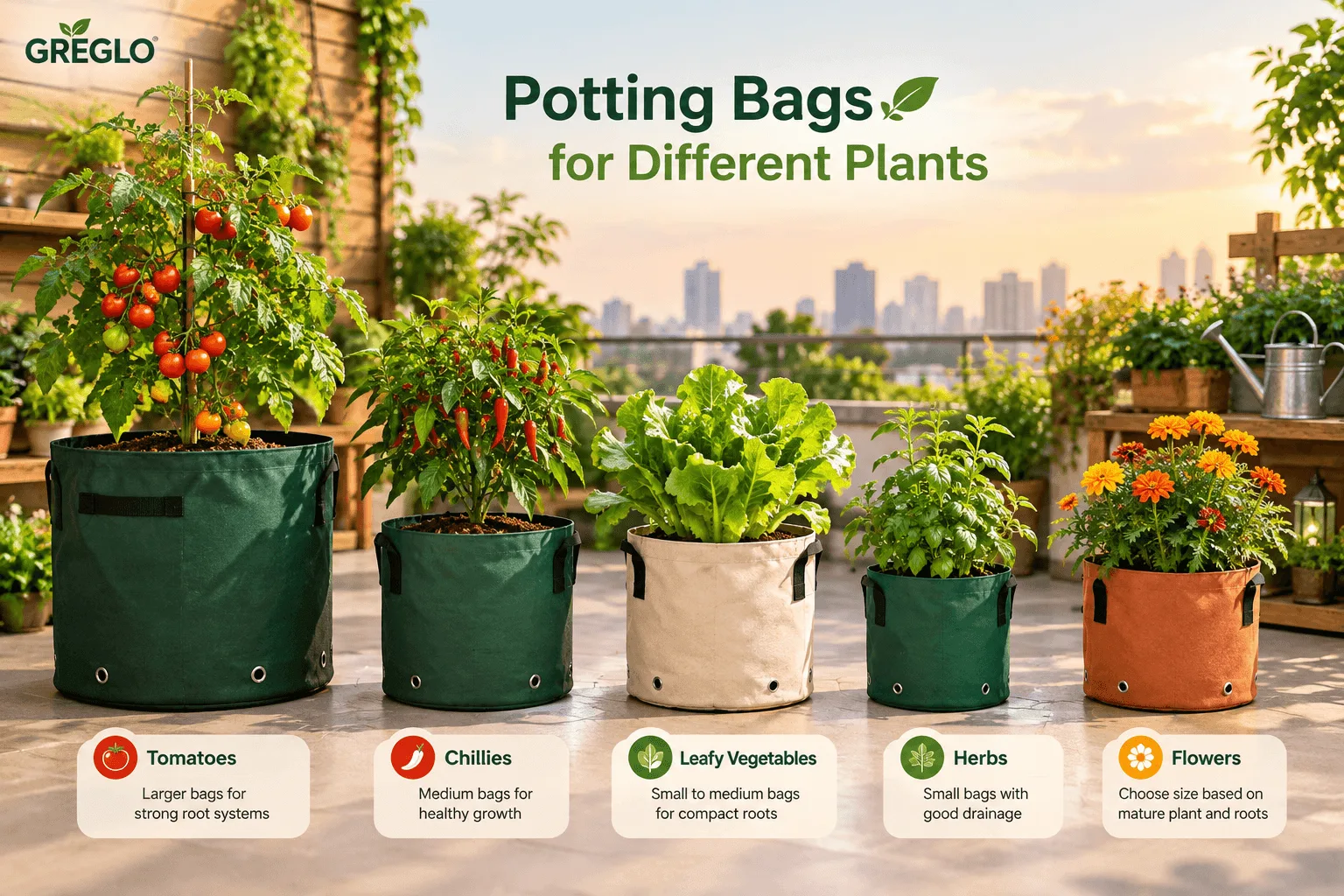
Different crops require different amounts of root space.
🍅 Tomatoes
Tomatoes generally need a larger and stable growing container because they develop substantial root systems and can become heavy as they grow.
🌶️ Chillies
Chilli plants can be grown in medium-sized containers depending on variety, plant size, and growing conditions.
🥬 Leafy Vegetables
Many leafy vegetables can be grown in smaller or medium-sized bags depending on the planting density and crop.
🌿 Herbs
Herbs can often be grown in smaller potting bags for plants, provided the container provides sufficient root space and drainage.
🌸 Flowers
Flowering plants vary significantly in size, so select the bag according to the mature plant and root system.
What Growing Medium Should You Use?
The potting bag is only one part of a successful container-growing setup. The growing medium also needs to provide suitable physical and chemical conditions for the plant.
A growing medium should provide an appropriate balance of:
💧 Moisture retention
🌬️ Air space
⬇️ Drainage
🌱 Root support
🧪 Nutrient availability
Coco coir potting mix can be used as a component of growing media for container plants.
Coco coir can help with moisture management while maintaining a lightweight structure. Depending on the crop, it may be combined with compost and other materials.
Read the related guide: [Coco Coir Potting Mix for Grow Bags: Easy Guide for Healthy Plants] → /blog/coco-coir-potting-mix-for-grow-bags/
Using Coco Coir in Potting Bags
Coco coir is derived from coconut husk and is widely used as a growing-medium component.
A simple growing-medium concept is:
🥥 Coco Coir → 🌿 Growing-Medium Structure → 💧 Moisture Management → 🌬️ Root Aeration → 🌱 Plant Growth
However, coco coir should not automatically be considered a complete nutrient source. Plants still require appropriate nutrient management based on their crop requirements.
When selecting coco coir, consider:
🔬 Particle size
🧪 EC
⚗️ pH
💧 Moisture content
📦 Expansion volume
🧼 Washing and buffering
🔄 Batch consistency
How to Choose the Right Potting Bag
Before buying potting bags for plants, evaluate the following factors.
Size and Capacity
Match the container to the plant's root requirements and mature size.
Material Quality
Choose material appropriate for the intended growing location and usage period.
Drainage Design
Check the number, placement, and design of drainage openings.
Strength
The bag should support the combined weight of the plant, growing medium, and water.
Handles
Handles can make larger bags easier to move when required.
Growing Location
Consider whether the bag will be used on a terrace, balcony, patio, garden, or nursery.
Expected Usage
For repeated use, consider durability and the manufacturer's stated specifications.
Potting Bags vs Traditional Plant Pots
Both options can work for container gardening.
|
Feature |
Potting Bags |
Traditional Pots |
|
Structure |
Flexible |
Rigid |
|
Weight |
Often lightweight |
Depends on material |
|
Storage |
Can be easier to store when empty |
Requires more space |
|
Mobility |
Generally easy to move |
Depends on size and material |
|
Size Options |
Multiple sizes |
Multiple sizes |
|
Growing Medium |
Required |
Required |
|
Drainage |
Depends on bag design |
Depends on pot design |
Neither option is universally suitable for every plant. The choice depends on the crop, space, growing conditions, and gardener's requirements.
Common Mistakes to Avoid
📏 Choosing a Bag That Is Too Small
A small container may not provide enough room for the plant's developing roots.
💦 Overwatering
Container plants should be watered according to crop requirements, growing medium, weather, and drainage.
🌱 Overcrowding
Growing too many plants in one bag can increase competition for water, nutrients, light, and root space.
💧 Ignoring Drainage
Excess water needs a suitable exit path.
🧪 Ignoring Nutrient Management
Plants grown in containers have limited growing volume, so nutrients need to be managed appropriately.
☀️ Ignoring the Growing Location
Sunlight, heat, wind, rainfall, and surface conditions can affect container performance.
How to Use Potting Bags for Plants
Follow this basic setup:
📍 Select Location → 👜 Choose Bag → 🥥 Prepare Medium → 🪣 Fill Bag → 🌱 Plant → 💧 Water → 👀 Monitor
Select the Location
Choose a location with suitable light and enough space for the plant to mature.
Choose the Bag
Select the appropriate size, material, and drainage design.
Prepare the Growing Medium
Prepare a suitable growing medium based on the plant and growing environment.
Fill the Bag
Fill the bag without excessively compacting the medium.
Plant
Place the seedling or plant at the appropriate depth.
Water
Water according to the plant's needs and allow excess water to drain.
Monitor
Regularly check moisture, plant growth, drainage, and nutrient requirements.
Potting Bag Buying Checklist
Before purchasing potting bags for plants, check:
☑️ Plant type
☑️ Bag dimensions
☑️ Growing capacity
☑️ Material
☑️ Thickness/GSM
☑️ Drainage
☑️ Handles
☑️ Outdoor suitability
☑️ Expected service life
☑️ Growing-medium compatibility
☑️ Quantity required
For bulk purchases, also evaluate specifications, MOQ, packaging, consistency, and delivery requirements.
GREGLO Growing Solutions
GREGLO provides cocopeat and coco coir growing-media solutions for different growing applications.
For gardeners using grow bags for plants, choosing the right container and growing medium together can make the growing setup easier to manage.
When selecting coco coir for container growing, consider specifications such as particle size, EC, pH, moisture, expansion volume, washing or buffering, and batch consistency.
Frequently Asked Questions
1. What are potting bags used for?
Potting bags for plants are used as flexible containers for growing vegetables, herbs, flowers, seedlings, and other container plants.
2. Which size potting bag is best?
The appropriate size depends on the plant's root system, mature size, and growing duration. There is no single size suitable for every plant.
3. Can I use cocopeat in potting bags?
Yes. Cocopeat can be incorporated into a growing medium for potting bags. The final formulation should match the crop's moisture, aeration, and nutrient requirements.