
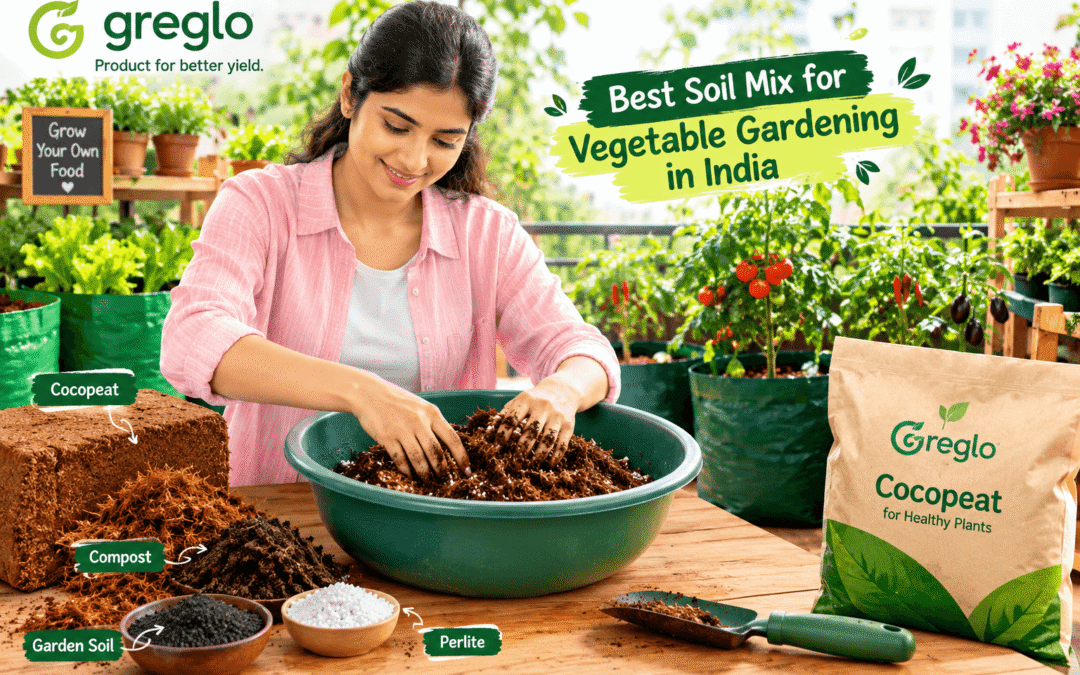
A good growing medium is one of the foundations of successful container gardening. Even with enough sunlight and regular watering, plants may struggle if the medium becomes too compact, drains poorly or does not retain enough moisture.
For vegetable gardening in India, the ideal mix should provide a balance of moisture retention, drainage, aeration and nutrients. This is particularly important for plants grown in pots, grow bags, balconies and terrace gardens.
Instead of relying on ordinary garden soil alone, you can prepare a more suitable soil mix for vegetables in India using a combination of soil, organic matter and materials such as cocopeat.
What Makes a Good Soil Mix for Vegetables?
A good potting mix for vegetables should perform several jobs at the same time.
It should:
-
- Hold enough moisture for healthy growth
- Allow excess water to drain
- Provide air around the roots
- Support healthy root development
- Supply or retain nutrients
- Remain loose rather than becoming heavily compacted
The exact mix can vary depending on your climate, container size, plant requirements and available materials.
What Should a Vegetable Soil Mix Contain?
A practical container mix usually combines three broad components.
1. Base Material
The base provides structure and helps anchor the roots.
Garden soil can be used in some mixes, but heavy or clay-rich soil may become compacted inside containers.
If using garden soil, make sure it is clean, reasonably loose and free from stones, weeds and contaminants.
2. Organic Matter
Organic matter helps improve the physical condition of the growing medium while contributing nutrients as it breaks down.
Common options include:
-
- Well-decomposed compost
- Vermicompost
- Other mature organic amendments
Avoid using fresh manure directly in a container mix because it can be too strong and may create unpleasant conditions for young roots.
3. Cocopeat
Cocopeat is commonly used in container gardening because it can improve moisture retention while helping create a lighter growing medium.
It can be particularly useful for balcony and terrace gardens where maintaining an appropriate moisture balance is important.
However, cocopeat should generally be treated as one component of a growing mix rather than automatically using it as the entire medium.
A Simple Soil Mix for Vegetable Gardening
For home gardeners, a simple starting approach is to combine:
- A suitable base material
- Mature compost or vermicompost
- Cocopeat or another moisture-management component
A commonly used starting ratio is approximately:
40% base material + 30% compost + 30% cocopeat
This is a starting point rather than a universal formula.
The mix may need adjustment depending on the original soil, climate, container size and drainage.
Why Adjust the Ratio?
A mix for a hot, exposed terrace may need different moisture management from one kept in a shaded balcony.
How to Prepare Soil Mix for Grow Bags
Preparing a soil mix for grow bags is relatively simple.
Step 1: Prepare the Materials
Keep your base material, mature compost and cocopeat ready.
Remove stones, roots, plastic pieces and other unwanted material.
Step 2: Hydrate Cocopeat if Required
If you are using compressed cocopeat, expand it according to the product instructions.
Break up compacted material so it mixes evenly with the other components.
Step 3: Mix Thoroughly
Combine the components in a clean area.
Mix until the materials are distributed evenly rather than forming separate layers.
Step 4: Check Moisture and Texture
The finished mix should feel loose and workable.
It should hold some moisture without becoming muddy or remaining saturated after watering.
Step 5: Fill the Container
Fill your pot or grow bag without pressing the medium down excessively.
Leave some space at the top so watering does not immediately wash material out of the container.
How to Check if Your Soil Mix Is Working
You do not need laboratory equipment to perform a basic home check.
After watering, observe:
-
- How quickly water enters the medium
- Whether excess water drains from the bottom
- How long the medium remains noticeably wet
- Whether the surface becomes hard
- Whether roots have enough space to develop
If water sits on the surface for a long time, the mix may be too compact or poorly draining.
If it becomes completely dry very quickly, you may need to reassess the mix and container placement.
Soil Mix for Terrace and Balcony Gardens
Container gardens on terraces and balconies often experience different conditions from plants growing directly in the ground.
1. Terrace Gardens
Terraces can receive strong sunlight, heat and wind.
These conditions can increase moisture loss from containers, particularly smaller pots.
A mix with suitable moisture retention can help, but drainage should still remain a priority.
2. Balcony Gardens
Balconies may receive less direct sunlight and have different airflow patterns.
Containers may therefore remain moist for longer.
Check the medium before watering rather than using the same routine as an exposed terrace garden.
Should You Use Only Garden Soil?
Using only garden soil is not always the best choice for containers.
Heavy soil can become compacted and may restrict drainage and air movement around the roots.
This does not mean garden soil can never be used.
Instead, assess its texture and combine it with appropriate organic matter and moisture-management materials where needed.
The goal is to create a growing medium that remains reasonably loose and drains well.
How Often Should You Refresh the Soil Mix?
-
Heavy Soil: Reduces aeration and drainage.
-
Too Much Compost: Can affect moisture and nutrient balance.
-
Fresh Manure: May damage young roots.
-
Cocopeat Alone: May not provide enough nutrients and structure.
-
Over-Compacting: Reduces airflow around roots.
-
Poor Drainage: Causes excess water to accumulate.
How Weather in India Can Affect Your Soil Mix
India has a wide range of climates, so there is no single perfect mix for every location.
During hot and dry periods, containers may lose moisture quickly.
During the monsoon, rainfall and humidity can keep the medium wet for longer.
In cooler periods, evaporation may slow down.
This is why the same potting mix for vegetables may behave differently depending on where and when you use it.
Simple Soil-Mix Checklistix
Before filling a pot or grow bag, check:
-
- Is the base material reasonably loose?
- Is the compost mature?
- Is the cocopeat properly prepared?
- Does the final mix drain excess water?
- Does it retain enough moisture?
- Are the container drainage holes open?
- Is the mix free from unwanted debris?
- Does the texture remain loose after watering?
If the answer is yes to these points, you have a much stronger starting point for container gardening.
Conclusion
The best soil mix for vegetables in India is not simply the richest or darkest mixture you can make. It should provide a practical balance of structure, drainage, moisture retention and nutrients.
For home gardeners, combining a suitable base material with mature compost and cocopeat can create a useful starting medium for pots and grow bags.
Once the mix is prepared, observe how it behaves under your local weather conditions. Adjusting the mix based on drainage, moisture retention and plant performance is more effective than following one formula blindly.
A well-prepared growing medium gives your container garden a stronger foundation for healthy root growth and consistent plant development.