
What Is Kitchen Gardening?
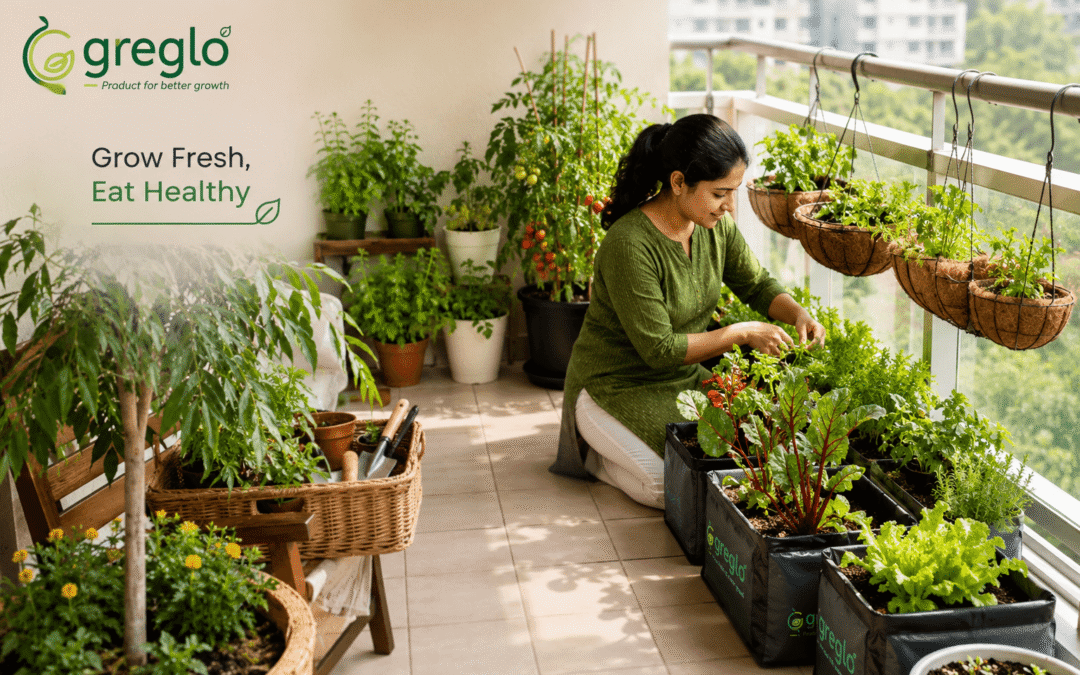
Kitchen gardening is the practice of growing herbs, vegetables and other edible plants at or around your home for regular household use.
You do not need a large backyard to create a kitchen garden. Pots, containers and grow bags can be used on balconies, terraces, verandas and other suitable spaces.
A small garden can provide herbs such as coriander and mint, leafy vegetables such as spinach and vegetables such as chilli and tomato.
The key is to choose plants that match your available space, sunlight, climate and time.
If you are learning how to start a garden, a small kitchen garden can be a practical place to begin.
🌱 Why Start a Kitchen Garden?
Growing food at home can make gardening more useful and enjoyable.
Some common benefits include:
- Easy access to fresh herbs and vegetables
- Better use of balconies and terraces
- An enjoyable gardening activity
- Opportunity to learn how plants grow
- Ability to grow plants in containers
- Flexible options for small spaces
You also have more control over how you care for your plants, including the growing medium, watering and nutrition.
☀️ Choose the Right Space
The first step in creating a kitchen garden is selecting a suitable location.
Observe the area during the day and determine how much direct sunlight it receives.
Possible locations include:
-
- Balcony
- Terrace
- Backyard
- Veranda
- Windowsill
- Outdoor patio
- Small garden area
Most edible plants need suitable light for healthy growth, but individual requirements vary.
For example, leafy greens may have different light requirements from fruiting plants such as tomatoes and chillies.
Before buying plants, understand the conditions of your available space.
🪴 Kitchen Gardening in Small Spaces
Limited space does not mean you cannot grow food.
Gardening at home can be adapted to small areas using containers and vertical growing methods.
For a small balcony, you can use:
-
- Small pots for herbs
- Medium containers for leafy vegetables
- Larger grow bags for vegetables
- Vertical supports for climbing plants
- Hanging containers where appropriate
Avoid filling every available space immediately. Leave enough room to water, inspect and harvest your plants.
Good organization can make a small garden much easier to maintain.
🌿 Best Herbs to Grow at Home
Herbs are a good starting point because many can be grown in containers.
1. Coriander
Coriander is a useful herb for many kitchens and can be grown in suitable containers.
Instead of sowing a large quantity at once, you can make smaller sowings at intervals for a more continuous supply.
2. Mint
Mint is well suited to containers and can grow vigorously under suitable conditions.
Because it can spread quickly, keeping it in its own container is often practical.
3. Basil
Basil can be grown in pots or grow bags and can be useful for cooking.
Provide suitable sunlight, moisture and growing space for healthy growth.
4. Curry Leaves
Curry leaf plants can be useful for households that regularly use curry leaves.
They generally require more space than small herbs as they develop, so choose a suitably sized container.
5. Fenugreek
Fenugreek can be grown for its leaves and can be suitable for a small edible garden when growing conditions are appropriate.
🥕 Best Vegetables for Kitchen Gardening
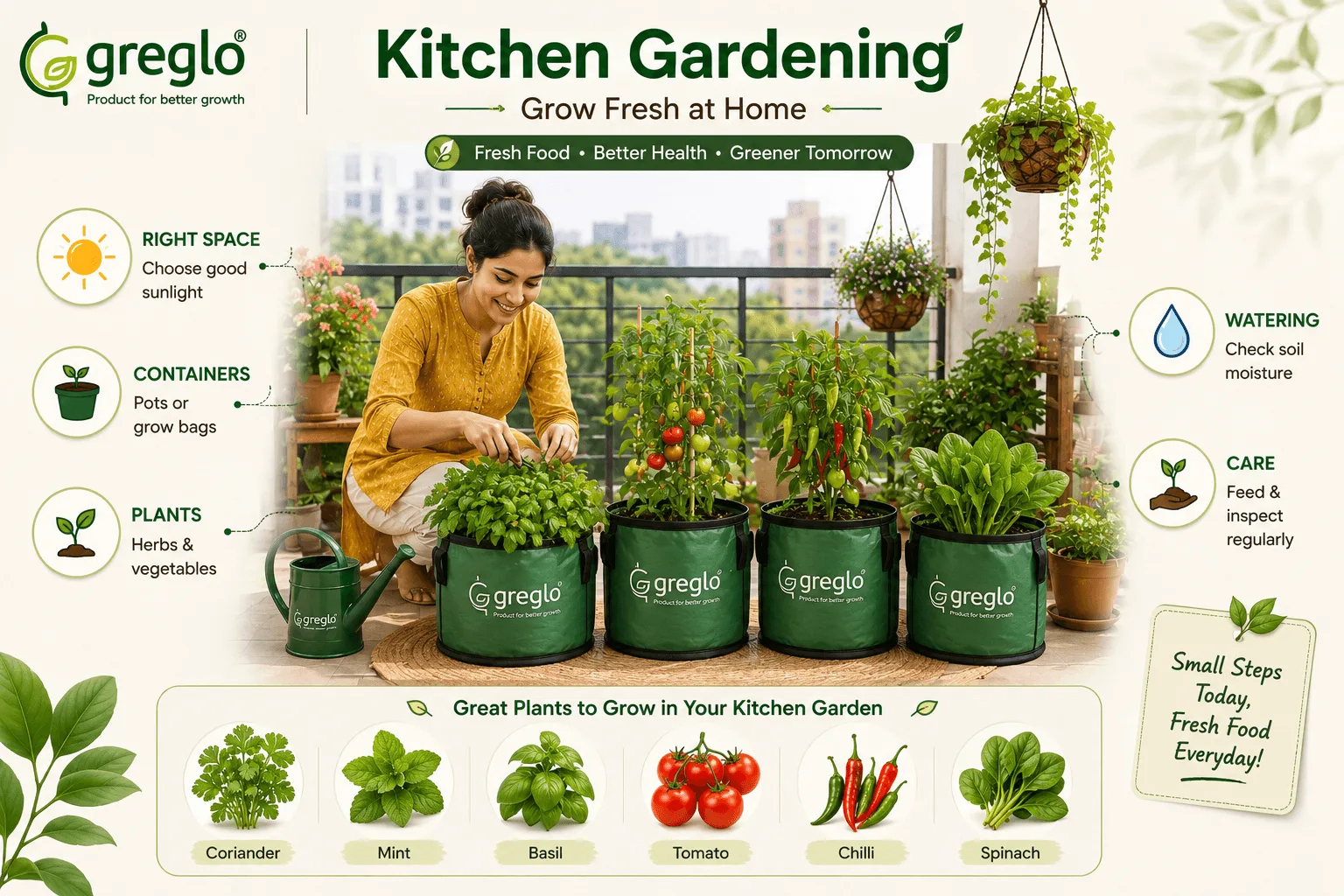
When planning vegetables to grow at home, start with crops that suit your available space and local growing conditions.
Some options include:
-
- Spinach
- Chilli
- Tomato
- Radish
- Beans
- Okra
- Brinjal
- Lettuce
- Cucumber
Not every vegetable is suitable for every location. Check the crop's seasonal and growing requirements before planting.
🥬 Leafy Vegetables
Leafy vegetables can be useful for beginners because they generally do not require the same root space as large plants.
Options include:
-
- Spinach
- Lettuce
- Amaranth
- Fenugreek
Use containers with suitable depth and drainage, and avoid overcrowding the plants.
Harvesting outer leaves where appropriate can allow plants to continue producing new growth.
🍅 Fruiting Vegetables
Fruiting vegetables can make a home vegetable garden more rewarding because you can watch the plants develop flowers and fruits.
Tomatoes
Tomatoes generally need good sunlight, sufficient root space, regular watering and suitable support depending on the variety.
Chillies
Chillies can work well in containers and are useful for households that regularly use them.
Brinjal
Brinjal can be grown in larger containers when provided with enough root space and suitable growing conditions.
Okra
Okra can be considered where sufficient sunlight and growing space are available.
🌱 Root Vegetables
Some root vegetables can be grown successfully in containers.
-
- Radish is one of the more convenient choices for beginners because it can grow in containers with suitable depth.
- Carrots can also be grown, but the container must provide enough depth for the selected variety.
The growing medium should be loose enough to allow roots to develop properly.
🪴 Pots or Grow Bags for Kitchen Gardening?
- Containers are an important part of a small edible garden.
- You can use traditional pots, plastic containers or grow bags depending on the plant and space.
When choosing a container, consider:
-
- Root space
- Container depth
- Drainage
- Growing volume
- Material
- Durability
- Plant size
Grow bags can be useful for vegetables because they are flexible and available in different sizes.
If you want to compare different growing options, our guide on grow bags for gardening can help you understand how different sizes and types can be used.
💧 Watering Your Kitchen Garden
Watering is one of the most important parts of maintaining a kitchen garden.
Avoid following a fixed schedule without checking the plants.
Before watering, check:
-
- Whether the growing medium is dry
- Weather conditions
- Container size
- Plant type
- Drainage
Containers can dry faster during hot weather, while heavy rainfall can increase the risk of excess moisture.
The goal is to provide appropriate moisture without keeping the roots continuously waterlogged.
🌿 Feeding Kitchen Garden Plants
Plants grown in containers have limited access to nutrients compared with plants growing in larger soil areas.
As plants grow, they may require additional nutrition.
Depending on the plant and growing medium, you can use suitable compost, organic matter or fertilizers according to the plant's requirements.
Avoid applying excessive fertilizer. More fertilizer does not automatically mean faster or healthier growth.
🐛 Watch for Pests and Plant Problems
Regular observation is one of the simplest garden tips for a kitchen garden.
Check your plants for:
-
- Holes in leaves
- Discoloured leaves
- Curling leaves
- Wilting
- Insects
- Fungal growth
- Slow or unusual growth
Poor watering, insufficient light, nutrient problems and pests can sometimes create similar symptoms.
Early observation makes it easier to respond before the problem becomes more serious.
🪴 Kitchen Gardening on a Balcony
A balcony can become a productive growing area when plants and containers are selected carefully.
Before setting up your kitchen garden, check:
-
- Available sunlight
- Wind exposure
- Safe container placement
- Drainage
- Water access
- Available floor space
Use smaller containers for herbs and leafy greens and larger containers for plants that require more root space.
Vertical supports can also help you grow climbing plants without using too much floor area.
🌤️ Kitchen Gardening on a Terrace
- A terrace can provide more room for a larger home vegetable garden, but planning is still important.
- Arrange containers according to plant size and sunlight requirements.
- Before placing many grow bags or containers on a terrace, consider drainage, water availability and safe placement.
- Keep enough space between containers so you can comfortably water, inspect and harvest the plants.
- Start with a manageable number of containers and expand gradually.
🌦️ Choose Plants According to the Season
One of the most important lessons in vegetable gardening is understanding that plants have different seasonal requirements.
Temperature, rainfall, humidity and sunlight can influence plant growth.
Instead of choosing plants only because they are popular, consider whether they are suitable for your current growing season.
A simple seasonal planting plan can reduce failures and make maintenance easier.
🚫 Common Kitchen Gardening Mistakes
Beginners can avoid many problems by planning before planting.
1. Growing Too Many Plants
Start with a small selection instead of trying to grow everything at once.
2. Ignoring Sunlight
A plant placed in an unsuitable location may struggle even with good watering and nutrition.
3. Overwatering
More water does not always mean healthier plants.
4. Using Small Containers
Large plants need adequate root space.
5. Poor Drainage
Excess water can create unhealthy root conditions.
6. Overcrowding
Plants need enough space for leaves, roots and airflow.
7. Choosing Unsuitable Crops
Always consider local climate and seasonal conditions.
8. Ignoring Plant Problems
Check plants regularly instead of waiting until damage becomes obvious.
🌿 Simple Kitchen Gardening Tips for Beginners
Follow these simple garden tips to make your edible garden easier to manage:
- Start with three to five plants.
- Choose plants you regularly use.
- Match plants to available sunlight.
- Use suitable container sizes.
- Make sure containers drain properly.
- Check growing medium moisture before watering.
- Give plants enough space.
- Observe plants regularly.
- Feed plants according to their requirements.
- Harvest at the appropriate stage.
- Expand your garden gradually.
🌱Conclusion
Kitchen gardening does not have to be complicated or require a large amount of space. Start with a few herbs and vegetables that suit your climate, available sunlight and daily needs.
Use suitable containers, prepare a healthy growing medium, water according to plant requirements and check your plants regularly. Whether you are creating a balcony garden, terrace garden or small home vegetable garden, starting small makes it easier to learn.
As you gain experience, you can gradually grow more gardening vegetables, experiment with different plants and turn your kitchen garden into a productive part of your home.