
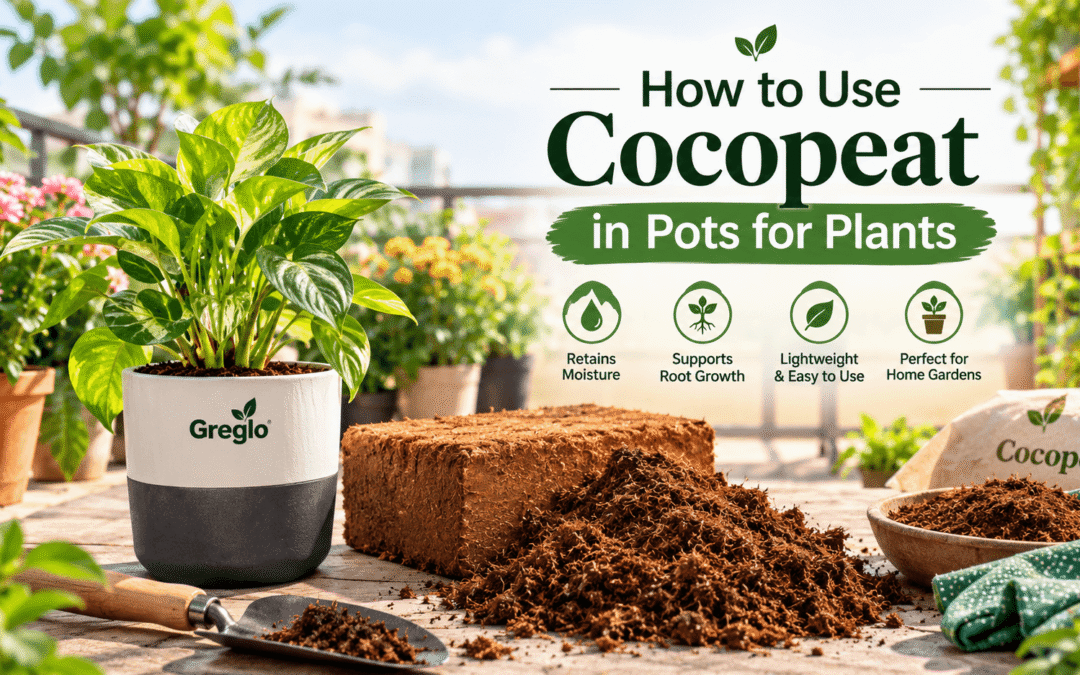
Growing plants in pots is a popular way to create a green space at home, whether you have a balcony, terrace, or small indoor garden. However, choosing the right growing medium is essential for healthy root development and plant growth. Cocopeat for plants is a useful option because it retains moisture, improves growing-medium structure, and keeps potting mixes lightweight.
Made from coconut husk, cocopeat is available in compressed blocks and small bricks that expand when water is added. It can be used for ornamental plants, flowering plants, herbs, and vegetables when combined with suitable materials such as compost and soil.
What Is Cocopeat and Why Is It Used in Pots?
Cocopeat, also known as coco coir pith, is a growing material obtained from coconut husk. It is commonly used in container gardening because of its moisture-holding capacity and lightweight texture.
When prepared correctly, cocopeat for plants can help:
- Retain moisture: Holds water that plant roots can absorb as needed.
- Improve growing-medium structure: Creates a loose, lightweight mix when combined with suitable materials.
- Support root development: Provides space for roots to grow through the growing medium.
- Reduce potting-mix weight: Useful for balcony and terrace gardens where heavy containers can be difficult to move.
- Support seed starting: Can be included in suitable seed-starting mixes.
However, cocopeat does not provide all the nutrients plants need. For most potted plants, it should be combined with compost, fertiliser, or other suitable potting materials.
How to Prepare Cocopeat for Pots
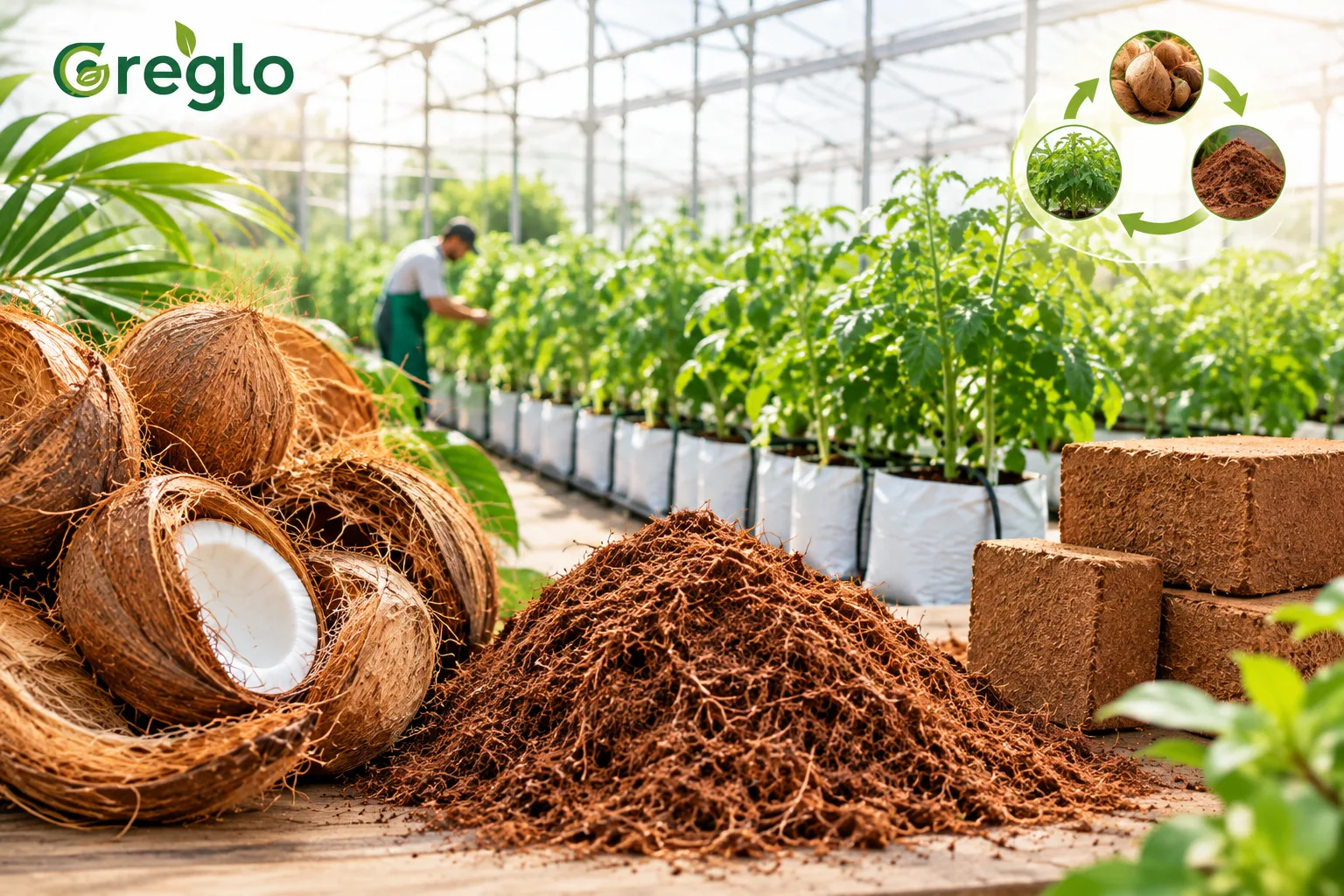
Before adding cocopeat to your pots, prepare it properly, especially if you are using a compressed block or brick.
Step 1: Choose the Right Cocopeat
Select a cocopeat product suitable for gardening. Greglo offers compressed cocopeat formats, including cocopeat5kg blocks and 650g bricks, which are convenient for different garden sizes.
For a few household pots, a smaller brick may be sufficient. Larger gardens may benefit from a bigger block.
Step 2: Add Water to the Compressed Cocopeat
Place the block or brick in a suitable container and gradually add water according to the product instructions. Allow the cocopeat to absorb the water and expand.
Step 3: Break Apart the Cocopeat
Once the material has expanded, gently break apart any compacted pieces by hand. Remove any unwanted debris and check that the material has a loose, even texture.
Step 4: Drain Excess Water
The prepared cocopeat should be moist but not waterlogged. Allow excess water to drain before mixing it with other materials.
Best Cocopeat Mix for Plants in Pots
Using cocopeat alone is not always the best choice for long-term plant growth because it contains limited nutrients. A balanced potting mix should provide moisture retention, drainage, aeration, and nutrients.
Here is a practical starting point for many common potted plants:
|
Ingredient |
Suggested Proportion |
Purpose |
|
Cocopeat |
40% |
Helps retain moisture and keeps the mix lightweight |
|
Garden soil or suitable potting base |
30% |
Adds structure and helps anchor plants |
|
Mature compost or vermicompost |
30% |
Supplies organic matter and nutrients |
These proportions are a general starting point, not a universal formula. Adjust the mix according to the plant's needs, the existing soil or potting base, and the drainage of your container.
Plants such as succulents and cacti generally need a more freely draining mix.
How to Use Cocopeat in Pots: Step-by-Step Guide
After preparing your cocopeat and potting mix, follow these steps to plant successfully.
1. Select a Pot With Drainage Holes
Choose a pot that suits the plant's mature size. Make sure it has drainage holes so excess water can escape. Cocopeat retains moisture, so drainage is important to prevent the roots from staying too wet.
2. Prepare the Potting Mix
Combine the prepared cocopeat with the selected potting base and mature compost. Mix thoroughly to distribute the ingredients evenly.
3. Fill the Pot
Add the mix to the pot without pressing it down too firmly. A loose growing medium allows water to move through it and gives roots room to grow.
4. Plant Your Seedling
Position the plant at the appropriate depth and gently fill around its roots with the potting mix. Avoid burying the stem deeper than recommended for that plant.
5. Water After Planting
Water slowly until the mix is evenly moist and excess water drains from the bottom. Check the moisture level before watering again rather than following a rigid daily schedule.
6. Monitor Plant Growth
Observe the leaves, stems, and growing medium over the following weeks. Add suitable nutrients when needed, because cocopeat alone does not provide a complete supply of plant nutrition.
Which Plants Can Grow in Cocopeat?
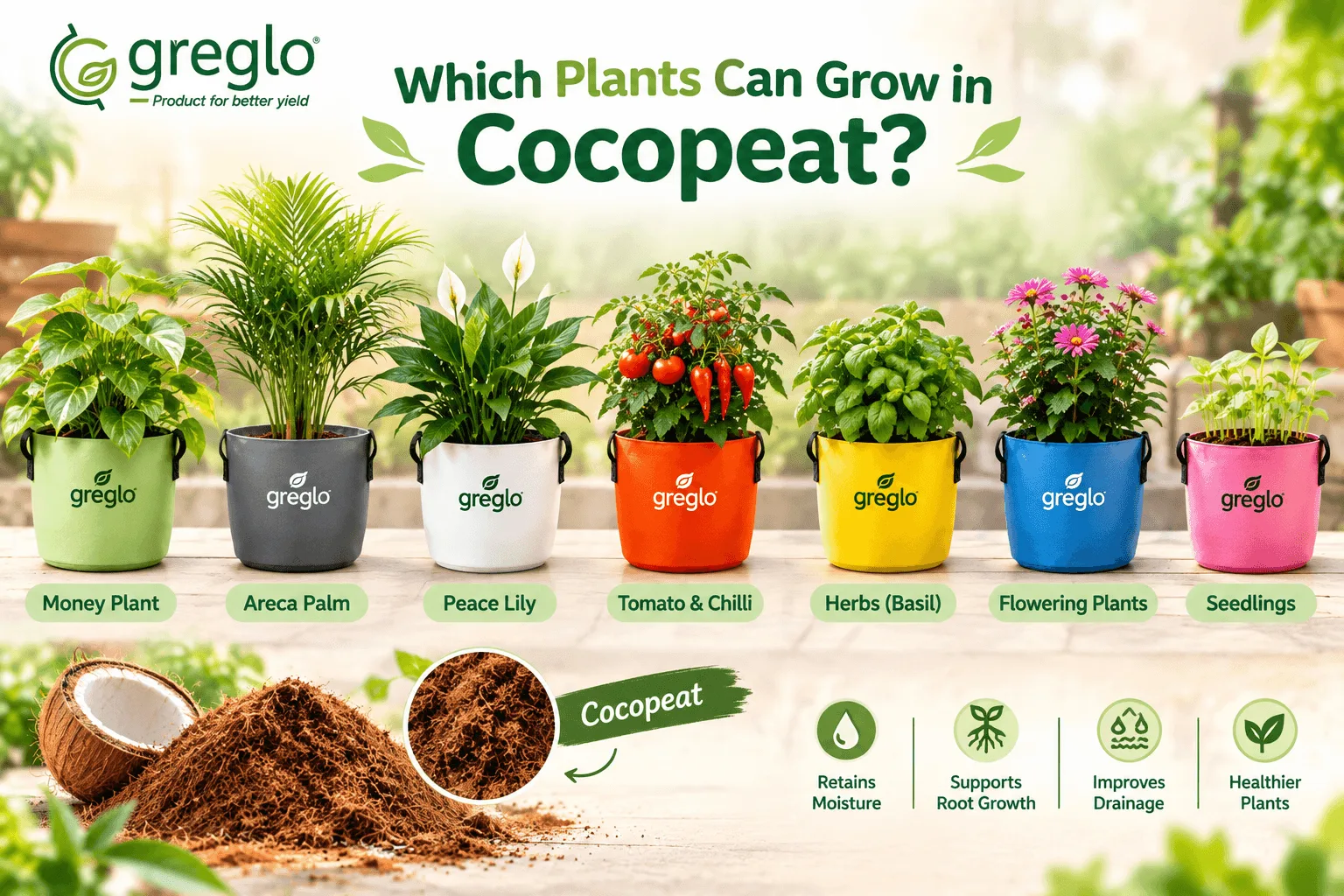
Many plants can grow in potting mixes containing cocopeat, provided the mix is adapted to their requirements.
| Plant Type | How Cocopeat Can Be Used |
| Money plant | Mix with suitable potting material and compost |
| Areca palm | Use in a moisture-retentive but well-draining potting mix |
| Peace lily | Combine with materials that retain moisture while allowing drainage |
| Tomato and chilli | Mix with a suitable potting base and compost |
| Herbs such as basil | Use in a nutrient-containing mix with good drainage |
| Flowering plants | Combine with suitable potting material and provide appropriate nutrients |
| Seedlings | Use as one component of a suitable seed-starting mix |
Always consider the individual plant's sunlight, watering, nutrient, and drainage requirements.
Common Mistakes to Avoid When Using Cocopeat
Avoid these mistakes when using cocopeat for plants in containers.
Using only cocopeat: It may not supply sufficient nutrients for long-term growth.
Overwatering: Check the moisture in the mix before watering again.
Ignoring drainage: Use pots with drainage holes and avoid leaving them in standing water.
Compressing the mix too tightly: Fill pots loosely to maintain a suitable growing structure.
Skipping nutrients: Provide compost or suitable fertiliser according to the plant's needs.
Using the same mix for every plant: Adjust the ingredients for moisture-sensitive plants and those that need excellent drainage.
Cocopeat Blocks vs Bricks: Which Should You Choose?
Cocopeat blocks and bricks serve a similar purpose, but the best format depends on how much growing medium you need.
| Feature | Cocopeat 650g Brick | Cocopeat 5kg Block |
| Best suited for | A few pots and small gardening projects | Multiple pots and larger gardens |
| Storage | Compact and easy to store | Convenient for bulk preparation |
| Preparation | Add water and allow it to expand | Add water according to product instructions |
| Typical use | Small home gardens and seed starting | Larger container gardens and repeated potting tasks |
- Choose a size based on the number of pots you maintain and how frequently you prepare potting mix.
- or suitable fertiliser according to the plant's needs.
- Using the same mix for every plant: Adjust the ingredients for moisture-sensitive plants and those that need excellent drainage.
Grow Healthier Potted Plants With Greglo Cocopeat
Choosing the right growing medium is an important step towards a healthy home garden. Greglo cocopeat blocks and bricks offer convenient options for preparing potting mixes for balcony plants, terrace gardens, flowering plants, and vegetables.
Prepare the cocopeat properly, combine it with suitable potting materials, ensure good drainage, and provide the nutrients your plants need.
Explore Greglo's cocopeat uses for plants and products to find a suitable format for your home gardening requirements.
Frequently Asked Questions
1. Is cocopeat good for plants in pots?
Yes. Cocopeat can be useful in pots because it retains moisture and creates a lightweight growing medium. For most plants, combine it with suitable potting materials and nutrients rather than relying on cocopeat alone.
2. Can I grow plants in 100% cocopeat?
Some plants can be grown in pure cocopeat under managed growing conditions, with appropriate nutrient and water management. For everyday home gardening, a suitable mix containing cocopeat, a potting base, and compost is often more practical.
3. How often should I water plants growing in cocopeat?
There is no single watering schedule for every plant. Check the moisture in the growing medium and consider the plant species, pot size, weather, and drainage before watering.
4. Does cocopeat contain nutrients?
Cocopeat is valued mainly for its physical properties, including moisture retention and growing-medium structure. It does not provide a complete nutrient supply, so plants generally need suitable fertilisation or nutrient-rich ingredients.
5. Can I reuse cocopeat from old pots?
It may be possible to reuse cocopeat if it is still in suitable condition and is free from serious pest or disease problems. Remove old roots and debris, assess its structure, and replenish nutrients as needed.