
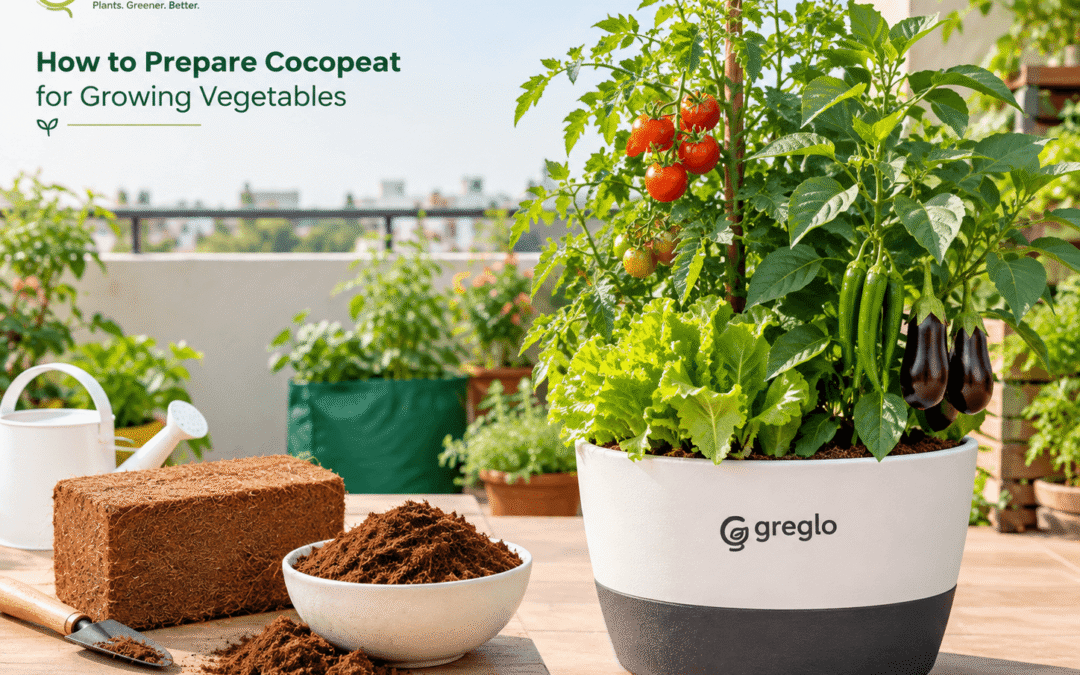
Growing vegetables at home becomes easier when you choose a suitable growing medium. Cocopeat for vegetable gardening is useful because it retains moisture, creates a lightweight growing medium, and can be mixed with compost and other materials to support healthy plant growth.
Whether you grow tomatoes, chillies, spinach, coriander, or beans in pots and grow bags, preparing cocopeat correctly helps create a better environment for vegetable roots.
Why Use Cocopeat for Growing Vegetables?
Cocopeat is made from processed coconut husk fibre. It is commonly available in compressed blocks and bricks that expand when water is added.
Here are some benefits of using cocopeat in a vegetable garden:
- Moisture retention: Helps keep the growing medium moist between watering sessions.
- Lightweight texture: Useful for pots, balcony gardens, and terrace gardens.
- Root development: Its loose texture can help create space for roots when combined with suitable materials.
- Easy preparation: Compressed cocopeat can be hydrated and mixed with compost before planting.
- Versatile use: Suitable for many container-grown vegetables when prepared as part of a balanced growing medium.
Cocopeat alone does not supply all the nutrients vegetables need. Mix it with mature compost and a suitable potting base, and provide additional nutrients when required by the crop.
How to Prepare Cocopeat for Vegetable Gardening
Step 1: Choose the Right Cocopeat
Choose a cocopeat block or brick according to the amount of growing medium you need. A smaller brick can be convenient for a few pots, while a larger block may be more suitable for multiple grow bags or a terrace vegetable garden.
For vegetables, choose a product suitable for horticultural use. Where available, check product information for pH, electrical conductivity (EC), and washing or buffering details.
Step 2: Hydrate the Cocopeat
Place the compressed block or brick in a large container. Add water gradually and allow the material to expand.
Break apart the softened cocopeat with your hands or a suitable gardening tool until it becomes loose and fluffy. Follow the product's instructions for the amount of water and hydration time.
Drain excess water before using it. The material should be evenly moist, not dripping wet.
Step 3: Prepare a Cocopeat Potting Mix
For many general-purpose vegetable containers, use this as a starting ratio:
|
Ingredient |
Proportion |
Purpose |
|
Hydrated cocopeat |
40% |
Helps retain moisture |
|
Suitable potting base or garden soil |
30% |
Adds structure and anchorage |
|
Mature compost or vermicompost |
30% |
Adds organic matter and nutrients |
Measure the ingredients by volume. Adjust the formula to suit your vegetables, local weather, container size, and drainage. Heavy garden soil may need a lighter alternative, while some crops benefit from a more aerated mix.
Step 4: Mix the Ingredients Thoroughly
Combine the hydrated cocopeat, potting base, and mature compost until the ingredients are evenly distributed.
Check that the mixture is loose and crumbly rather than compacted or muddy. If it holds too much water, adjust the structure with a suitable aeration material.
Step 5: Fill Pots or Grow Bags
Fill containers with the prepared mix, leaving a little room at the top for watering. Use pots or grow bags with appropriate drainage.
Choose the container size based on the vegetable's mature size and root system. Leafy greens can often grow in shallower containers than larger fruiting vegetables such as tomatoes.
Which Vegetables Can You Grow in Cocopeat Mix?
1. Leafy Vegetables
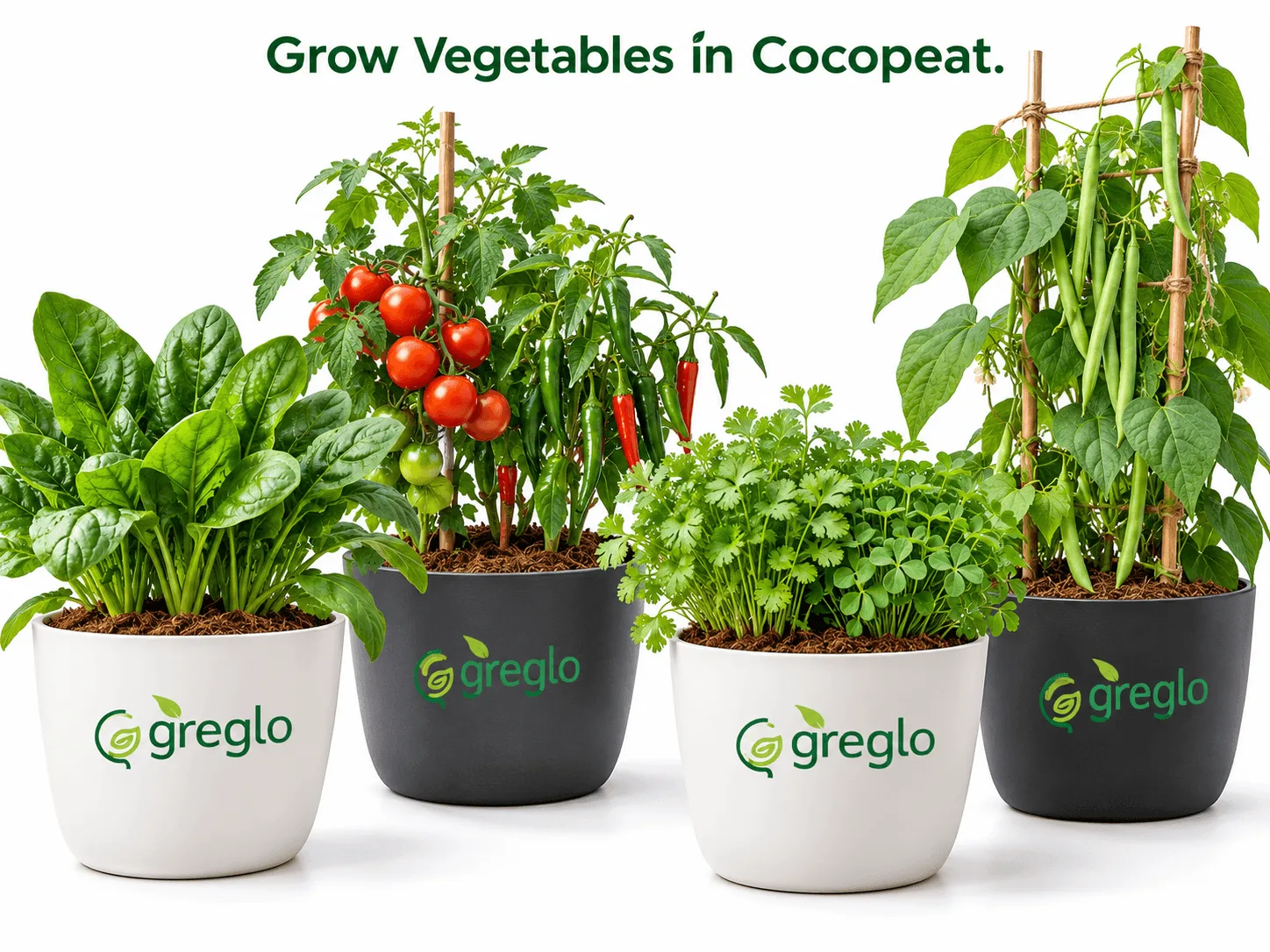
Spinach, amaranth, and other leafy greens can grow in a suitable cocopeat-based mix. Use a container with adequate depth and provide enough light and nutrients for continued leaf production.
2. Tomatoes and Chillies
Tomatoes and chillies need containers that accommodate their root systems. Use a nutrient-supporting mix, provide adequate sunlight, and maintain consistent moisture without waterlogging.
3. Coriander and Fenugreek
Coriander and fenugreek can be grown in pots, trays, or grow bags. Sow the seeds at the recommended depth and keep the growing medium evenly moist during germination.
4. Beans
Many bean varieties can grow in containers when supplied with sufficient root space, sunlight, and support where needed. Choose a mix that drains well while providing enough moisture.
Tips for Watering Vegetables Grown in Cocopeat
Cocopeat retains water, but watering needs vary with the crop, weather, container, and stage of growth.
- Check the moisture level before watering.
- Water gently so seeds and young seedlings are not disturbed.
- Ensure excess water can drain from the container.
- Check pots more frequently during hot weather.
- Avoid keeping the mix constantly saturated.
- Adjust watering as plants mature and develop larger root systems.
Plants in small pots or exposed terrace gardens may dry faster than those in larger containers or shaded locations.
Common Mistakes to Avoid
- Growing vegetables in plain cocopeat alone: Most vegetables need additional nutrients and a suitable growing-medium structure.
- Using cocopeat before hydrating it properly: Break up compressed pieces for a more even texture.
- Adding too much water: Excess moisture can reduce air around roots.
- Ignoring compost quality: Use mature compost suitable for gardening.
- Choosing undersized grow bags: Large fruiting vegetables generally need more root space than small leafy crops.
- Using the same mix for every vegetable: Adjust the growing medium to suit the crop and growing conditions.
Cocopeat Blocks vs Bricks for Vegetable Gardening
| Feature | Cocopeat blocks | Cocopeat bricks |
| Typical use | Larger gardens and multiple containers | A few pots or small gardens |
| Storage | Compact before hydration | Compact and easy to store |
| Preparation | Hydrate and loosen | Hydrate and loosen |
| Best choice | Depends on the volume required | Depends on the volume required |
Check the net weight and stated expansion yield before purchasing, because block and brick sizes can vary by product.
Start Your Vegetable Garden with Greglo Cocopeat
Planning to grow vegetables in pots, balcony planters, or terrace grow bags? Explore Greglo cocopeat blocks and bricks to prepare a suitable growing medium for your home garden.
Hydrate the cocopeat, combine it with mature compost and an appropriate potting base, and choose containers that provide enough space and drainage for your vegetables.
Frequently Asked Questions
1. Is cocopeat good for growing vegetables?
Yes. Cocopeat can be a useful component of a vegetable-growing medium because it retains moisture and keeps the mix lightweight. Combine it with compost and a suitable potting base, and manage nutrients according to the crop.
2. Can I grow vegetables in 100% cocopeat?
Some growers use cocopeat as a standalone medium with carefully managed nutrient solutions. For typical home gardening, however, plain cocopeat does not provide a complete supply of nutrients, so a suitable potting mix and nutrient plan are important.
3. How much cocopeat should I use in a vegetable pot?
The amount depends on the container size and the mix you choose. A starting formula is 40% hydrated cocopeat, 30% suitable potting base, and 30% mature compost by volume. Adjust it according to the vegetable and drainage needs.
4. Can I use cocopeat for vegetable seeds?
Yes. Cocopeat can be used in seed-starting mixes because it retains moisture. Use a fine, suitable medium, avoid waterlogging, and provide appropriate light and nutrients as seedlings develop.