
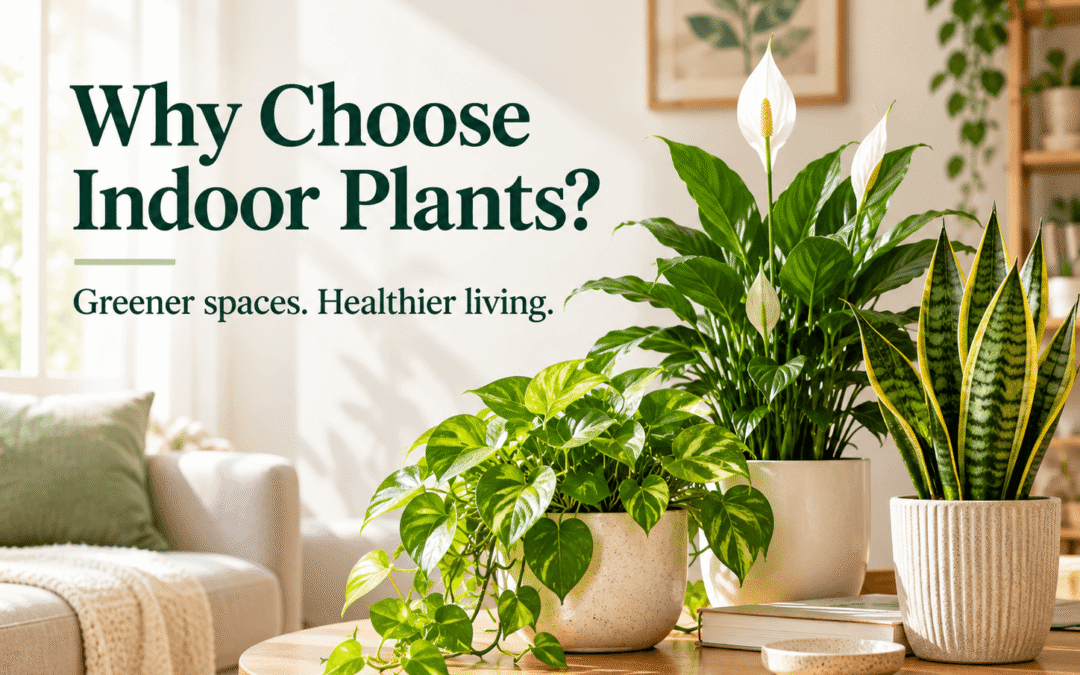
Indoor plants bring natural beauty into homes and make living spaces feel fresher and more inviting. From money plants and snake plants to peace lilies and areca palms, there are many houseplants that can grow well indoors when their light, watering, and soil requirements are met.
Growing indoor plants in India requires a little attention to local conditions. Hot summers, monsoon humidity, air conditioning, and differences in natural light can all affect plant growth. Choosing suitable plants and providing the right growing medium can help beginners maintain a healthy indoor garden.
This guide explains how to choose indoor plants, select suitable pots, prepare potting mix, and care for houseplants throughout the year.
Why Choose Indoor Plants?
Indoor plants can add colour, texture, and greenery to bedrooms, living rooms, workspaces, and balconies. They also provide an enjoyable way to connect with nature in apartments and homes with limited outdoor space.
Some common benefits of growing indoor plants include:
- Improve home décor: Plants add natural colour and visual interest to indoor spaces.
- Make small spaces greener: Compact plants can fit on shelves, tables, and window ledges.
- Support a relaxing environment: Caring for plants can be a rewarding hobby.
- Offer flexible gardening options: Many houseplants grow well in containers.
- Create opportunities to learn gardening: Beginners can start with easy-care varieties and expand their collection over time.
Plants do not all improve indoor air quality to a meaningful degree under normal home conditions, so choose them primarily for their appearance, growing suitability, and enjoyment.
Popular Indoor Plants in India
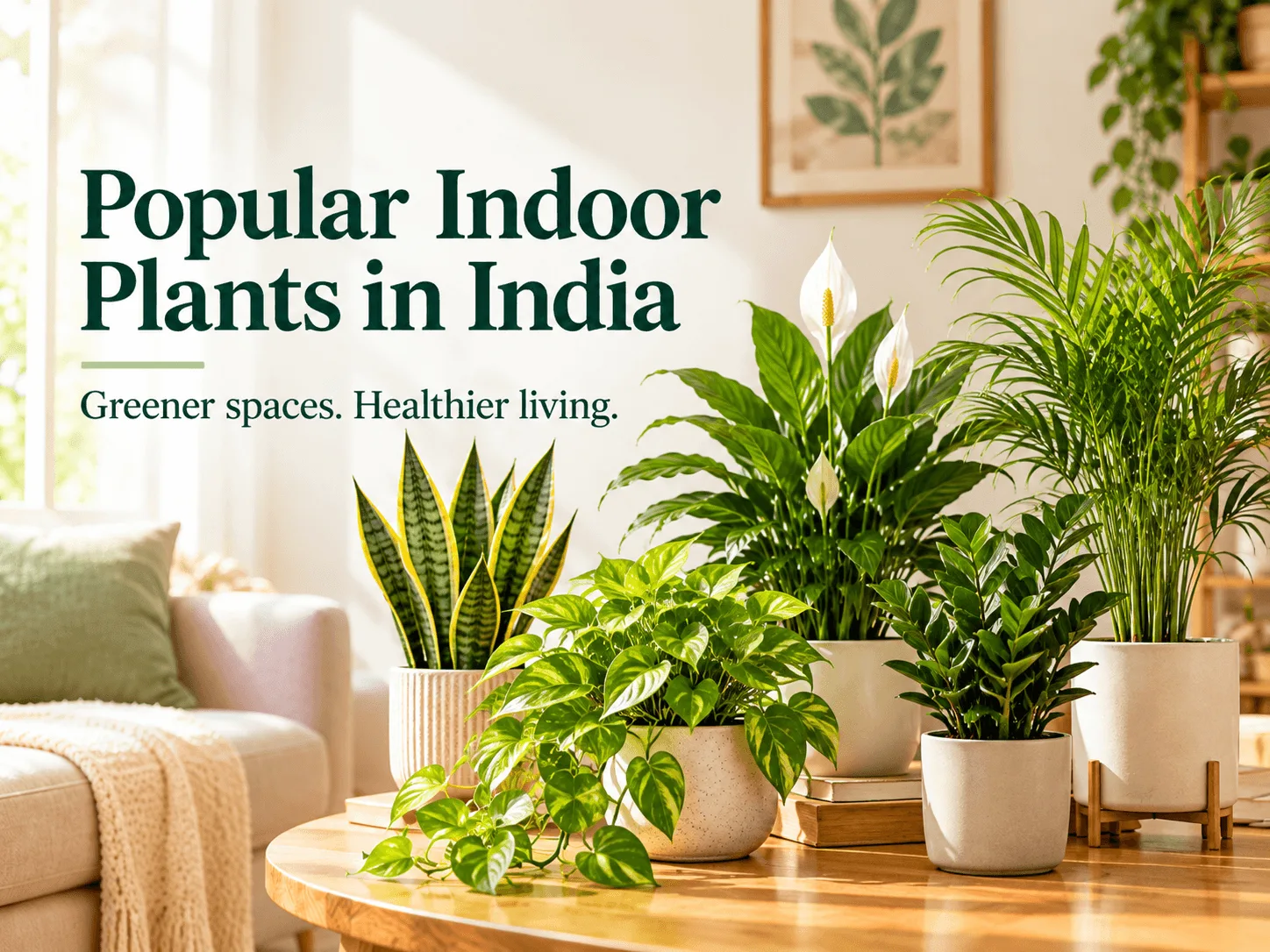
Choosing suitable varieties is one of the first steps to building an indoor garden. Consider the natural light available in your home, the amount of space you have, and how much time you can spend on plant care.
Here are some popular indoor plants for Indian homes.
1. Snake Plant
Snake plants have upright, sword-shaped leaves and are suitable for many indoor settings.
They tolerate lower light better than plants that require direct sunlight, although they generally grow better in bright, indirect light. Allow the potting mix to dry considerably between waterings.
2. Money Plant
Money plants, commonly grown as pothos, are popular for their trailing vines and attractive green or variegated leaves.
They can grow in hanging planters, pots, and on shelves. Bright, indirect light generally supports better growth, but they can tolerate moderate lower-light conditions.
3. Peace Lily
Peace lilies have broad green leaves and distinctive white flower-like spathes. They prefer bright, indirect light and evenly moist—but not waterlogged—potting mix.
They may droop when thirsty, although it is better to water before severe wilting occurs.
4. Areca Palm
Areca palms bring a tropical appearance to living rooms and other spacious areas.
They prefer bright, indirect light, regular watering when the upper layer of the mix begins to dry, and good drainage. Avoid leaving the roots standing in water.
5. ZZ Plant
ZZ plants have glossy, sturdy leaves and can tolerate lower light and occasional missed watering.
Their rhizomes store water, so frequent watering is unnecessary. Allow the potting mix to dry well before watering again.
Best Indoor Plants for Every Space
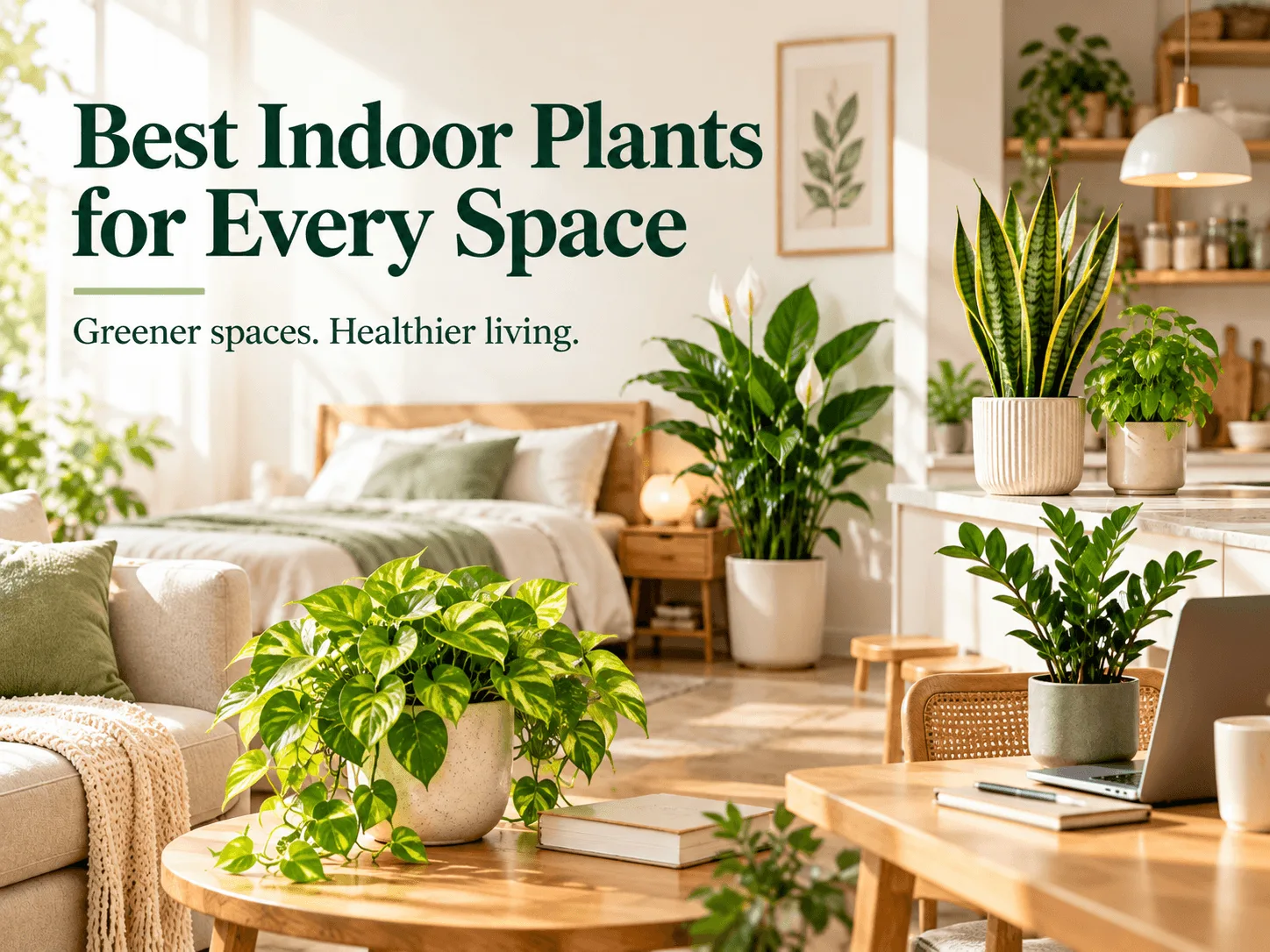
Different rooms offer different amounts of light, ventilation, and available space. Match the plant to the room rather than choosing one based only on its appearance.
1. Indoor Plants for Living Rooms
Living rooms often provide space for medium or large plants. Consider areca palms, snake plants, money plants, or ZZ plants, depending on the available light.
Place plants near a bright window where they receive suitable indirect light. Keep larger pots away from narrow walkways and air-conditioning vents that produce strong, direct airflow.
2. Indoor Plants for Bedrooms
Compact snake plants, money plants, and selected peace lilies can work well in bedrooms with appropriate light and ventilation. Choose plants that fit the room without blocking windows or creating clutter.
Remember that all plants need suitable light, even if they are marketed as bedroom plants.
3. Indoor Plants for Kitchens
Money plants and some compact herbs can be suitable for kitchens with enough natural light. Keep pots away from cooking heat, grease, and strong temperature changes. Herbs such as mint and basil generally need brighter light than many foliage houseplants.
4. Indoor Plants for Workspaces
Small ZZ plants, snake plants, and money plants can suit desks and home-office shelves. If a workspace receives very little daylight, consider moving plants periodically to a brighter location or using a suitable grow light.
How to Choose the Right Plant Pots
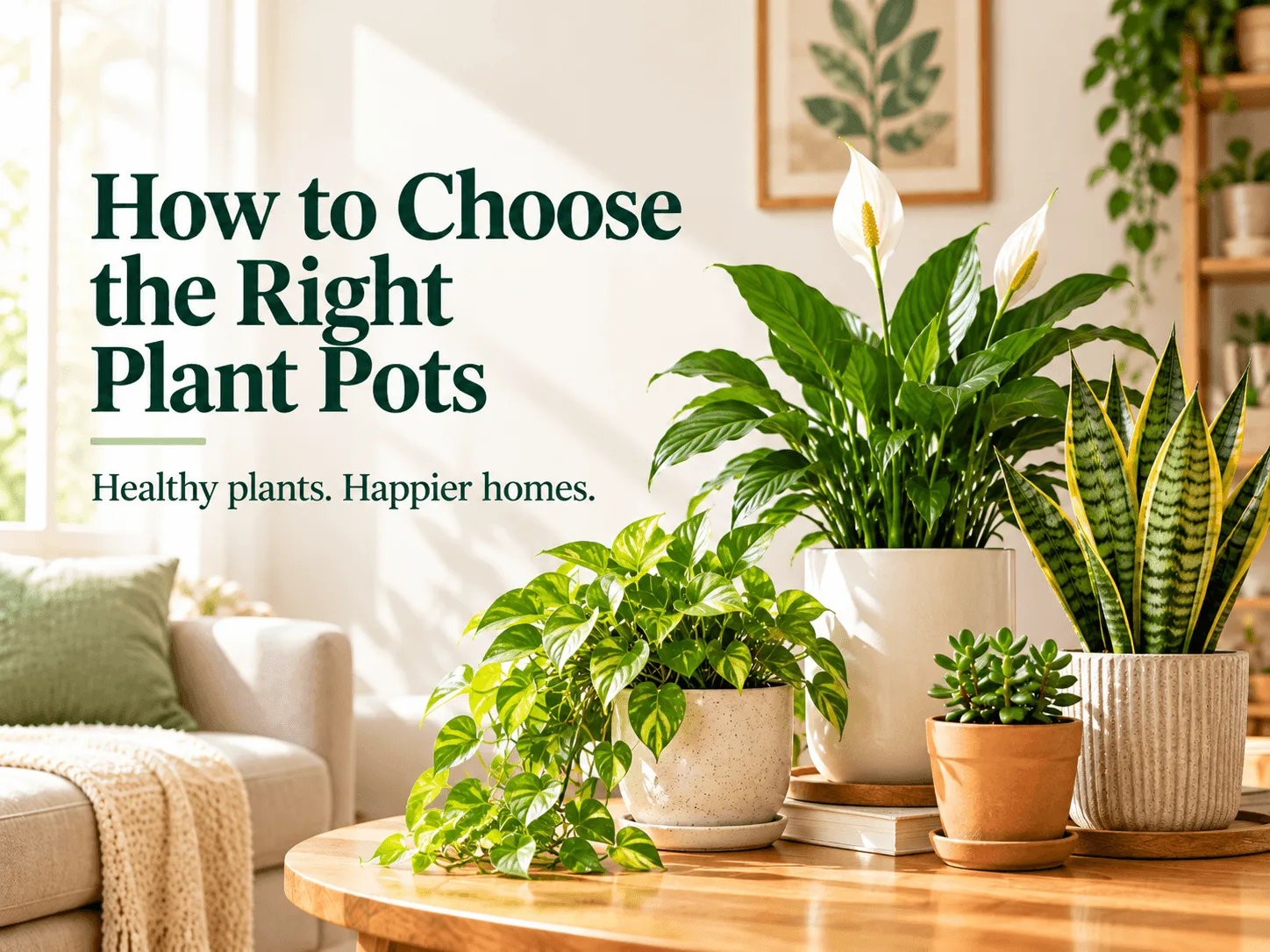
The right pot supports healthy root development and helps manage moisture. A decorative container may look attractive, but drainage and pot size are more important for plant health.
Consider these factors when selecting indoor plant pots.
- Choose the right size: Select a pot that comfortably accommodates the root ball. An excessively large pot can hold moisture for too long.
- Check drainage: Prefer pots with drainage holes so excess water can escape.
- Select a suitable material: Terracotta dries faster, while plastic and glazed ceramic containers tend to retain moisture longer.
- Consider the plant's growth: Larger plants may require heavier, stable containers.
- Use decorative covers carefully: If a nursery pot sits inside a decorative pot, remove it for watering when necessary and empty any collected water.
Choose indoor flower pots that fit your room while providing enough space and drainage for healthy roots.
Soil Mix and Growing Medium for Indoor Plants
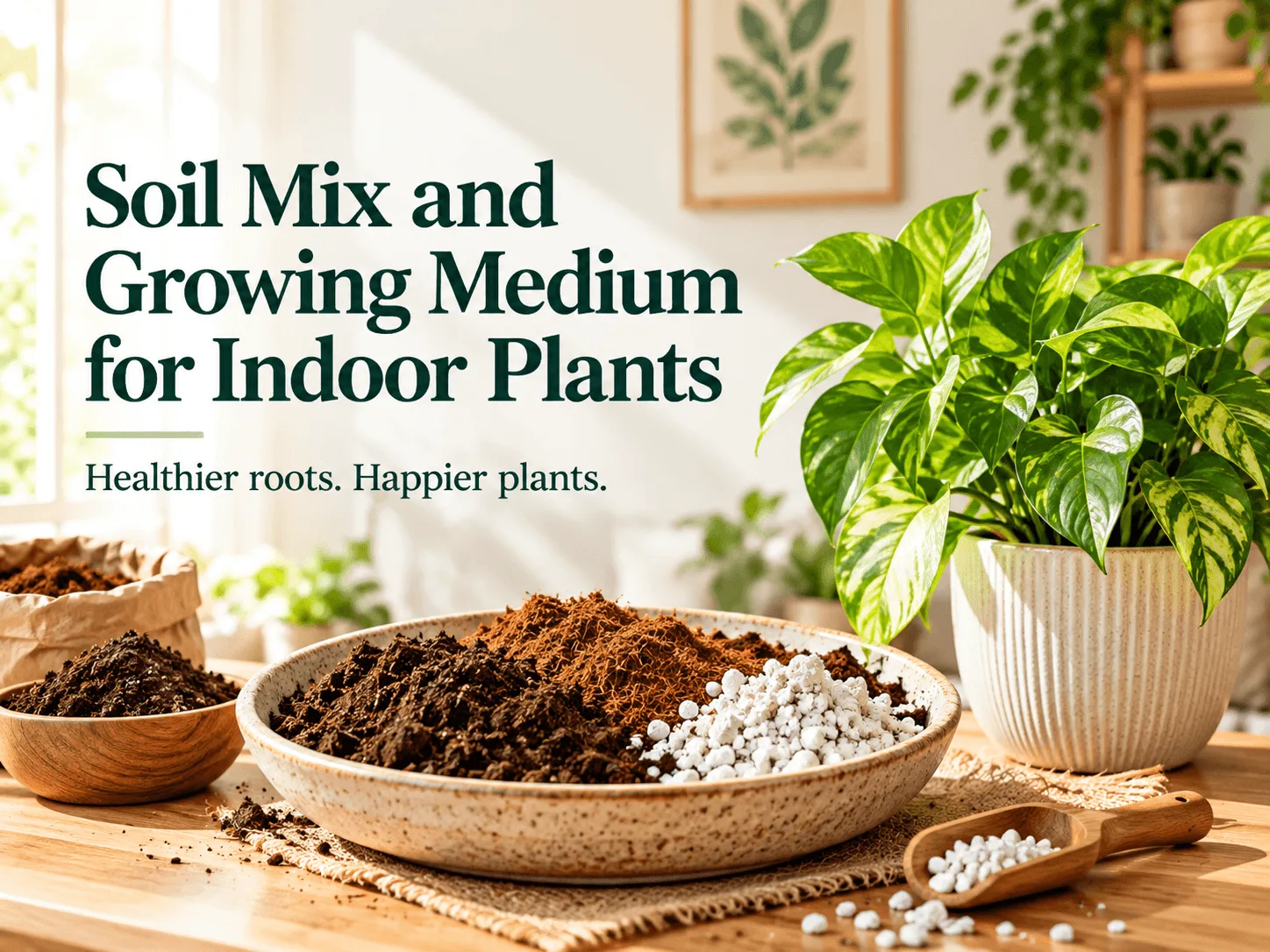
A suitable potting mix supplies support, moisture, air, and space for roots to grow. Most indoor plants benefit from a medium that retains some moisture without remaining soggy.
Garden soil alone may become compacted in containers, reducing air movement around roots. A lightweight, well-draining potting mix is often more suitable.
How to Prepare an Indoor Plant Potting Mix
A basic mix for many foliage houseplants can include:
- Cocopeat: Helps retain moisture and keeps the mix lightweight.
- Mature compost: Supplies organic matter and nutrients.
- Perlite, coarse sand, or another suitable aeration material: Helps improve drainage and air movement, depending on the material and mix.
For a simple starting point, combine two parts cocopeat, one part mature compost, and one part perlite or another suitable aeration material by volume. Adjust the proportions to suit the plant and local conditions. Plants that prefer drier roots need a more freely draining mix.
Hydrate compressed cocopeat before use, loosen it, and remove excess water. Cocopeat is useful for moisture management, but it should not automatically be treated as a complete source of nutrients. Use a balanced growing medium and an appropriate fertiliser when needed.
Explore Greglo's cocopeat products when preparing a growing medium for suitable indoor plants.
Watering and Light Requirements
Incorrect watering and unsuitable lighting are common reasons indoor plants struggle. Each plant has different requirements, so check the potting mix and observe the plant instead of following a rigid watering schedule.
How Often Should You Water Indoor Plants?
Use these steps to decide when to water:
- Check the upper layer of the potting mix with your finger.
- Water when the mix has dried to the depth appropriate for that plant.
- Apply water evenly until excess moisture drains from the bottom.
- Empty the saucer or outer container so the pot does not remain in standing water.
Snake plants and ZZ plants generally need the mix to dry more thoroughly between waterings. Peace lilies prefer more consistent moisture. During cooler periods, many indoor plants use water more slowly, while warm conditions may increase their needs.
How Much Light Do Indoor Plants Need?
- Bright, indirect light: Suitable for many popular foliage plants and peace lilies.
- Moderate light: Can suit money plants and several adaptable houseplants.
- Lower light: Snake plants and ZZ plants may tolerate these conditions, but growth can slow.
Low-light tolerant does not mean no-light tolerant. If a room receives almost no natural daylight, use a suitable grow light or move the plant to a brighter area regularly.
Indoor Plant Care Tips for Indian Weather
Summer
-
Check soil moisture frequently.
-
Avoid harsh afternoon sunlight and hot airflow.
-
Water according to each plant’s needs.
Monsoon
-
Ensure proper drainage and air circulation.
-
Avoid overwatering.
-
Check for pests and fungal issues.
Winter
-
Check soil moisture before watering.
-
Protect plants from cold drafts.
-
Provide adequate light and reduce fertilising if growth slows.
Common Indoor Plant Problems and Solutions
-
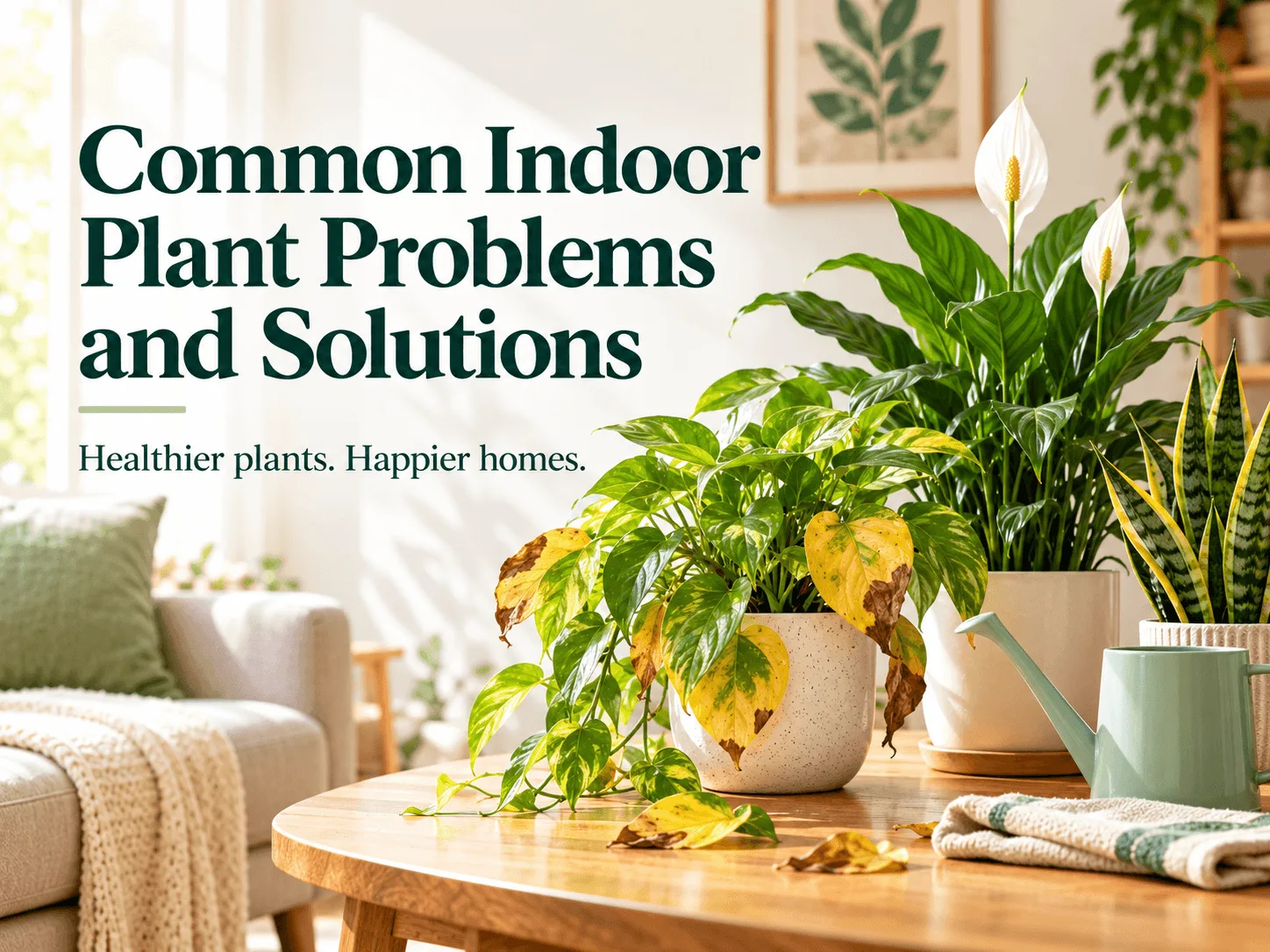
Yellow Leaves: Overwatering or low light → Check soil moisture and lighting.
-
Brown Leaf Tips: Irregular watering or salt buildup → Adjust watering and flush excess salts if needed.
-
Slow Growth: Insufficient light or nutrients → Improve light and feeding.
-
Pests: Mealybugs, spider mites, or aphids → Isolate the plant and apply suitable treatment.
-
Root Rot: Waterlogged soil or poor drainage → Trim damaged roots and repot in a well-draining mix.
Formula: Identify the Problem → Check Growing Conditions → Apply the Right Solution
Frequently Asked Questions About Indoor Plants
1. Which indoor plants are easiest to grow in India?
Snake plants, money plants, and ZZ plants are common choices for beginners. Their success still depends on appropriate light, drainage, and watering.
2. Can indoor plants grow without sunlight?
Plants need light for photosynthesis. Some tolerate lower light levels, but a room without sufficient daylight may require a grow light.
3. Is cocopeat good for indoor plants?
Yes. Cocopeat can help retain moisture and create a lightweight growing medium. Mix it with suitable materials for aeration and nutrients instead of assuming pure cocopeat will meet every plant's long-term needs.
4. Which pots are best for indoor plants?
Choose pots with drainage holes and enough room for the roots. Terracotta, plastic, and glazed ceramic can all work, but their moisture-retention properties differ.