
How to Start a Garden at Home
Starting a garden does not require a large backyard or years of gardening experience. With the right space, suitable plants, healthy growing medium and a simple care routine, almost anyone can create a productive home garden.
If you are wondering how to start a garden, the best approach is to begin small and learn what works in your space. A balcony, terrace, backyard, windowsill or a few containers can become a useful growing area.
This guide explains how to start gardening at home, from choosing the right location and containers to selecting best starter plants, watering, feeding and maintaining healthy plants.
🌱 1. Decide What You Want From Your Garden
Before buying plants or containers, decide what you want to grow and why you want a garden.
Some people want fresh vegetables and herbs, while others want flowers or greenery around their home. Your goal will influence the space, containers and plants you choose.
You could create:
- A home vegetable garden for vegetables
- A small herb garden for everyday cooking
- A flower garden for colour
- A container garden for balconies or terraces
- A mixed garden with vegetables, herbs and flowers
For gardening for beginners, starting with a few easy plants is usually better than planting too many varieties at once.
🧤 What Do You Need to Start Home Gardening?
You do not need expensive equipment to begin home gardening. Start with a few basic supplies:
- Suitable pots or grow bags
- Quality growing medium
- Healthy seeds or seedlings
- Watering can or suitable water source
- Basic gardening tools
- Organic or balanced plant nutrition
- Support sticks for climbing plants when required
As you gain experience, you can add more tools and experiment with different growing methods.
☀️ 2. Choose the Right Gardening Space
The location of your garden can have a major effect on plant growth.
Start by observing how much sunlight different areas of your home receive. Many vegetables and flowering plants need several hours of sunlight each day, while some leafy plants can tolerate less.
Good options for gardening at home include:
- Backyard spaces
- Balconies
- Terraces
- Windowsills
- Verandas
- Outdoor container areas
For balcony gardening, check whether the plants will receive enough light and whether containers can be placed safely.
For terrace gardening, also consider drainage, accessibility and the weight of containers before setting up a large number of plants.
🪴 3. Choose Pots, Grow Bags or Other Containers
Containers are useful when you do not have a traditional garden bed.
You can use pots, plastic plant bags, containers or grow bags depending on your available space and the plants you want to grow.
When choosing a container, consider:
- Plant size
- Root space
- Container depth
- Drainage
- Material
- Durability
- Growing volume
Larger plants generally need more root space, while herbs and smaller leafy vegetables can grow in smaller containers.
If you are comparing different options, selecting the right grow bags can make container gardening easier, especially for vegetables and other plants that benefit from good root space and drainage.
🌿 4. Prepare a Healthy Growing Medium
Healthy roots are the foundation of a successful garden.
Instead of using ordinary garden soil alone, many container gardeners use a growing medium made from a combination of materials. Depending on the plant, this may include soil, compost, coco peat and other suitable components.
Coco peat can help improve moisture retention and provide a lightweight component in growing mixes.
A good growing medium should generally provide:
- Adequate moisture retention
- Good drainage
- Sufficient air around the roots
- Suitable structure for root growth
- Organic matter or nutrients where required
Avoid using a dense medium that remains waterlogged for long periods.
🌱 5. Choose the Best Starter Plants
One of the easiest ways to make home gardening for beginners enjoyable is to start with plants that match your climate, available space and experience level.
Some useful best starter plants include:
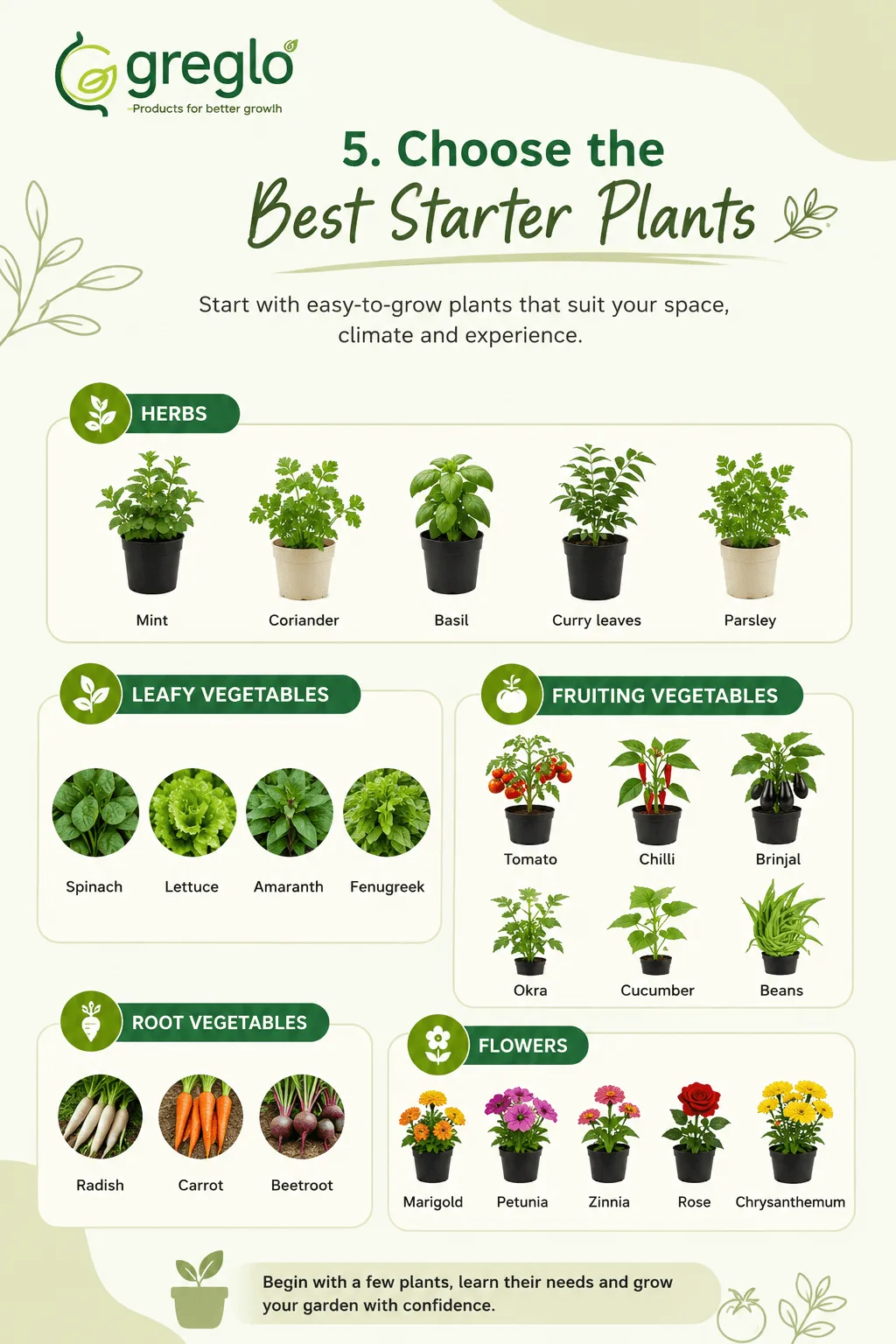
Herbs
- Mint
- Coriander
- Basil
- Curry leaves
- Parsley
Leafy Vegetables
- Spinach
- Lettuce
- Amaranth
- Fenugreek
Fruiting Vegetables
- Tomato
- Chilli
- Brinjal
- Okra
- Cucumber
- Beans
Root Vegetables
- Radish
- Carrot
- Beetroot
Flowers
- Marigold
- Petunia
- Zinnia
- Rose
- Chrysanthemum
🌿 6. Understand Your Plant’s Growing Requirements
Every plant has different requirements.
Before planting, check:
- Sunlight requirements
- Watering needs
- Container size
- Plant spacing
- Growing period
- Temperature preferences
- Feeding requirements
Understanding these differences is an important part of learning how to grow plants at home successfully.
💧 7. Learn How to Water Correctly
Watering is one of the most common challenges for new gardeners.
Too little water can cause plants to wilt, while excessive watering can create poor root conditions.
Instead of following a fixed watering schedule, check the growing medium and plant condition.
Before watering, consider:
- Is the surface dry?
- Is the container draining properly?
- Is the plant showing signs of stress?
- Has the weather been hot or rainy?
- Does the particular plant need frequent watering?
Water thoroughly when required and allow excess water to drain.
🌿 8. Give Your Plants the Right Nutrition
Plants need nutrients to produce healthy leaves, flowers, fruits and roots.
Nutrient requirements depend on the plant and growing medium. Compost, organic matter and suitable fertilizers can be used according to the plant's needs.
Avoid adding large quantities of fertilizer simply because you want faster growth. Excess nutrients can damage plants and create other growing problems.
A simple feeding routine is usually easier for beginners to manage.
🐛 9. Check Your Plants for Pests and Problems
Regular observation can help you identify problems early.
During routine home gardening, check leaves, stems and the growing medium for:
- Discoloured leaves
- Holes or bite marks
- Wilting
- Yellowing
- Slow growth
- Visible insects
- Fungal growth
Pests, watering problems, poor drainage and nutrient issues can sometimes produce similar symptoms.
✂️ 10. Create a Simple Garden Maintenance Routine
A garden becomes easier to manage when plant care becomes a routine.
Daily or as needed
- Check plant condition
- Check moisture
- Observe pests
Weekly
- Remove damaged leaves
- Check drainage
- Inspect new growth
- Rotate containers if necessary
Periodically
- Add nutrients
- Prune plants where required
- Provide support to climbing plants
- Replace unhealthy plants
🥕 How to Start a Home Vegetable Garden
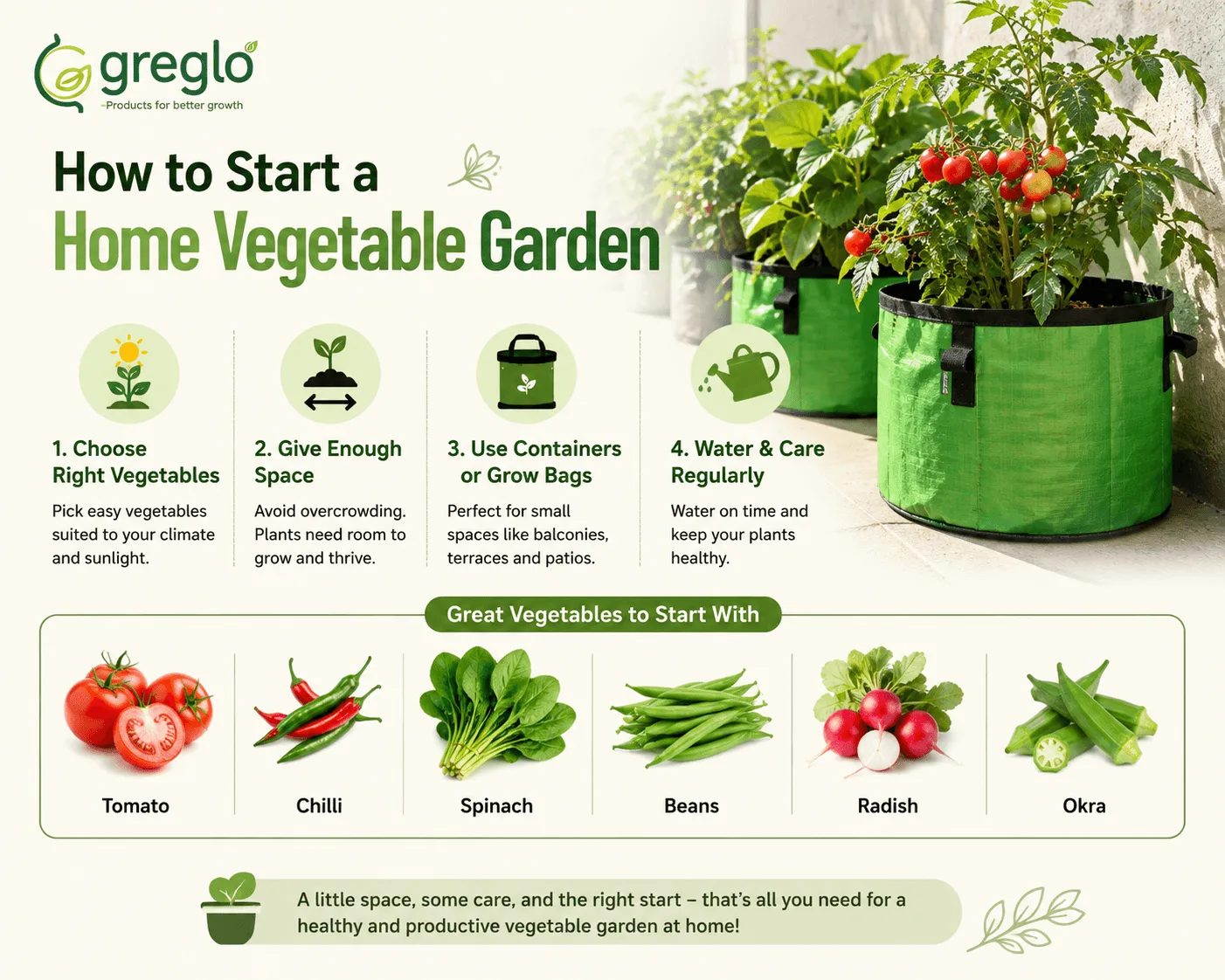
- If your main goal is growing food, a home vegetable garden can be a practical place to begin.
- Start with vegetables that suit your local climate and available sunlight. Tomatoes, chillies, leafy vegetables, beans, radishes and okra can be considered depending on the growing season and space.
- When planning gardening vegetables, avoid overcrowding. Plants need enough space for their roots, leaves and overall growth.
- You can grow vegetables directly in garden beds or use containers and grow bags when space is limited.
🌿 Kitchen Gardening: Grow Useful Plants at Home
Kitchen gardening focuses on growing herbs, vegetables and other edible plants that can be used in everyday cooking.
A small kitchen garden might include:
- Coriander
- Mint
- Basil
- Green chilli
- Tomato
- Spinach
- Curry leaves
Choose plants based on what your household actually uses. This makes the garden more useful and easier to maintain.
🪴 Balcony Gardening: Make the Most of Small Spaces
Balcony gardening is a practical option for apartments and homes without a backyard.
Use the available vertical and horizontal space carefully. Smaller containers can be used for herbs and leafy greens, while larger containers can accommodate vegetables that need more root space.
Before setting up a balcony garden, consider:
- Sunlight
- Wind exposure
- Container weight
- Water drainage
- Safe placement
- Accessibility
Vertical supports can also help climbing plants grow without taking up excessive floor space.
🌤️ Terrace Gardening: Plan Before You Plant
- Terrace gardening can provide considerably more growing space than a balcony, but it requires careful planning.
- Before adding containers, consider drainage, water availability and safe placement. Organize plants according to their sunlight requirements and container size.
- A terrace garden can include vegetables, herbs, flowers and ornamental plants.
- Start with a manageable number of containers rather than filling the entire terrace immediately.
🌱 How to Plan a Simple Veg Garden
A simple veg garden can be planned in a few steps:
- Measure your available space.
- Identify areas with suitable sunlight.
- Choose vegetables suited to your climate.
- Select appropriate containers or planting beds.
- Prepare the growing medium.
- Arrange plants with enough spacing.
- Create a watering routine.
- Monitor plant growth and adjust care.
When choosing vegetable garden vegetables, consider how much space each crop needs and how long it takes to produce a harvest.
🌦️ Adjust Your Garden Care With the Seasons
Garden care should change throughout the year.
Hot weather may increase watering requirements, while heavy rainfall can make drainage more important. Cooler periods may be better suited to certain leafy vegetables and other crops.
Rather than following the same routine throughout the year, observe:
- Temperature
- Rainfall
- Sunlight
- Humidity
- Plant growth
- Seasonal pests
Choosing plants according to your local growing conditions can make gardening for beginners much easier.
🚫 10 Common Gardening Mistakes Beginners Should Avoid
New gardeners often make simple mistakes that can be avoided with a little planning.
- Choosing plants without checking sunlight requirements
- Overwatering plants
- Using containers without drainage
- Overcrowding plants
- Choosing containers that are too small
- Adding too much fertilizer
- Ignoring pests
- Using poor-quality planting material
- Growing too many plants at once
- Expecting immediate results
Plants need time to establish roots and adapt to their growing environment.
🌿 Simple Garden Tips for Beginners
Here are some practical garden tips to make your garden easier to manage:
- Start small.
- Choose plants suitable for your climate.
- Check sunlight before planting.
- Use containers with adequate drainage.
- Avoid overwatering.
- Give plants enough growing space.
- Observe your plants regularly.
- Keep basic gardening records.
- Remove damaged plant material.
- Expand gradually as you gain experience.
❓ Frequently Asked Questions
1. How do I start a garden at home?
Start by choosing a suitable location with enough sunlight, selecting a few beginner-friendly plants, preparing a healthy growing medium and using containers with proper drainage. Begin with a small garden and expand as you gain experience.
2. What are the best plants for beginner gardeners?
Herbs, leafy vegetables, chilli, tomato, radish, marigold and other plants suited to your local growing conditions can be good choices. The best starter plants depend on your available space, sunlight and climate.
3. Can I start gardening without a backyard?
Yes. Gardening at home can be done on balconies, terraces, verandas and other suitable spaces using containers or grow bags.
4. What can I grow in a home vegetable garden?
Depending on your climate and space, you can grow tomatoes, chillies, leafy vegetables, radishes, beans, okra, cucumbers and other suitable crops.
5. Is kitchen gardening suitable for beginners?
Yes. Kitchen gardening can be a simple way to begin because you can start with a few herbs and vegetables that you regularly use.
Conclusion
Learning how to start a garden is easier when you focus on the basics rather than trying to create a large garden immediately. Choose the right space, understand sunlight requirements, use suitable containers and growing media, select beginner-friendly plants and develop a consistent watering and maintenance routine.
Whether you want a small balcony garden, a productive home vegetable garden, a kitchen gardening setup or a larger terrace garden, start with a few plants and learn as you go.
With regular observation and simple garden tips, your garden can gradually become healthier, more productive and more enjoyable to maintain.