
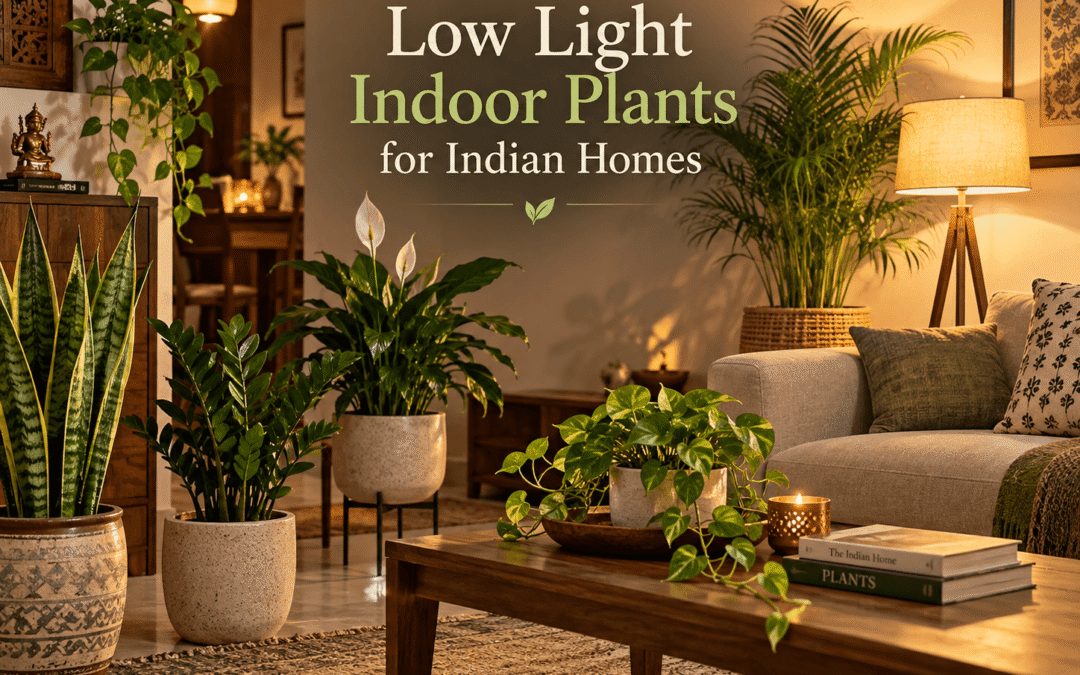
Not every home receives bright sunlight throughout the day. Apartments, bedrooms, office corners, and rooms with small windows may have limited natural light. Fortunately, several plants can adapt to these conditions and bring greenery into your living space.
Choosing the right low light indoor plants can make it easier to maintain an indoor garden without placing every pot beside a sunny window. However, low light does not mean no light. All plants need some light to survive, and even shade-tolerant varieties grow better when they receive suitable indirect daylight.
In this guide, discover the best low light houseplants for Indian homes, where to place them, how to water them, and how to prepare a suitable potting mix for healthy growth.
What Are Low Light Indoor Plants?
Low light indoor plants are plants that can tolerate lower levels of natural light than many sun-loving plants. They are suitable for rooms that receive indirect daylight but do not get strong direct sunlight.
These plants are useful for apartments, bedrooms, living rooms, workspaces, and other indoor areas where sunlight is limited.
Keep in mind that a room that appears bright to your eyes may still be relatively dim for a plant. A position near a window with filtered daylight is generally better than a dark corner far from any natural light source.
Benefits of Growing Low Light Houseplants
- Suitable for indoor spaces: Many varieties grow well in rooms with indirect daylight.
- Easy to maintain: Several options tolerate occasional variations in watering and light.
- Space-saving: Compact plants can fit on desks, shelves, and small tables.
- Decorative greenery: Different leaf shapes and colours can complement home interiors.
- Beginner-friendly: Some varieties are forgiving when you are learning basic plant care.
urce.
10 Best Low Light Indoor Plants for Indian Homes
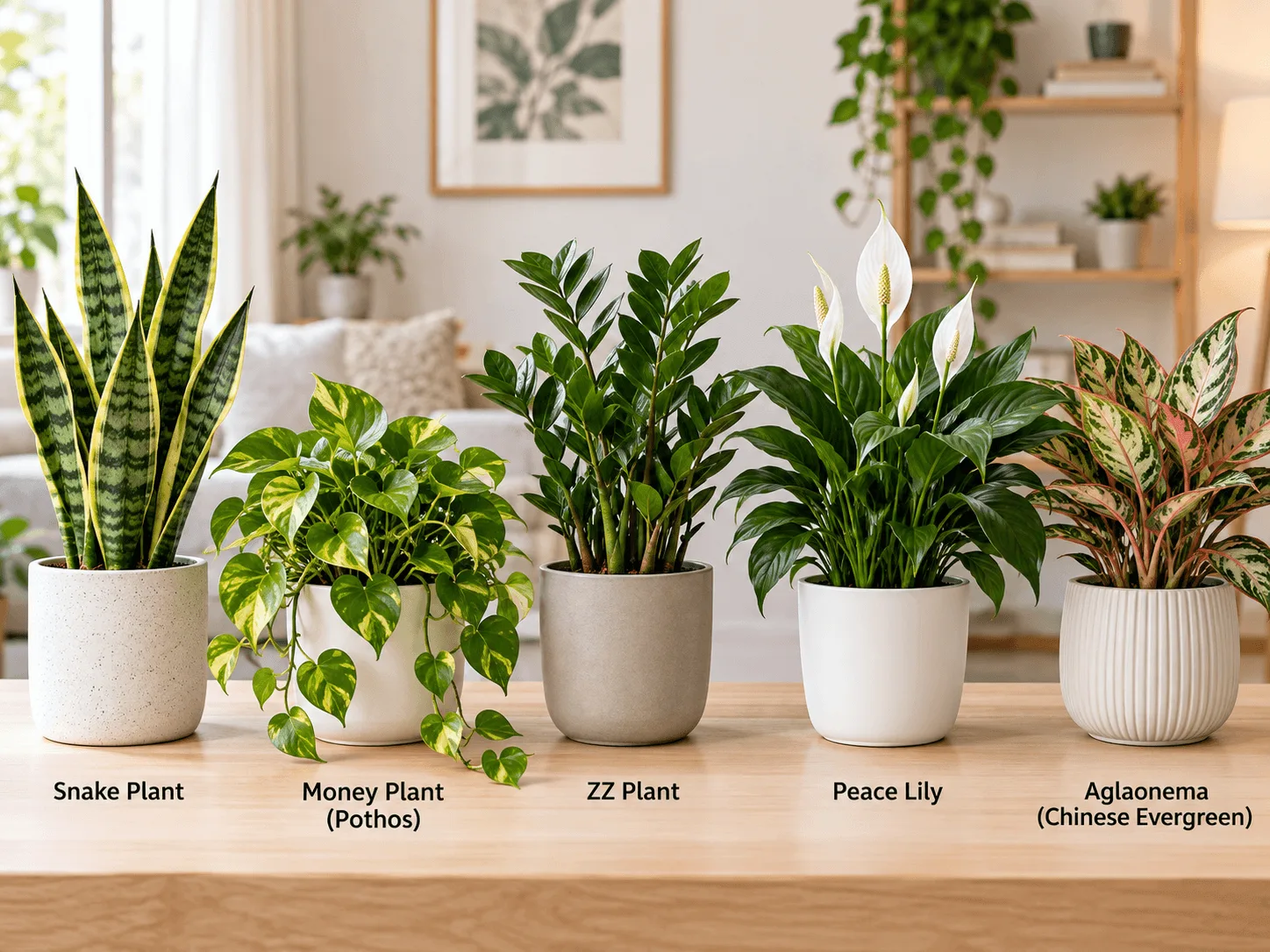
The following plants are worth considering for homes with limited natural light. Their needs differ, so choose according to your room conditions, available space, and maintenance routine.
1. Snake Plant
The snake plant is a popular choice for beginners because it tolerates lower light levels and does not require frequent watering.
Its upright, sword-shaped leaves make it suitable for bedrooms, living rooms, office corners, and narrow spaces. It can survive in lower light, although growth may be slower than in brighter indirect light.
Care tips:
-
- Place it in indirect light or a naturally lit room.
- Allow the potting mix to dry substantially between waterings.
- Use a pot with drainage holes.
- Avoid leaving water standing around the roots.
Best for: Beginners, bedrooms, and indoor corners with some daylight.
2. Money Plant (Pothos)
Money plant, also known as pothos, is one of the most versatile low light houseplants. Its trailing vines look attractive in hanging pots, on shelves, and in decorative planters.
It can tolerate lower light conditions, but brighter indirect light usually supports fuller growth and more noticeable leaf patterns.
Care tips:
-
- Place it where it receives filtered daylight.
- Water when the upper part of the growing medium begins to dry.
- Trim long vines to maintain the desired shape.
- Provide a support pole if you want it to climb.
Best for: Shelves, hanging planters, living rooms, and home offices.
Safety note: Pothos is toxic if chewed, so keep it away from children and pets who may nibble on plants.
3. ZZ Plant
The ZZ plant has glossy, deep-green leaves and is known for tolerating lower light and occasional missed waterings.
It works well in offices, bedrooms, and living rooms where you want a low-maintenance plant. However, it will not grow well indefinitely in a completely dark space.
Care tips:
-
- Choose a spot with some indirect daylight.
- Let the growing medium dry well between waterings.
- Avoid heavy, constantly wet soil.
- Do not water on a fixed schedule without checking the soil first.
Best for: Busy households, offices, and beginners.
Safety note: The ZZ plant can cause irritation if chewed. Keep it away from children and pets.
4. Peace Lily
Peace lilies have attractive green leaves and distinctive white flower-like structures called spathes. They can adapt to moderate or lower indirect light, although flowering is usually better when light is sufficient.
They generally prefer a more consistently moist growing medium than snake plants or ZZ plants.
Care tips:
-
- Provide filtered or indirect daylight.
- Check the growing medium regularly and water when the surface begins to dry.
- Do not leave the roots sitting in water.
- Wipe the leaves occasionally to remove dust.
Best for: Living rooms and other indoor areas with indirect daylight.
Safety note: Peace lilies are toxic if chewed and may irritate the mouth. Keep them away from pets and children.
5. Aglaonema (Chinese Evergreen)
Aglaonema is valued for its attractive foliage, which may include green, silver, pink, or red patterns depending on the variety.
Many green-leaved varieties tolerate lower light better than varieties with more colourful foliage. They are suitable for decorative pots in living rooms and bedrooms.
Care tips:
-
- Provide indirect daylight.
- Water when the upper layer of the mix starts to dry.
- Use a well-draining potting mix.
- Protect the plant from cold drafts and sudden temperature changes.
Best for: Indoor decoration and homes with filtered daylight.
Safety note: Aglaonema is toxic if chewed, so place it out of reach of children and pets.
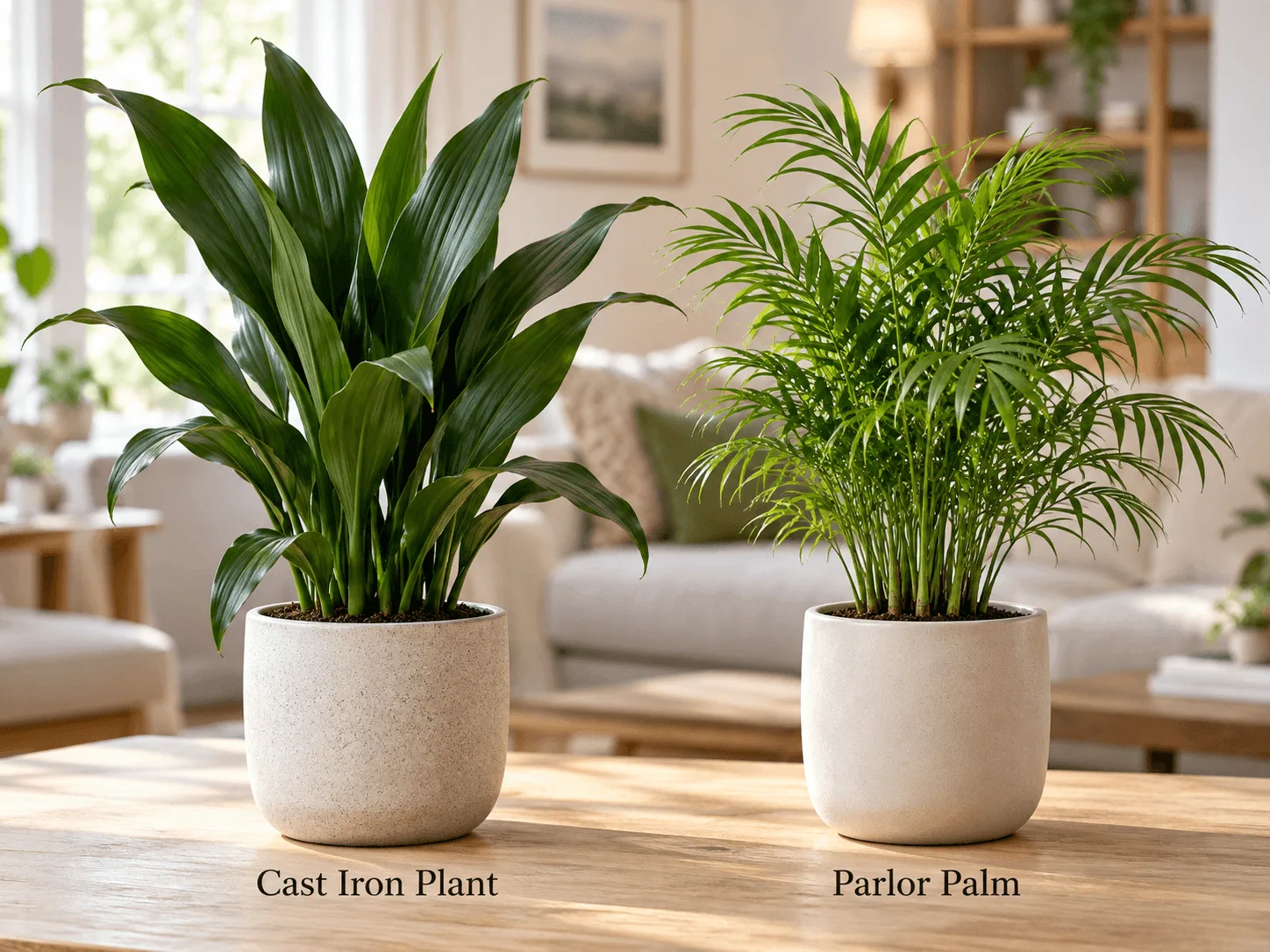
6. Cast Iron Plant
The cast iron plant is known for its ability to tolerate lower light and less-than-perfect growing conditions. Its broad, dark-green leaves create a simple, elegant look.
It is a useful choice for indoor areas where other plants may struggle, provided there is still some natural or suitable artificial light.
Care tips:
-
- Place it in low to moderate indirect light.
- Allow the top layer of the growing medium to dry before watering.
- Avoid waterlogged soil.
- Remove damaged leaves when necessary.
Best for: Shaded living rooms and low-maintenance indoor gardens.
7. Parlor Palm
The parlor palm adds a soft, tropical appearance without requiring direct sunlight. It can adapt to lower indoor light, though steady indirect light generally supports healthier growth.
Its relatively compact size makes it suitable for corners, side tables, and small apartments.
Care tips:
- Keep it in indirect daylight.
- Water when the surface of the growing medium begins to dry.
- Ensure the pot drains freely.
- Avoid placing it beside strong air-conditioning drafts.
Best for: Living rooms, bedrooms, and compact indoor spaces.
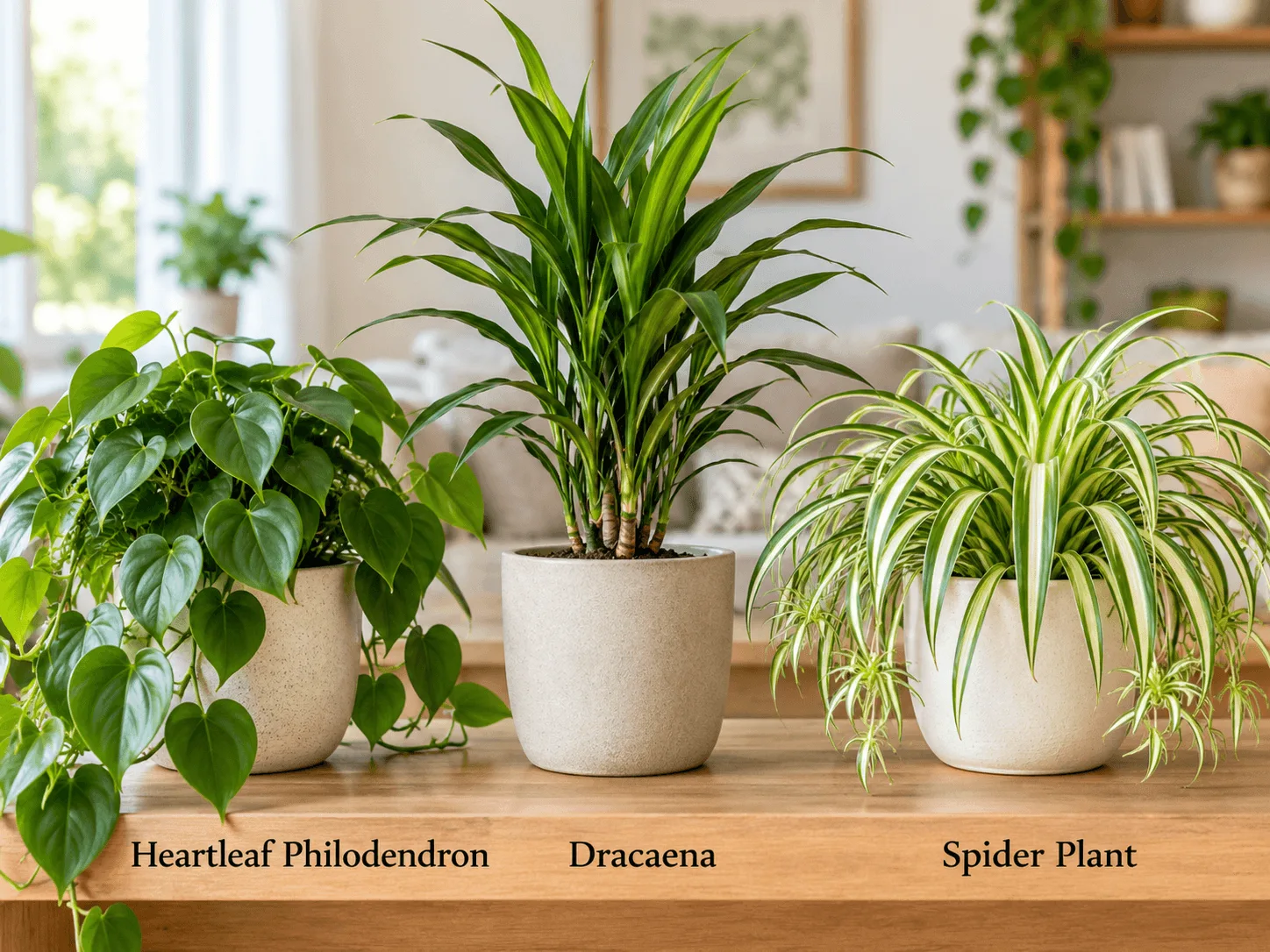
8. Heartleaf Philodendron
Heartleaf philodendron is a trailing plant with attractive heart-shaped leaves. It is a practical option for shelves, hanging planters, and plant stands.
It tolerates lower light, but growth may become slower and the spaces between leaves may increase when light is insufficient.
Care tips:
-
- Provide indirect light whenever possible.
- Water when the top layer of the potting mix begins to dry.
- Trim vines to encourage a manageable shape.
- Use a loose, well-draining growing medium.
Best for: Hanging pots, shelves, and indoor vertical greenery.
Safety note: Philodendrons are toxic if chewed. Keep them away from children and pets.
9. Dracaena
Some dracaena varieties adapt well to indoor conditions with moderate or lower indirect light. Their upright growth makes them useful for adding height to a living room or office.
Different varieties have different light requirements, so check the needs of the specific plant before buying.
Care tips:
-
- Place it in indirect daylight.
- Let the upper portion of the growing medium dry between waterings.
- Avoid overwatering.
- Remove dry or damaged leaves as needed.
Best for: Living rooms, offices, and spaces that need a taller plant.
Safety note: Many dracaena varieties are toxic to cats and dogs if chewed.
10. Spider Plant
Spider plants have arching green or variegated leaves and can produce small plantlets on long stems. They are suitable for hanging baskets, shelves, and bright indoor corners.
Although spider plants tolerate some lower-light conditions, they generally grow better in moderate indirect light. Variegated varieties may lose some of their contrast when light is insufficient.
Care tips:
-
- Place the plant in indirect daylight.
- Water when the upper layer of the growing medium starts to dry.
- Avoid keeping the roots constantly wet.
- Trim dry leaf tips if necessary.
Best for: Shelves, hanging baskets, and beginner indoor gardens.
Best Low Light Indoor Plants for Different Rooms
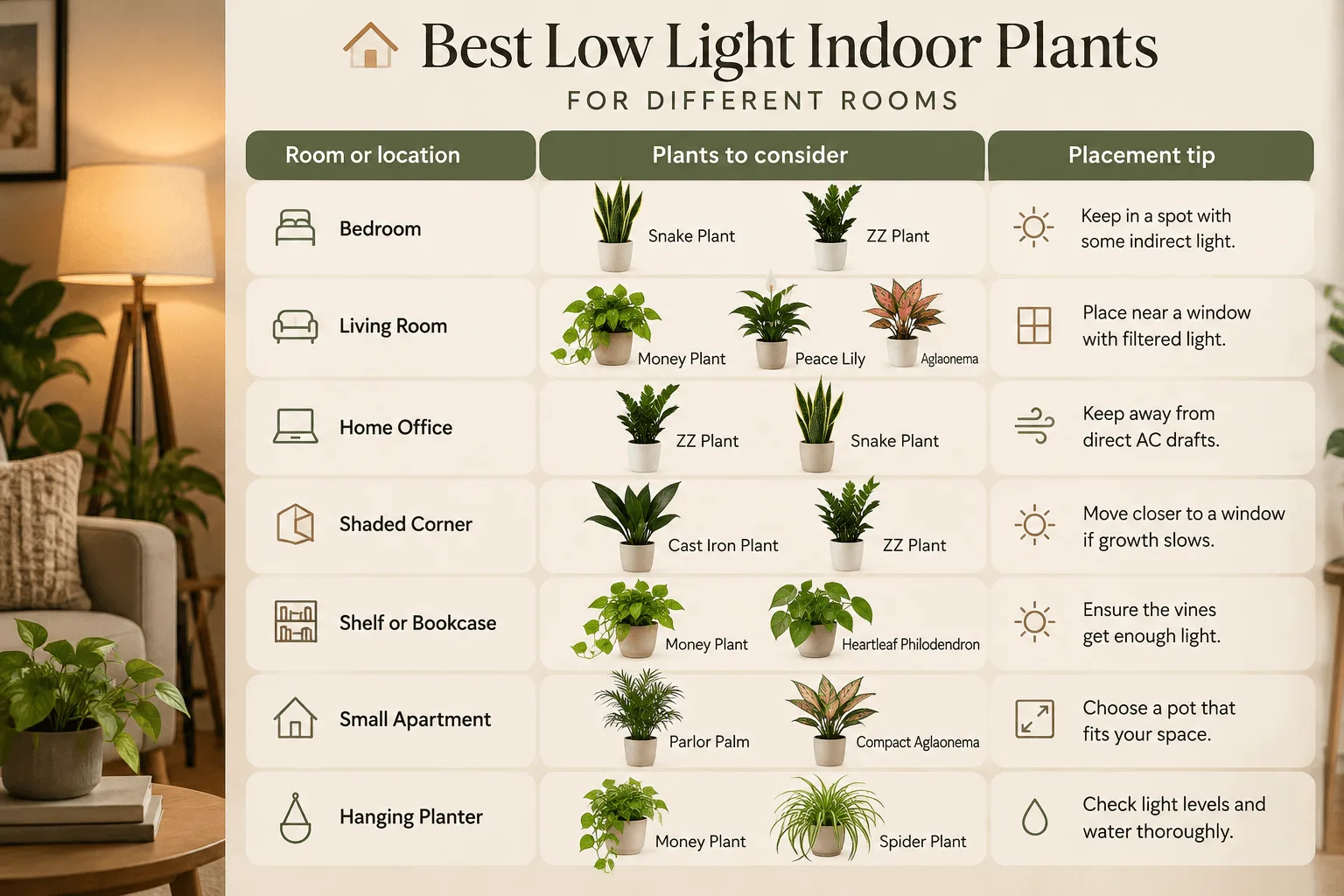
Important: A plant may tolerate low light without thriving in it. If leaves become pale, growth slows significantly, or stems stretch towards a window, try moving the plant to a brighter location with indirect light.
How Much Light Do Low Light Houseplants Need?
Even shade-tolerant plants need light for photosynthesis. The aim is to provide enough light for steady growth without exposing plants to unsuitable direct sunlight.
Choose the Right Location
- Near a window: Filtered daylight near a window is often a good starting point.
- Away from harsh afternoon sun: Some indoor plants may develop scorched leaves under intense direct sunlight.
- In naturally dim rooms: Consider a suitable grow light if daylight is inadequate.
- Rotate pots occasionally: Turning the pot helps different sides receive light more evenly.
Can Indoor Plants Grow Without Sunlight?
No plant can grow indefinitely without a suitable light source. Some plants tolerate low light, but a room with no windows or almost no daylight may require an artificial grow light.
A regular ceiling light is not necessarily strong enough to support healthy plant growth. Choose a grow light designed for plants and follow the manufacturer's placement and timing guidance.
Best Potting Mix for Low Light Indoor Plants
A suitable growing medium helps roots receive both moisture and air. This is particularly important in low-light areas, where pots may dry more slowly.
Cocopeat can help retain moisture and make a potting mix lighter. However, plain cocopeat alone is generally not a complete long-term growing medium for most indoor plants because it provides limited nutrition.
How to Prepare a Simple Indoor Plant Mix
For many foliage plants, you can start with a mix containing:
- Cocopeat: Helps retain moisture and improves the lightness of the mix.
- Mature compost: Adds organic matter and nutrients.
- A suitable aeration material: Perlite, pumice, or another appropriate coarse material can help improve air movement and drainage.
Adjust the proportions to the plant's needs. Plants such as snake plants and ZZ plants generally require a mix that drains more freely than one used for peace lilies.
How to Choose Indoor Plant Pots
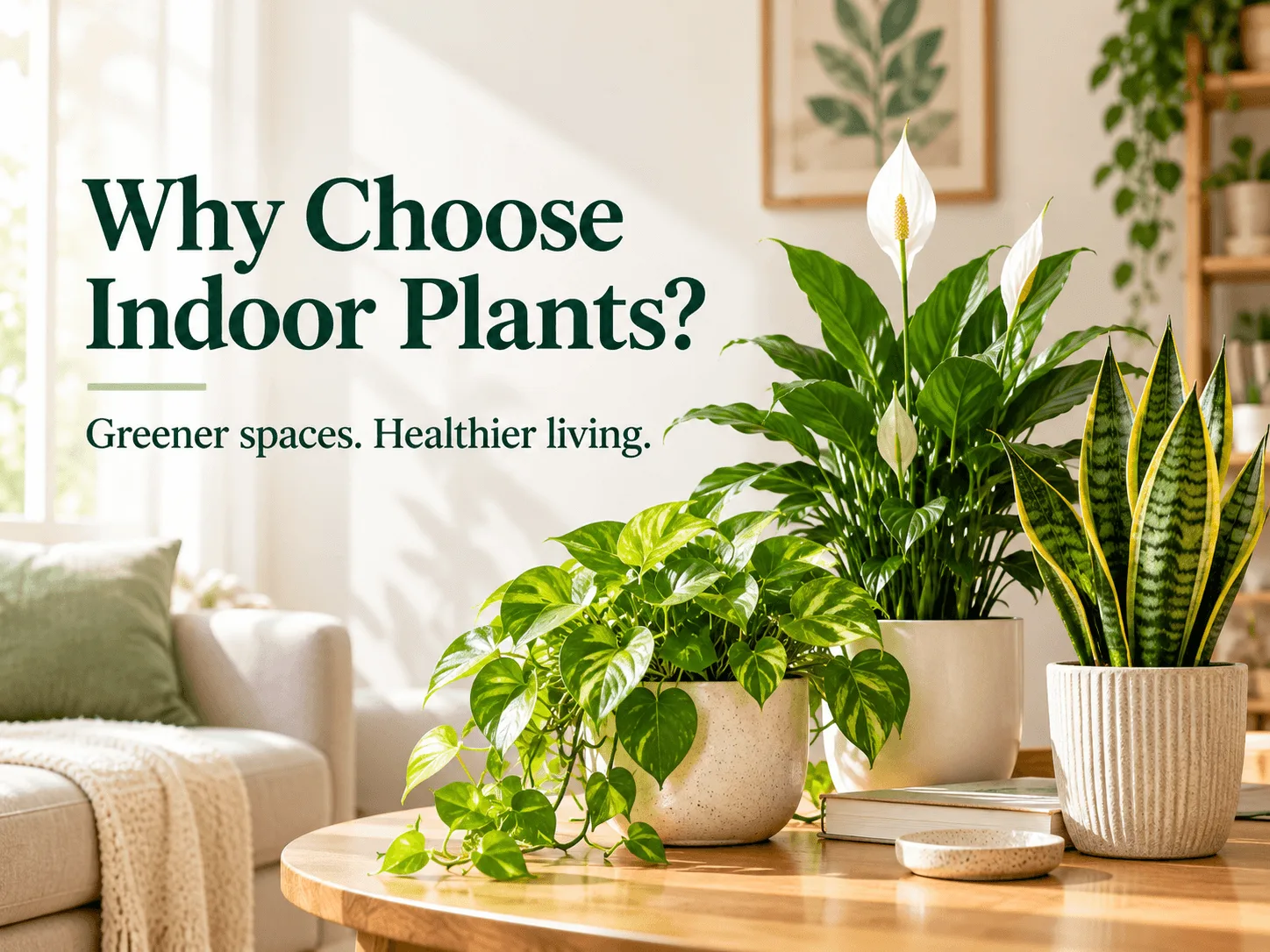
The right pot supports root health and makes watering easier. A decorative pot is useful, but drainage and suitable sizing should come first.
When selecting indoor plant pots, consider these points:
- Drainage holes: Choose a pot that allows excess water to escape.
- Pot size: Select a container that accommodates the root ball without leaving an unnecessarily large volume of wet mix.
- Material: Plastic, terracotta, ceramic, and other materials dry at different rates.
- Weight: Lightweight pots are useful for shelves and apartment balconies, provided they are stable.
- Placement: Use a saucer or waterproof tray to protect indoor surfaces, and empty collected water after watering.
Create a Greener Home with Greglo
You do not need a large garden to enjoy indoor greenery. By selecting suitable low light indoor plants, choosing pots with proper drainage, and adjusting watering to each plant's needs, you can create a healthier growing environment in your home.
A well-prepared potting mix also makes a difference. Greglo cocopeat can be used as part of a suitable mix with compost and aeration materials to support moisture management and root growth.
Explore Greglo's cocopeat products and prepare a growing medium that suits your indoor plants. Start with one or two easy-care varieties, observe how they respond to your home's light, and build your indoor garden gradually.