
Cocopeat and compost mix is a useful growing medium for home gardens because cocopeat helps retain moisture, while mature compost adds organic matter and nutrients. When combined with a suitable base material and good drainage, this mix can support plants grown in pots, grow bags, and balcony or terrace gardens.
Why Mix Cocopeat with Compost?
Cocopeat is made from processed coconut husk fibre. It is lightweight and holds water, but it does not provide all the nutrients plants need. Compost helps improve the nutrient content of the growing medium.
The main benefits include:
1. Better moisture retention: Cocopeat holds moisture between watering sessions.
2. Improved growing-medium structure: It helps create a lightweight mix for containers.
3. Added organic matter: Mature compost contributes nutrients and supports soil health.
4. Support for root growth: A suitable mix balances moisture retention with air circulation.
5. Convenient container gardening: The mix can be prepared for pots, grow bags, and home vegetable gardens.
What Is the Best Cocopeat and Compost Ratio?
For many general-purpose container plants, you can begin with this simple mix:
|
Ingredient |
Proportion |
Purpose |
|
Hydrated cocopeat |
40% |
Holds moisture and keeps the mix lightweight |
|
Garden soil or suitable potting base |
30% |
Adds structure and helps anchor roots |
|
Mature compost or vermicompost |
30% |
Adds organic matter and nutrients |
These proportions are a starting point, not a universal formula. Adjust the mix according to the plant, local climate, container size, and drainage.
Use a suitable, clean potting base where garden soil is heavy or poorly drained.
For succulents and other plants that need drier conditions, use a more freely draining mix rather than following this moisture-retaining formula unchanged.
How to Prepare Cocopeat and Compost Mix
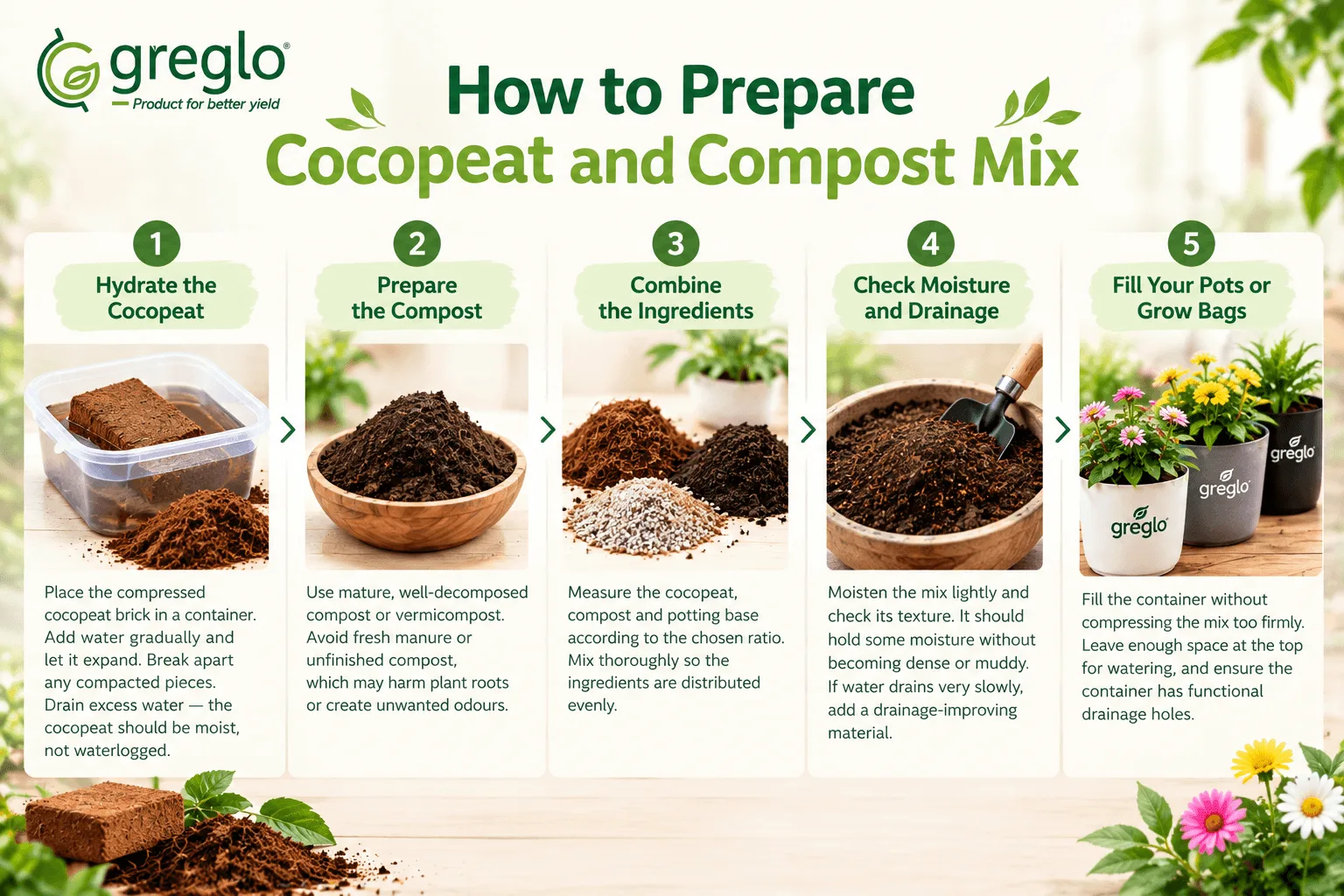
Step 1: Hydrate the Cocopeat
Place the compressed cocopeat brick or block in a suitable container. Add water gradually and allow it to expand. Break apart any compacted pieces until the material is loose and evenly hydrated.
Drain excess water before mixing. The cocopeat should feel moist rather than waterlogged.
Step 2: Prepare the Compost
Choose mature, well-decomposed compost or vermicompost. Avoid fresh manure or unfinished compost, which may harm plant roots or create unwanted odours.
Step 3: Combine the Ingredients
Measure the cocopeat, compost, and potting base according to the chosen ratio. Mix thoroughly so that the ingredients are distributed evenly.
Step 4: Check Moisture and Drainage
Moisten the mix lightly and check its texture. It should hold some moisture without becoming dense or muddy. If water drains very slowly, adjust the structure with a suitable drainage-improving material.
Step 5: Fill Your Pots or Grow Bags
Fill the container without compressing the mix too firmly. Leave enough space at the top for watering, and ensure the container has functional drainage holes.
Which Plants Can Grow in Cocopeat and Compost Mix?
soil mix for vegetables
Tomatoes, chillies, leafy greens, and many other container vegetables can grow in a cocopeat-based mix with compost and an appropriate potting base. Choose a container large enough for the mature plant.
2. Herbs
Basil, coriander, and mint can grow in containers filled with a well-draining mix. Adjust watering to the plant's needs rather than keeping the medium constantly wet.
3. Indoor Plants
Many foliage plants, including money plants, can benefit from a moisture-retentive potting mix. However, different indoor plants have different drainage and aeration requirements.
4. Flowering Plants
Many flowering plants grow well in a suitable container mix, provided they receive enough light, nutrients, and water. Check the needs of each variety before preparing a large batch.
Common Mistakes to Avoid
- Using only cocopeat: Cocopeat alone is not a complete nutrient source for most established plants.
- Adding too much compost: Excess compost can make the mix overly rich or affect its structure.
- Using unfinished compost: Choose mature compost suitable for container gardening.
- Overwatering: Cocopeat retains moisture, so check the mix before watering again.
- Ignoring drainage: Pots and grow bags need suitable drainage to prevent waterlogging.
- Using the same formula for every plant: Succulents, seedlings, vegetables, and indoor plants may need different mixes.
How Often Should You Water This Mix?
There is no single watering schedule for every pot. Water when the moisture level and plant requirements indicate it is needed. Small pots may dry faster than large containers, while humid weather and shaded locations can slow drying.
Check the growing medium with your finger before watering. If it is still sufficiently moist below the surface, you may not need to water yet. Avoid letting the container remain waterlogged.
Cocopeat and Compost Mix for Pots vs Grow Bags
The basic ingredients can be similar for pots and grow bags, but the final mix should suit the container and plant.
- Pots: Check drainage holes and choose a mix appropriate for the plant's root system.
- Grow bags: Select a suitable bag size for the crop and make sure excess water can escape.
- Terrace gardens: Consider container weight, drainage, exposure to sun and wind, and watering frequency.
Frequently Asked Questions
1. Can I mix cocopeat with compost?
Yes. Cocopeat can be mixed with mature compost to create a moisture-retentive growing medium. For many plants, include a suitable potting base and adjust the proportions to suit the crop.
2. Is cocopeat and compost enough for plants?
It can be part of a suitable potting mix, but the best combination depends on the plant. Some plants need additional structure, aeration, or a different nutrient-management plan.
3. Can I use vermicompost instead of compost?
Yes. Mature vermicompost can be used as the compost component. Use an appropriate amount and avoid assuming that more is always better.
4. Can I use this mix for seed germination?
A cocopeat-based medium can be useful for starting seeds, but seedlings need suitable moisture, aeration, light, and nutrients as they develop. A dedicated seed-starting mix may be preferable for some seeds.