
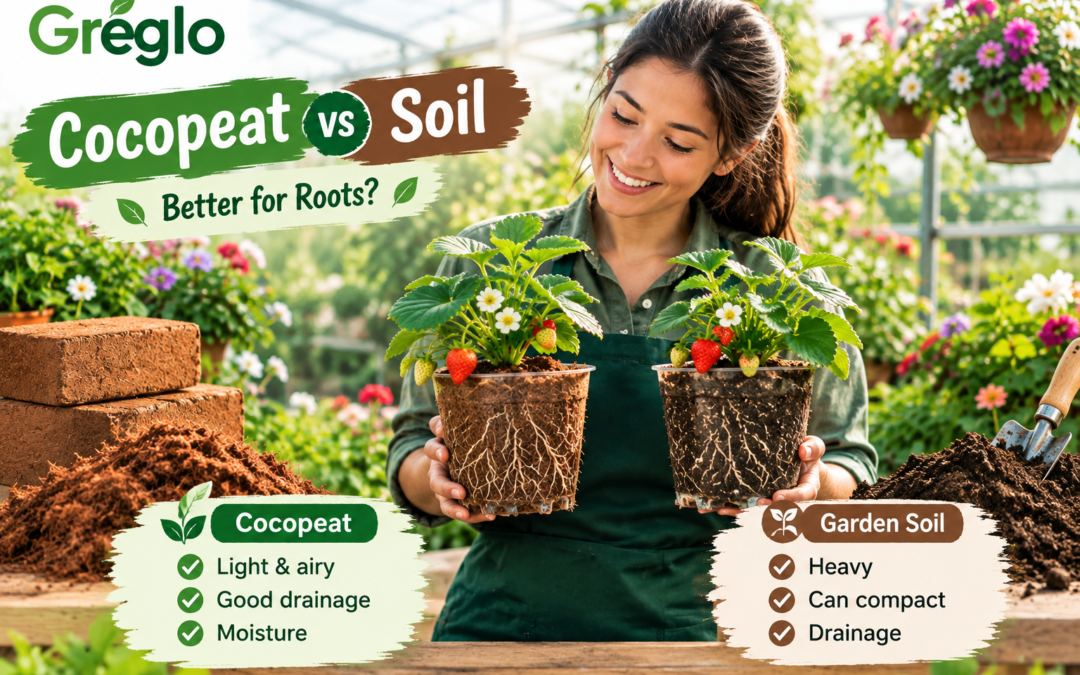
Choosing the right growing medium is one of the first steps toward healthy plant growth. While traditional soil has been used for gardening for centuries, cocopeat has become increasingly popular among home gardeners, nurseries, and growers looking for a lightweight and versatile alternative.
But when it comes to cocopeat vs soil, which one is better for plants?
The answer depends on the type of plant, growing conditions, watering habits, and how you plan to use the growing medium. In this guide, we’ll compare cocopeat and soil based on water retention, drainage, aeration, nutrients, plant growth, and practical use.
What Is Cocopeat?
Cocopeat, also known as coco coir, is a growing medium made from the fibrous material found between the outer shell and inner surface of a coconut. It is processed and commonly sold as loose material, blocks, or bricks that expand when hydrated.
One of the main benefits of cocopeat for plants is its ability to hold moisture while still providing space for air around the roots. Because it is lightweight and easy to handle, cocopeat is widely used in container gardening, seed starting, nurseries, and soilless growing systems.
However, cocopeat does not naturally provide all the nutrients plants need. For this reason, it is often combined with compost, fertilizers, or other growing materials.
What Is Soil?
Soil is a natural growing medium containing a mixture of minerals, organic matter, air, water, and microorganisms. Depending on its composition, soil can provide plants with physical support as well as naturally occurring nutrients.
Garden soil can vary considerably. Clay-heavy soil may retain too much water, while sandy soil may drain quickly. Good-quality soil with sufficient organic matter can provide a balanced environment for many plants.
For container gardening, however, ordinary garden soil is not always ideal because it can become compacted and restrict drainage and root aeration.
Cocopeat vs Soil: Key Differences
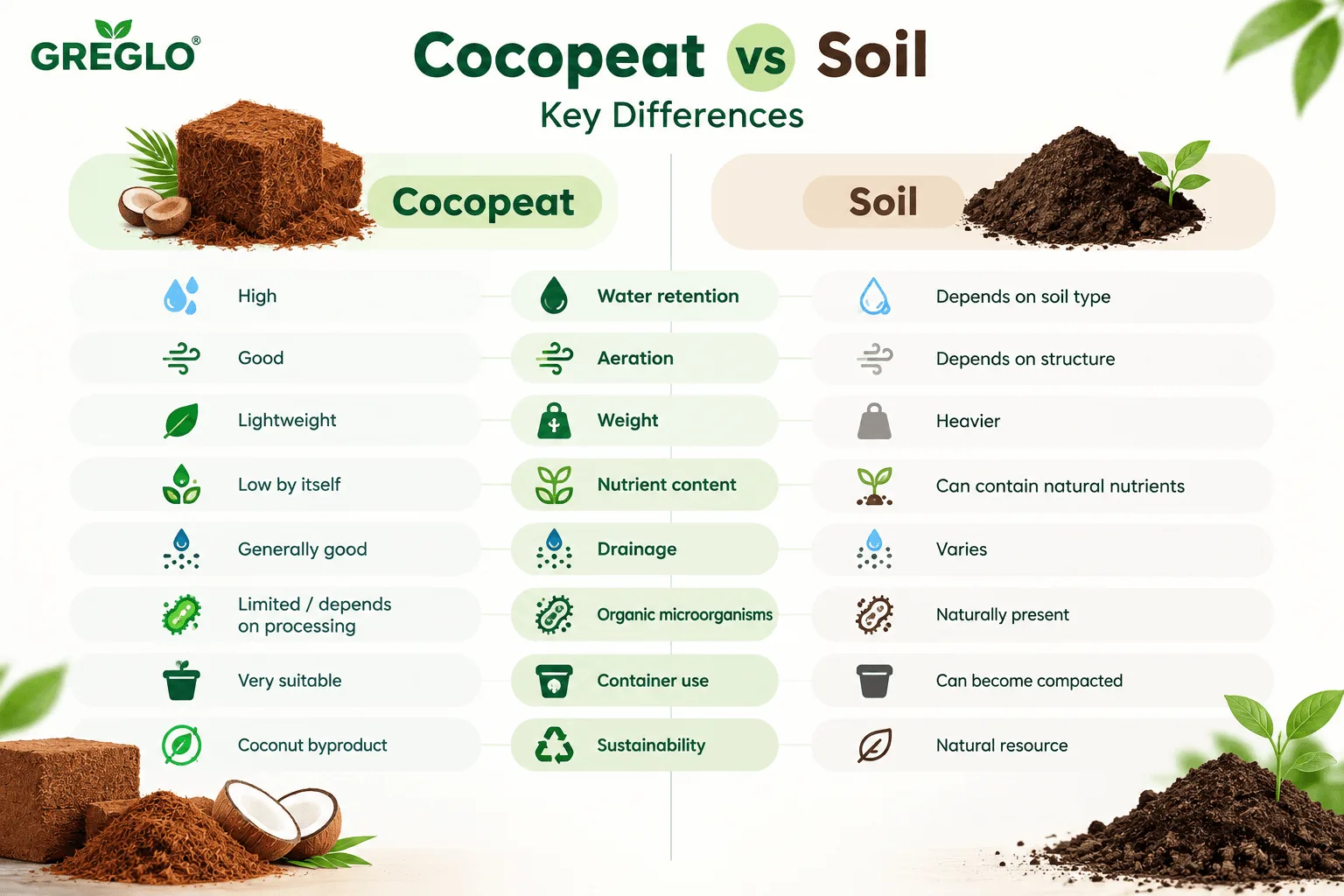
When comparing cocopeat vs soil, it is useful to look at several factors rather than focusing on a single characteristic.
| FeatureCocopeatSoil | ||
| Water retention | High | Depends on soil type |
| Aeration | Generally good | Depends on structure |
| Weight | Lightweight | Usually heavier |
| Nutrient content | Low by itself | Can contain natural nutrients |
| Drainage | Generally good | Varies |
| Organic microorganisms | Limited/depends on processing | Naturally present |
| Container use | Very suitable | Can become compacted |
| Sustainability | Made from coconut-processing byproduct | Natural resource |
Water Retention
One of the biggest differences between cocopeat and soil is how they manage moisture.
Cocopeat can absorb and retain a significant amount of water. At the same time, its fibrous structure can maintain air spaces around plant roots. This makes it useful for plants that benefit from a consistently moist but aerated growing environment.
Soil behaves differently depending on its composition. Clay soil can hold water for a long time, while sandy soil tends to drain more quickly. Organic matter can improve the water-holding capacity and structure of many soils.
If you frequently have difficulty keeping container plants evenly moist, cocopeat can be a useful component of a growing mix.
Drainage and Aeration
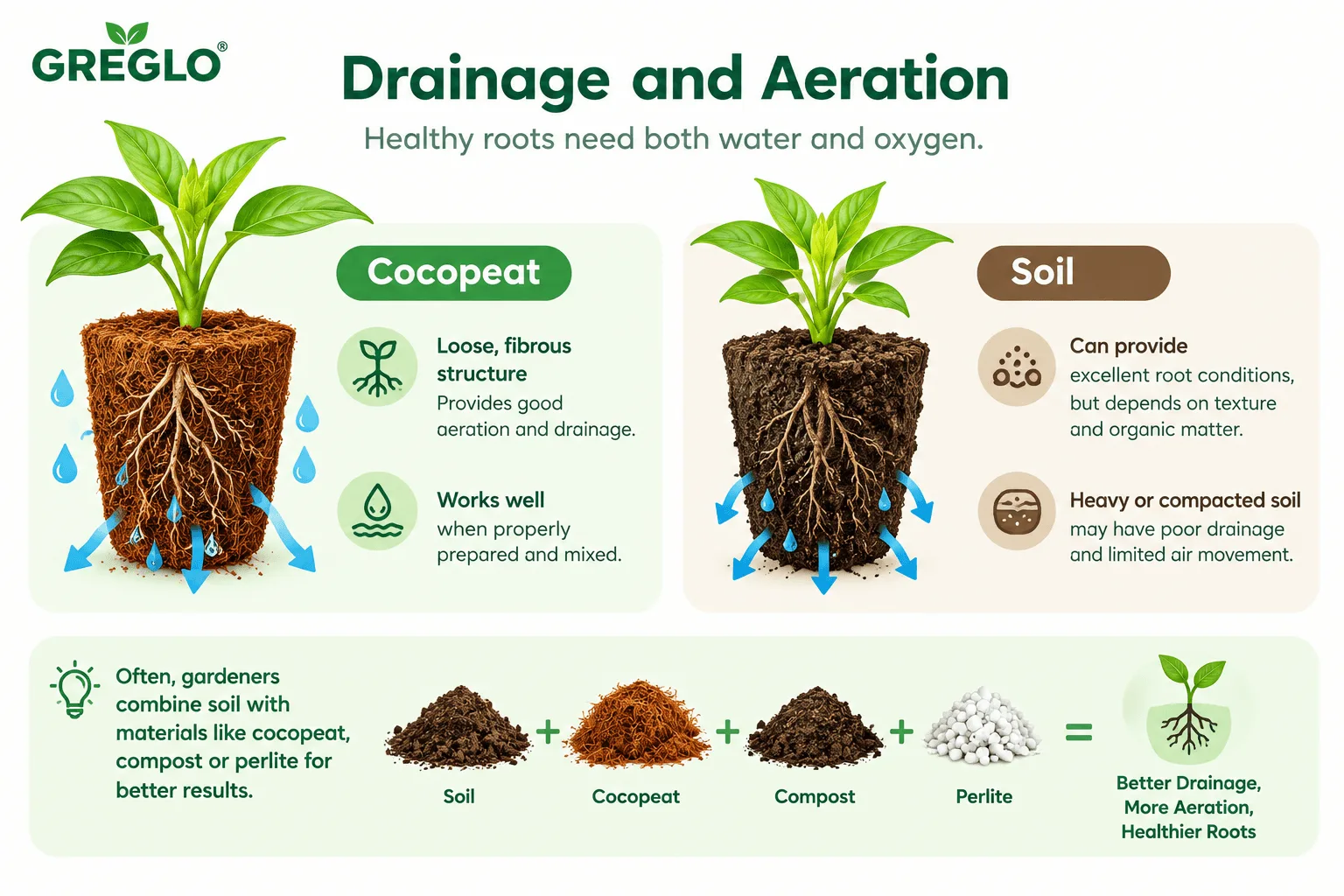
Healthy roots need both water and oxygen. A growing medium that stays saturated for too long can reduce the amount of oxygen available to the roots.
Cocopeat has a loose, fibrous structure that can provide good aeration and drainage when properly prepared and used in an appropriate mix.
Soil can also provide excellent root conditions, but its performance depends on its texture and organic matter. Heavy or compacted soil may have poor drainage and limited air movement.
This is one reason gardeners often combine soil with materials such as cocopeat, compost, or perlite.
Nutrient Availability
This is an important point when considering cocopeat vs soil for plants.
Cocopeat should generally not be treated as a complete source of plant nutrition. Although it may contain small amounts of naturally occurring minerals, plants typically need additional nutrients when grown primarily in cocopeat.
Soil can naturally contain nutrients and organic matter, although the nutrient content varies considerably. Over time, nutrients can also become depleted and may need to be replenished with compost or fertilizers.
For this reason, choosing cocopeat does not mean eliminating the need for plant nutrition.
Weight and Handling
Cocopeat is significantly lighter than most garden soil. This makes it convenient for container gardening, rooftop gardens, nurseries, and situations where moving heavy pots is difficult.
Soil is heavier, especially when wet. While that weight can provide stability for large plants, it can make large containers difficult to move.
For gardeners managing many containers, the lighter nature of cocopeat can be a practical advantage.
Can Cocopeat Replace Soil?
A common question is: is cocopeat better than soil, and can it completely replace soil?
Cocopeat can be used as the primary growing medium for certain plants and growing systems, but it should not automatically be considered a complete replacement for soil.
When growing plants in mostly cocopeat, growers need to pay attention to nutrition, watering, and the quality of the cocopeat. A suitable nutrient program may be necessary to support healthy plant growth.
For many home gardeners, using cocopeat as part of a growing mix can be more practical than using it alone.
Cocopeat and Soil Mix
Instead of choosing one or the other, gardeners can combine the two.
A cocopeat soil mix can combine the moisture retention and lightweight structure of cocopeat with the physical support and nutrient-holding properties of soil.
The exact ratio depends on the plant and the characteristics of the soil being used. Compost or other materials can also be included when appropriate.
For example, a general container mix might contain:
-
-
- Soil for structure and support
- Cocopeat for moisture retention and aeration
- Compost for organic matter and nutrients
-
The ideal combination should be adjusted according to the plant's specific requirements.
Which Is Better for Different Plants?
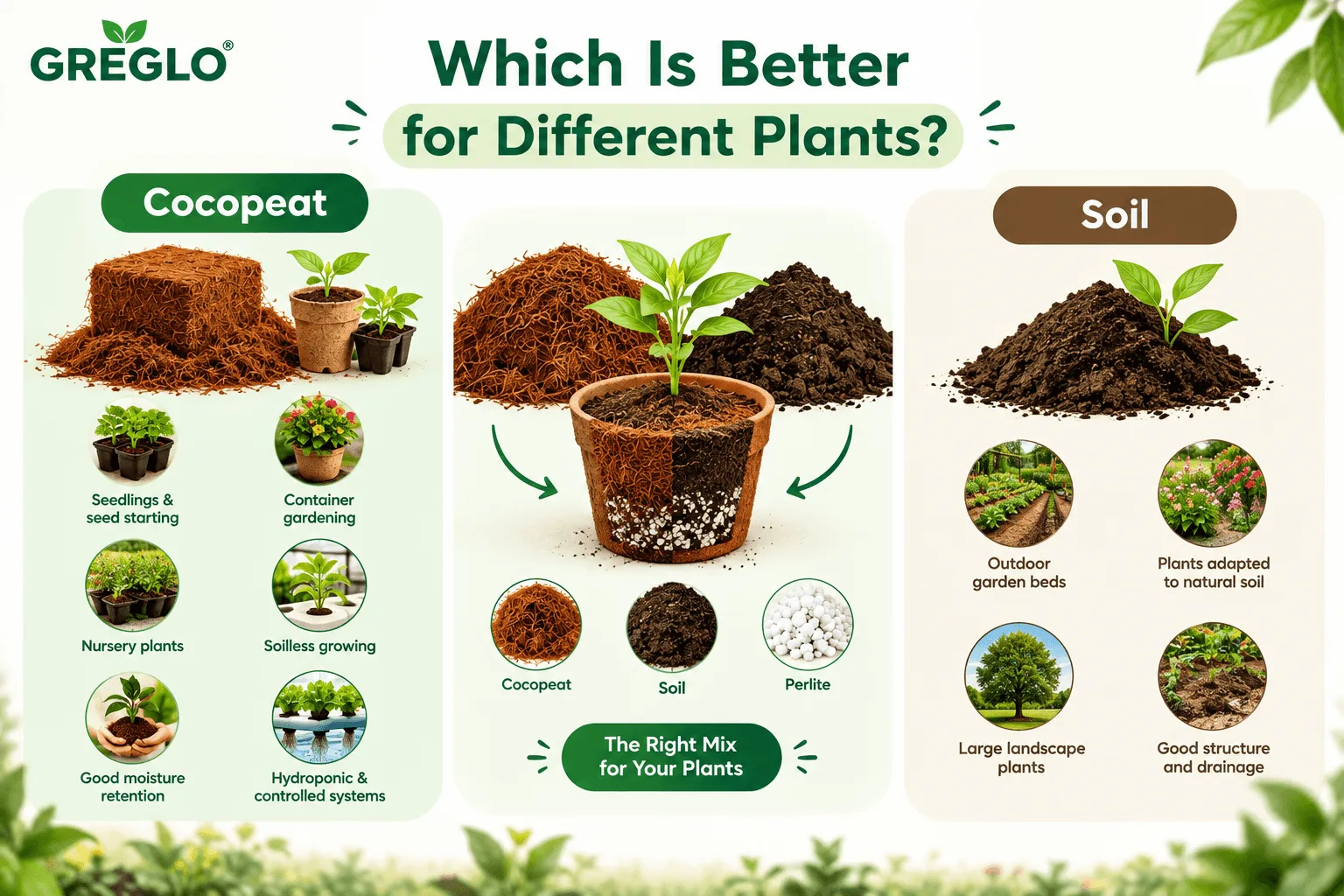
There is no single answer to which growing medium is best for every plant.
Cocopeat can be particularly useful for:
-
-
- Seedlings and seed starting
- Container gardening
- Nursery plants
- Soilless growing
- Plants that benefit from good moisture retention
- Hydroponic and other controlled growing systems
-
Soil can be particularly useful for:
-
-
- Outdoor garden beds
- Plants adapted to natural soil conditions
- Large landscape plants
- Gardens where natural soil has good structure and drainage
-
Some growers use a combination of both to create a growing environment suited to their plants.
Cocopeat vs Soil: Which One Should You Choose?
The choice between cocopeat vs soil depends on your growing conditions rather than one medium being universally better.
If you want a lightweight medium with good moisture retention and aeration, cocopeat can be a useful option. If you have fertile, well-structured garden soil, traditional soil may already provide an excellent environment for your plants.
For container gardening, combining cocopeat with soil and other suitable materials can provide a balanced growing medium.
Ultimately, the best growing medium is the one that provides your plant with the right combination of moisture, drainage, air, physical support, and nutrients.
Conclusion
Cocopeat and soil each have their own advantages, and the choice should be based on how and where you are growing your plants.
Cocopeat is lightweight, moisture-retentive, and useful in many container and soilless growing applications. Soil provides natural structure, nutrients, and biological activity, but its performance depends heavily on its composition and condition.
Rather than asking whether cocopeat is always better than soil, consider what your plant actually needs. In many cases, using cocopeat together with soil, compost, or other suitable materials can create an effective growing medium.
If you're interested in comparing cocopeat with other growing media, explore our guides on cocopeat vs peat moss, cocopeat vs perlite, and the best growing media for hydroponics.
FAQ: Cocopeat vs Soil
1. Is cocopeat better than soil for plants?
Cocopeat is not universally better than soil. It depends on the plant and growing conditions. Cocopeat is lightweight and provides good moisture retention and aeration, while suitable soil can provide natural nutrients and physical support.
2. Can cocopeat replace soil?
Cocopeat can be used as a primary growing medium for some plants, but it does not automatically provide everything plants need. When using mostly cocopeat, plants may require an appropriate nutrient supply and careful watering.
3. Can I mix cocopeat with soil?
Yes. A cocopeat soil mix is commonly used for container gardening. Cocopeat can improve moisture retention and help create a lighter, more aerated growing medium, while soil provides structure and support.
4. What are the benefits of cocopeat for plants?
The main benefits of cocopeat for plants include good moisture retention, lightweight structure, and useful air spaces around roots. It can be used in container gardening, seed starting, nurseries, and some soilless growing systems.
5. Is cocopeat good for all plants?
Cocopeat can work well for many plants, but there is no single growing medium that is ideal for every plant. Different plants have different requirements for moisture, drainage, nutrients, and root support.