
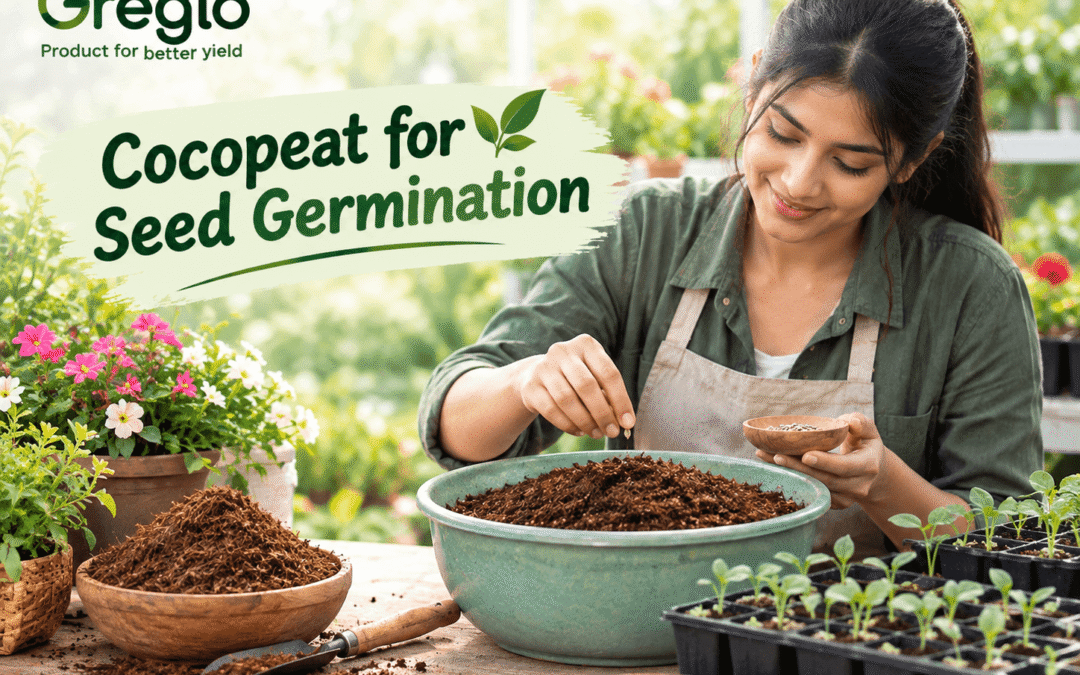
Starting plants from seeds is an exciting way to grow vegetables, flowers, herbs, and other plants. However, successful germination depends on more than just good-quality seeds. The growing medium also plays an important role.
Cocopeat has become a popular material for seed starting because it is lightweight, moisture-retentive, and easy to handle.
But is cocopeat for seed germination a good choice?
In this guide, we'll explain how cocopeat can be used for starting seeds, its benefits and limitations, how to prepare it, and common mistakes to avoid.
What Is Cocopeat?
Cocopeat, also known as coco coir, is made from processed coconut husk material. It is available in loose form as well as compressed blocks and bricks.
When hydrated, compressed cocopeat expands into a soft, fibrous growing material.
Its ability to retain moisture while maintaining air spaces makes it useful for seed starting and other growing applications.
Is Cocopeat Good for Seed Germination?
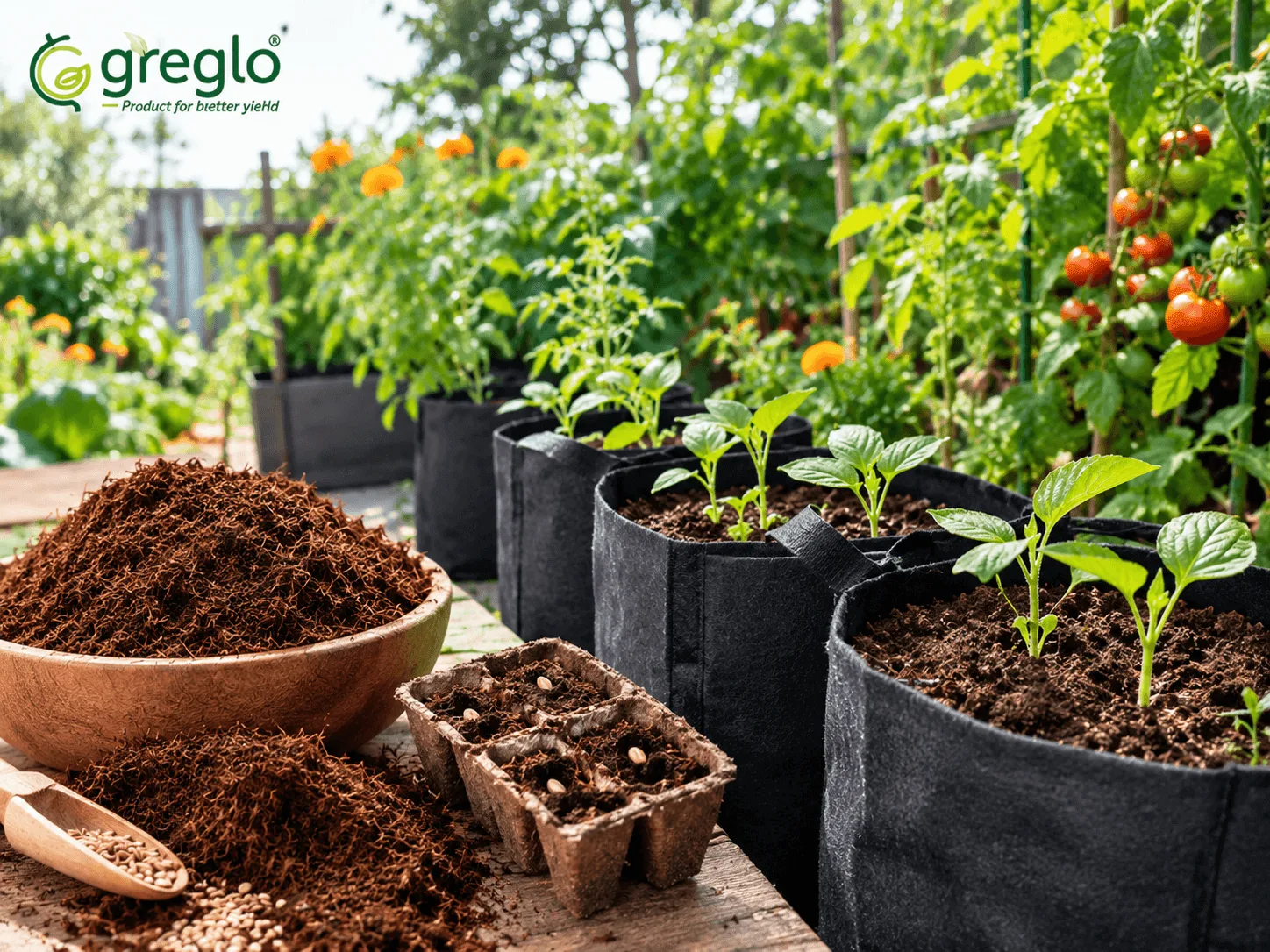
Yes, cocopeat can be a useful seed germination growing medium.
Seeds need moisture, oxygen, suitable temperature, and appropriate conditions to germinate. Cocopeat can help maintain moisture around the seed while its fibrous structure provides air spaces.
However, cocopeat should not be considered a complete nutritional medium for seedlings. Once seedlings begin developing and require more nutrients, they need access to an appropriate source of nutrition.
Benefits of Cocopeat for Seed Starting
There are several benefits of cocopeat for seed germination.
1. Good Moisture Retention
Cocopeat can retain moisture around seeds, helping maintain the consistent moisture needed during germination.
2. Lightweight
Compared with traditional garden soil, cocopeat is lightweight and easy to handle.
3. Good Aeration
Its fibrous structure can maintain air spaces, which is important because germinating seeds and developing roots need oxygen.
4. Easy to Store
Compressed cocopeat blocks and bricks can be stored conveniently before being hydrated and used.
5. Easy to Handle
Prepared cocopeat is generally easy to place into seed trays, pots, and propagation containers.
How to Plant Seeds in Cocopeat
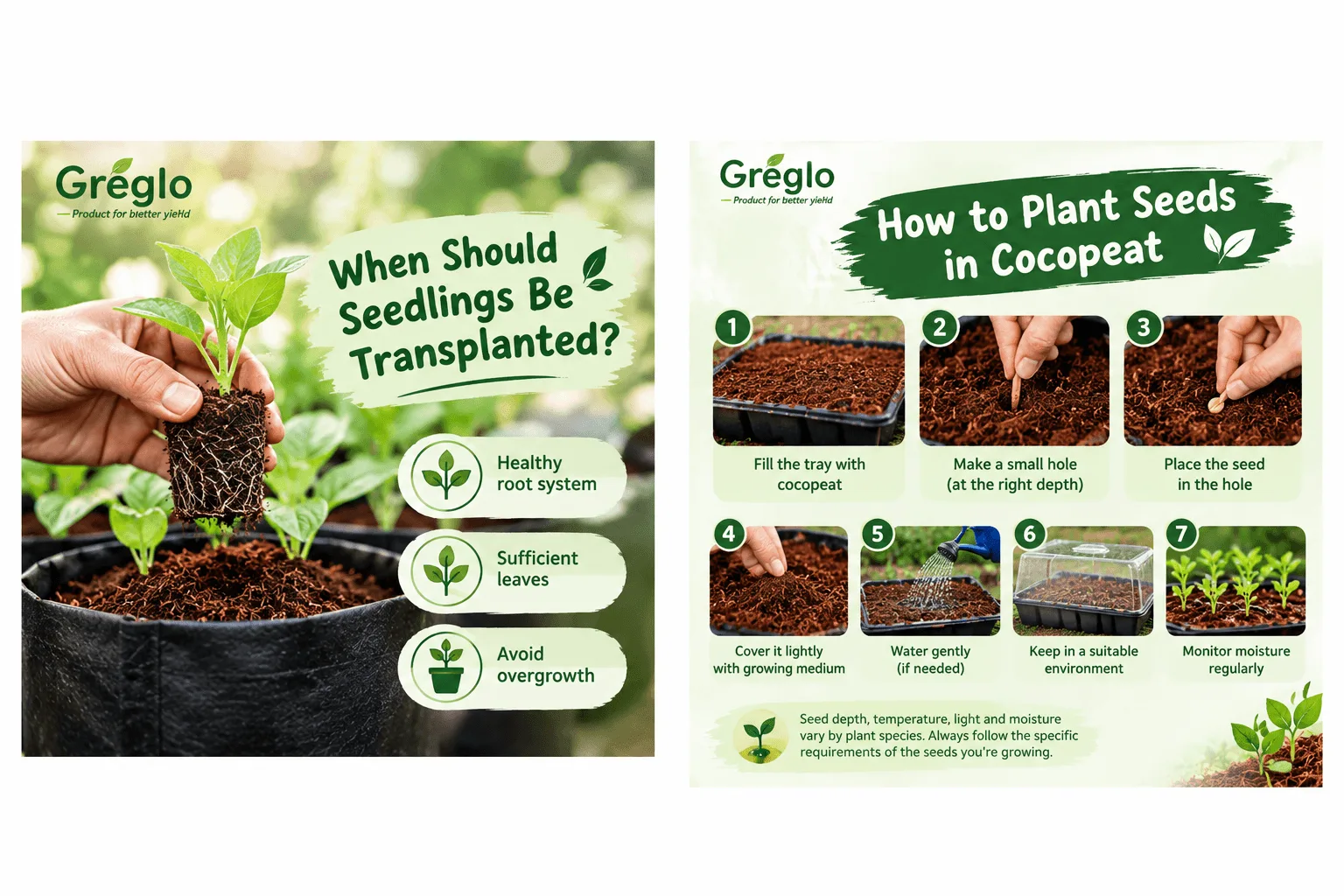
Once the cocopeat is prepared, sow the seeds according to the requirements of the particular plant.
A general process is:
-
- Fill the seed tray with prepared cocopeat.
- Make a small hole at the appropriate depth.
- Place the seed in the hole.
- Cover it lightly with growing medium.
- Water gently if additional moisture is needed.
- Keep the tray in an appropriate environment for germination.
Seed depth, temperature, light, and moisture requirements vary between plant species, so always consider the requirements of the specific seeds you are growing.
Does Cocopeat Provide Nutrients to Seeds?
Cocopeat is mainly a physical growing medium and should not be treated as a complete source of nutrition.
Seeds contain stored nutrients that support the earliest stages of germination. As seedlings develop roots and leaves, however, their nutritional requirements increase.
At that stage, seedlings may need to be transplanted into a nutrient-containing growing mix or provided with an appropriate nutrient solution.
Cocopeat vs Soil for Seed Germination
Both cocopeat and soil can be used for starting plants, but they have different properties.
Cocopeat is lightweight and has good moisture-retention characteristics. Soil can provide natural minerals, organic matter, and microorganisms depending on its composition.
For seed trays and controlled propagation, cocopeat can be convenient because it is easy to handle and provides a relatively uniform growing material.
However, the quality and preparation of both materials matter.
Cocopeat and Perlite for Seedlings
Cocopeat can also be combined with perlite.
A cocopeat and perlite mix can provide moisture retention from cocopeat while adding more air spaces and drainage through perlite.
This can be useful when the growing environment or plant requires greater drainage.
The appropriate ratio depends on the plant, watering conditions, and growing setup.
Common Mistakes When Using Cocopeat for Seeds
Overwatering
Because cocopeat retains moisture, excessive watering can keep the growing medium unnecessarily wet.
Using Poor-Quality Cocopeat
Not all cocopeat products are identical. Quality, processing, and preparation can affect how the material performs.
Forgetting Nutrients
Cocopeat alone should not be treated as a complete nutritional medium for developing seedlings.
Compacting the Medium
Pressing cocopeat too tightly can reduce the air spaces that developing roots need.
Planting Seeds Too Deep
Seeds should be planted according to the requirements of the specific plant. Planting too deeply can interfere with successful emergence.
When Should Seedlings Be Transplanted?
The right transplanting time depends on the plant species and seedling development.
In general, seedlings can be moved when they have developed a healthy root system and sufficient leaves to continue growing independently.
Avoid delaying transplantation for too long if the seedling has outgrown its container or requires additional nutrients and space.
Explore GREGLO for quality cocopeat and growing media solutions for healthier, more consistent plant growth.
Frequently Asked Questions
1. Is cocopeat good for seed germination?
Yes. Cocopeat for seed germination can be useful because it retains moisture, provides air spaces, and is lightweight and easy to handle.
2. Can seeds grow in cocopeat alone?
Seeds can germinate in cocopeat alone, but developing seedlings eventually need an appropriate supply of nutrients. Cocopeat should not be treated as a complete nutritional growing medium.
3. How do you prepare cocopeat for seeds?
Hydrate compressed cocopeat, allow it to expand, loosen the material, remove unwanted debris, and use the moist cocopeat in a clean seed tray or container.
4. Does cocopeat help seeds germinate faster?
Cocopeat can provide suitable moisture and aeration conditions for germination, but germination speed primarily depends on the seed species, seed quality, temperature, moisture, and other environmental conditions.
5. Can I mix cocopeat with soil for seedlings?
Yes. Cocopeat can be combined with suitable soil and organic matter to create a growing mix for seedlings. The mix should provide appropriate moisture, drainage, aeration, and nutrition.