
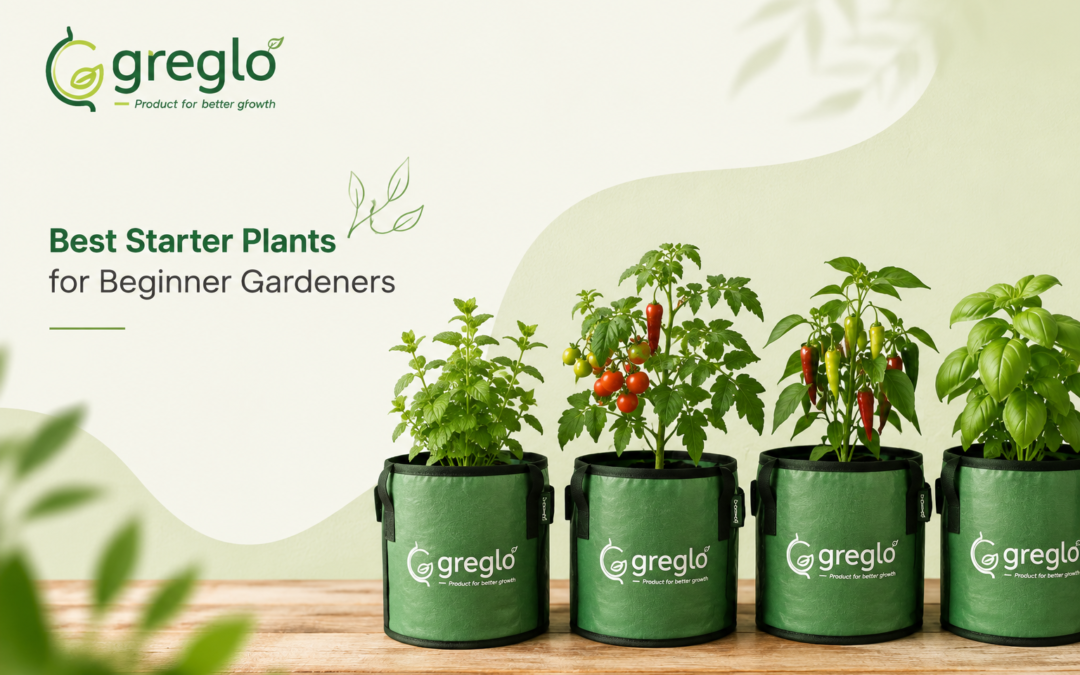
Best Starter Plants for Beginner Gardeners
Starting a garden can feel confusing when you see hundreds of plants to choose from. Some need more space, some require specific growing conditions, and others need regular care.
For beginners, choosing the right plants can make the experience much easier and more enjoyable. The best starter plants are generally those that are relatively easy to manage, suitable for your growing conditions and rewarding enough to keep you interested.
Whether you are growing plants on a balcony, terrace, backyard or in containers, you can start with a small selection of beginner-friendly plants and gradually expand your garden.
If you are learning how to start a garden, choosing suitable plants is one of the first decisions to make.
🌱 What Makes a Good Starter Plant?
Instead, beginners should look for plants that are reasonably adaptable and easy to understand.
When choosing plants, consider:
-
- How much sunlight they need
- How frequently they need water
- How much space their roots require
- Whether they grow well in containers
- How long they take to produce results
- Whether they suit your local climate
- How much maintenance they require
Choosing plants that match your available space and growing conditions is more important than simply choosing the most popular varieties.
🌿 1. Mint
Mint is one of the easiest herbs for beginners to grow.
It can grow well in containers and can be useful in everyday cooking and drinks. Because mint can spread quickly, growing it in a separate container is often a practical choice.
Give mint:
-
- A suitable container
- Well-draining growing medium
- Regular moisture
- Adequate sunlight or suitable partial shade
Mint is a good choice for home gardening because it does not require a large growing area.
🌿 2. Coriander
Coriander is another useful option for beginners, particularly if you want to grow something that can be used regularly in the kitchen.
It can be grown in containers with suitable growing media. Instead of planting too much at once, beginners can sow a small quantity and make additional sowings later.
This gives you a simple way to learn about germination, watering and harvesting.
🌿 3. Basil
Basil is an excellent choice if you want an aromatic herb for your garden.
It generally performs well when given adequate sunlight and suitable growing conditions. Regular harvesting can also encourage the plant to produce new growth.
Basil can be grown in:
-
- Pots
- Grow bags
- Balcony containers
- Terrace gardens
- Small home gardens
It is a practical option for people starting gardening for beginners.
🥬 4. Spinach
Spinach is a useful leafy vegetable for beginner gardeners.
It can be grown in containers when provided with sufficient growing space and suitable conditions. Because leafy vegetables can provide relatively quick feedback, they can be encouraging for people who are new to gardening.
Keep the growing medium adequately moist without leaving the roots waterlogged.
🥬 5. Lettuce
Lettuce can be another good choice for container gardening.
It generally does not require the same amount of space as larger vegetable plants, making it useful for small gardens.
Lettuce can be grown in:
-
- Pots
- Shallow containers
- Grow bags
- Balcony gardens
- Raised planting areas
Choose a suitable variety for your local conditions and provide adequate light.
🍅 6. Tomato
Tomatoes are popular among beginners because watching the plant develop flowers and fruit can make gardening especially rewarding.
However, tomatoes usually require more attention than simple herbs. Depending on the variety, they may need:
- A larger container
- Adequate sunlight
- Regular watering
- Plant support
- Suitable nutrition
If you have enough space and sunlight, tomatoes can be one of the most rewarding plants to grow at home.
🌶️ 7. Chilli
Chilli plants are another practical option for a home vegetable garden.
They can be grown in containers and may continue producing for a considerable period when given appropriate care.
For beginners, chilli can be a useful way to learn about:
-
- Container size
- Watering
- Sunlight
- Plant nutrition
- Flowering and fruiting
Choose varieties that are suitable for your local growing conditions.
🍆 8. Brinjal
Brinjal, also known as eggplant, can grow well in suitable containers when given enough root space.
It generally requires adequate sunlight and consistent care. A larger container is preferable as the plant develops.
Brinjal can be a good addition to a home vegetable garden if you have enough space for a medium-sized plant.
🌱 9. Radish
Radish is worth considering if you want to learn about root vegetables.
One advantage for beginners is that radishes can be grown in containers with suitable depth.
The important considerations include:
- Loose growing medium
- Suitable container depth
- Consistent moisture
- Appropriate sunlight
Avoid compacting the growing medium because root vegetables need room to develop.
🌱 10. Beans
Beans can be an interesting choice for beginner gardeners, particularly if you want to grow vertically.
Some varieties require support as they climb. A trellis, frame or suitable support can help the plants grow upward instead of spreading across the ground.
This makes beans useful for gardeners trying to make efficient use of limited space.
🥕 Best Starter Plants for a Home Vegetable Garden
If your main goal is growing food, begin with vegetables that match your climate and available space.
A simple beginner selection could include:
| Plant | Space Needed | Beginner Level |
| Spinach | Small | Easy |
| Radish | Small | Easy |
| Chilli | Medium | Easy |
| Tomato | Medium | Moderate |
| Beans | Medium | Easy–Moderate |
| Brinjal | Medium | Moderate |
| Lettuce | Small | Easy |
| Okra | Medium | Moderate |
The exact suitability of each plant depends on your local climate, season and growing conditions.
🪴 Should Beginners Use Pots or Grow Bags?
Both pots and grow bags can be useful for container gardening.
The right choice depends on the plant, available space and your growing requirements.
When selecting a container, consider:
- Root space
- Container depth
- Drainage
- Material
- Durability
- Growing volume
Grow bags can be particularly useful when you want flexible containers for vegetables and other plants.
For more information about choosing suitable containers, see our guide on grow bags for gardening.
💧 How to Care for Starter Plants
Choosing easy plants is only the beginning. Basic care is still important.
-
Water Carefully
Do not automatically water every plant every day. Check the growing medium and plant condition first.
-
Provide Enough Light
Place plants where they can receive the amount of light they require.
-
Give Plants Enough Space
Avoid placing too many plants in a single container. Crowding can affect airflow and root development.
-
Feed When Necessary
Plants may require additional nutrients as they grow, particularly when grown in containers.
-
Monitor Regularly
Check leaves, stems and new growth for signs of pests, nutrient problems or watering issues.
🚫 Common Mistakes When Choosing Starter Plants
Beginners often make the mistake of choosing plants based only on appearance.
Avoid:
- Buying too many plants at once
- Ignoring sunlight requirements
- Choosing containers that are too small
- Growing plants that do not suit your climate
- Overcrowding containers
- Choosing high-maintenance plants immediately
- Ignoring drainage requirements
A small garden that you understand is usually better than a large garden that becomes difficult to manage.
🌿Conclusion
Choosing the best starter plants can make your first gardening experience much easier. Instead of filling your garden with many varieties, start with a few plants that match your available sunlight, space, climate and time.
Herbs, leafy vegetables, chillies, radishes, beans and simple flowering plants can provide a good introduction to home gardening. As you gain confidence, you can experiment with tomatoes, brinjal, larger vegetables and more demanding plants.
The goal of beginner gardening is not to create a perfect garden immediately. Start small, observe your plants, learn from each growing cycle and expand your garden gradually.