
Watering is one of the most important parts of home gardening, but it is also one of the easiest things to get wrong.
Many beginners ask, “How often should I water plants?” The answer is not simply once a day or twice a day. Water requirements change according to temperature, rainfall, container size, growing medium, sunlight, plant size and drainage.
This is especially important in India, where gardening conditions can change significantly between summer, monsoon and winter.
Instead of following a fixed schedule, learn how to check your growing medium and understand when your plants actually need water.
Why Is Proper Watering Important?
Plants need water for photosynthesis, nutrient movement, cell growth and other essential processes.
Too little water can cause plants to wilt and grow slowly. Too much water can reduce air around the roots and create conditions that encourage root problems.
The goal is to maintain appropriate moisture without keeping the root zone permanently saturated.
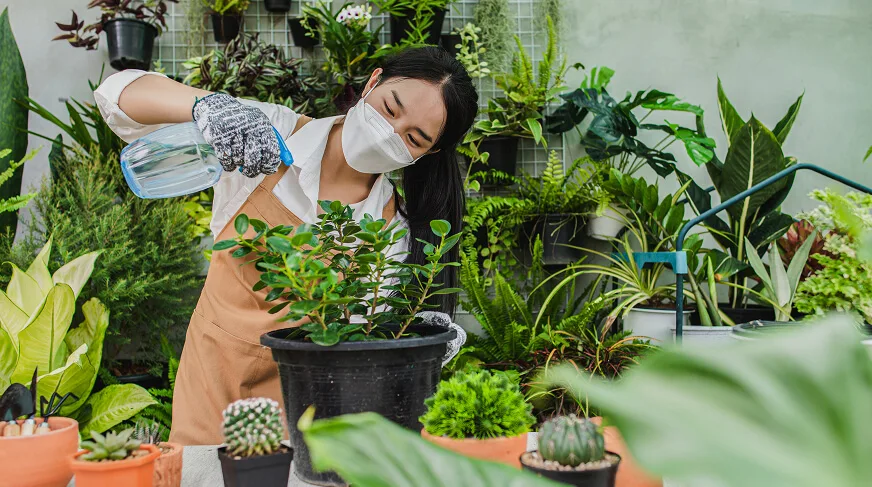
Good watering helps:
-
- Support healthy root development
- Maintain plant growth
- Improve nutrient uptake
- Reduce unnecessary water use
- Prevent excessive dryness
- Protect plants from waterlogging
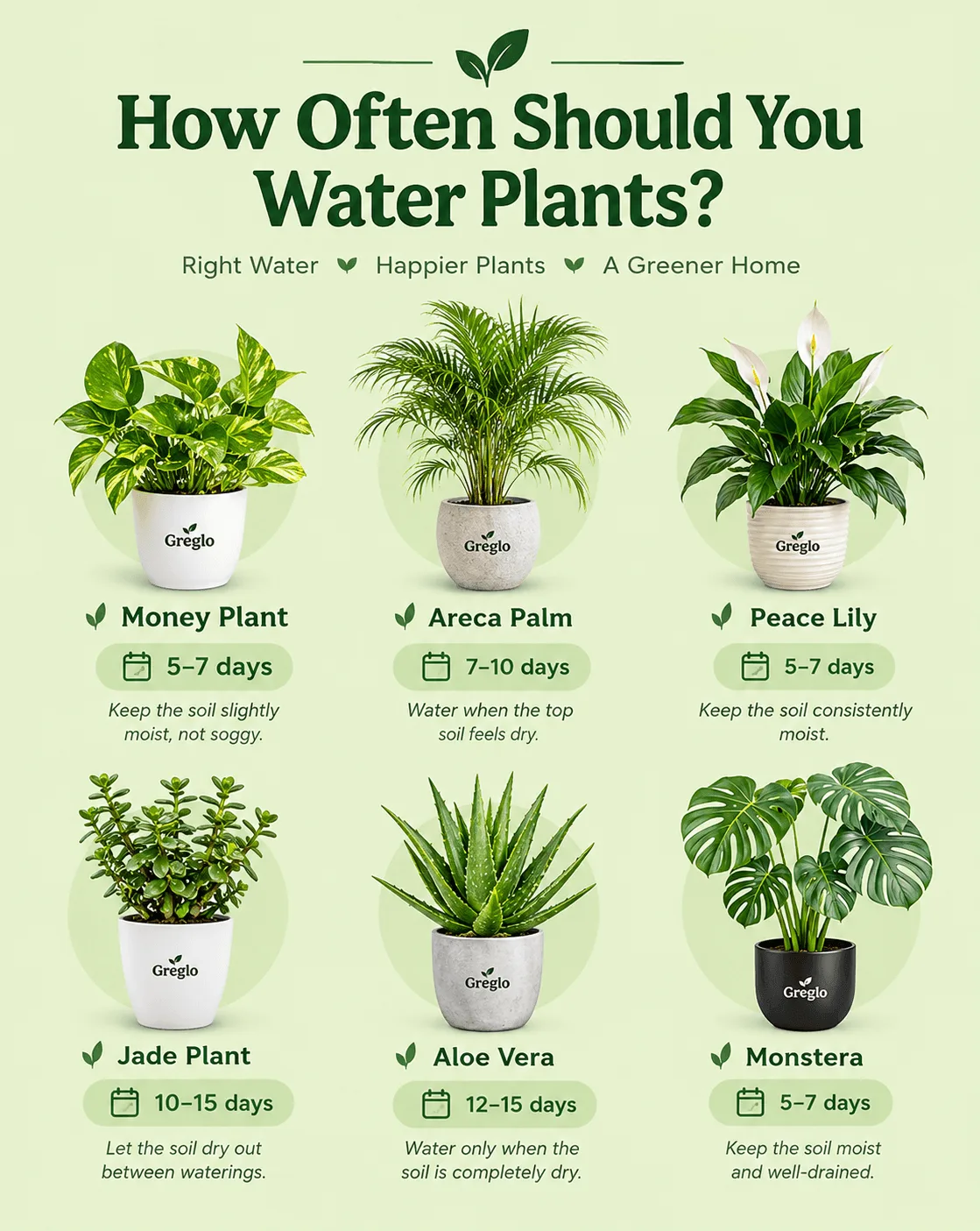
How Often Should You Water Plants?
There is no universal watering schedule that works for every garden.
A container on a hot terrace may dry much faster than a larger container placed in partial shade.
Before watering, check:
-
- Moisture in the growing medium
- Weather conditions
- Container size
- Plant size
- Sunlight exposure
- Drainage
- Recent rainfall
If the growing medium is still sufficiently moist, you may not need to water again.
How to Check if Plants Need Water
Check Before Watering
Check the Soil
Touch the top layer. If it feels moist, wait. If it feels dry, water.
Check the Plant
Drooping or weak leaves may indicate the plant needs water.
Check the Container
Small pots and grow bags in strong sunlight dry out faster.
How Often Should You Water Plants in Summer?
Indian summers can increase evaporation and cause containers to dry quickly.
During hot weather, check your plants more frequently.
You may find that some containers need water more often than they do during cooler months.
Summer Watering Tips
-
- Check containers regularly
- Water according to actual moisture
- Avoid allowing the root zone to become completely dry for extended periods
- Protect sensitive plants from excessive afternoon heat where appropriate
- Use suitable mulch if beneficial for your setup
- Make sure excess water can drain
How Often Should You Water Plants During Monsoon?
The monsoon changes the watering routine completely.
Rain may provide enough moisture, so manually watering containers according to your summer routine can result in overwatering.
During Rainy Weather
Check:
-
- Whether the container received rainfall
- How wet the growing medium is
- Whether drainage holes are working
- Whether water is collecting beneath the container
Move portable containers to a protected location when necessary, especially during prolonged heavy rainfall.
The biggest concern during monsoon gardening is often excess moisture rather than insufficient water.
How Often Should You Water Plants During Monsoon?
Cooler temperatures generally reduce evaporation compared with hot summer conditions.
As a result, containers may remain moist for longer.
Check the growing medium before watering rather than automatically following a summer schedule.
Morning watering can be practical when watering is required, particularly when temperatures are cooler.
What Is the Best Time to Water Plants?
For many home gardens, morning is a practical time to water.
Morning watering gives plants access to moisture during the daytime and allows foliage that becomes wet during watering to dry.
If morning watering is not possible, watering later in the day can still be appropriate when plants genuinely need water.
The important point is to avoid watering simply according to the clock when the growing medium is already sufficiently moist.
How Much Water Should You Give Plants?
There is no single number of litres that works for every container.
The amount depends on:
-
- Container volume
- Root depth
- Plant size
- Growing medium
- Temperature
- Drainage
Water Requirement = Container Volume + Root Depth + Plant Size + Growing Medium + Temperature + Drainage
Effective Watering = Thorough Root-Zone Moisture + Proper Drainage − Excess Watering
Watering Seeds and Young Seedlings
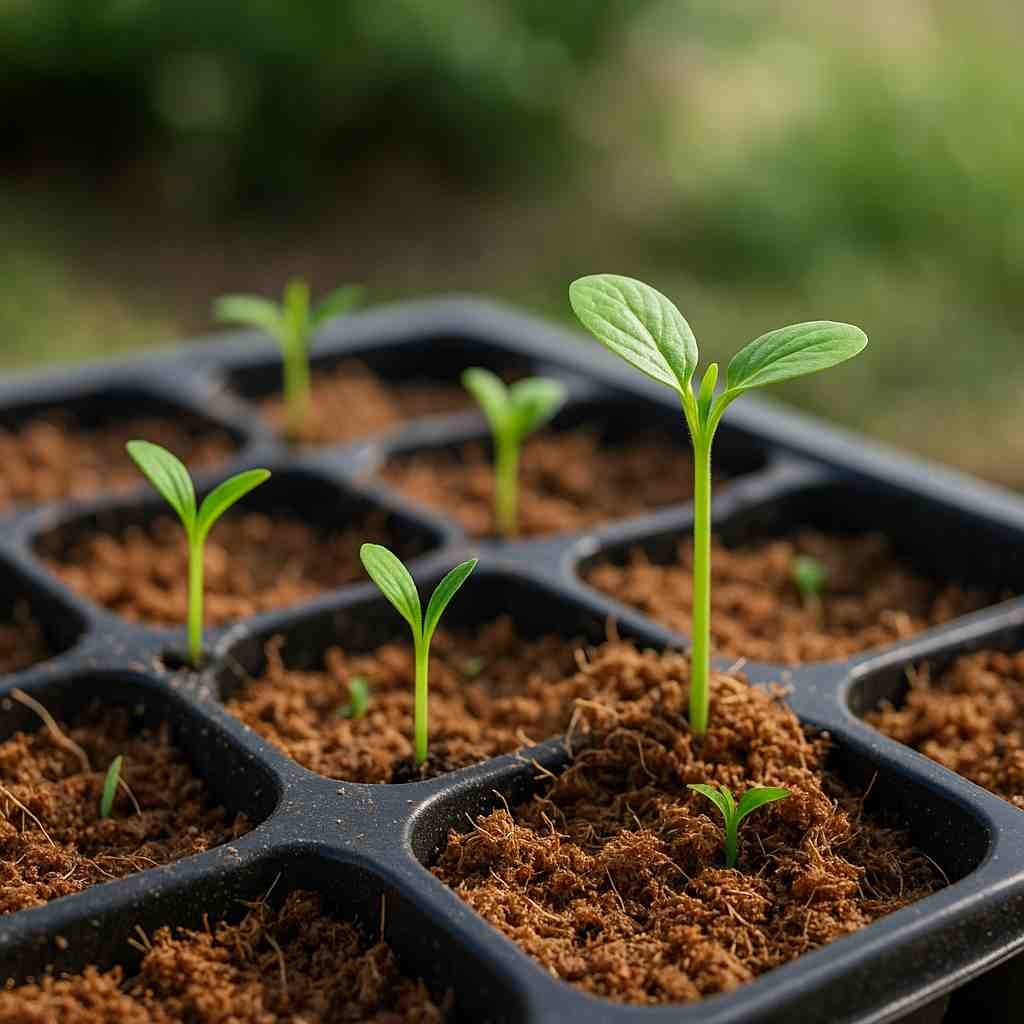
Seeds and young seedlings need more careful watering because their root systems are small.
Avoid using a strong stream of water immediately after sowing.
Instead:
-
- Use a gentle watering can
- Keep the growing medium appropriately moist
- Avoid disturbing the seeds
- Check moisture frequently
- Prevent waterloggin
Seedling Watering = Gentle Watering + Consistent Moisture + Frequent Checks − Waterlogging
Watering Plants Grown in Cocopeat
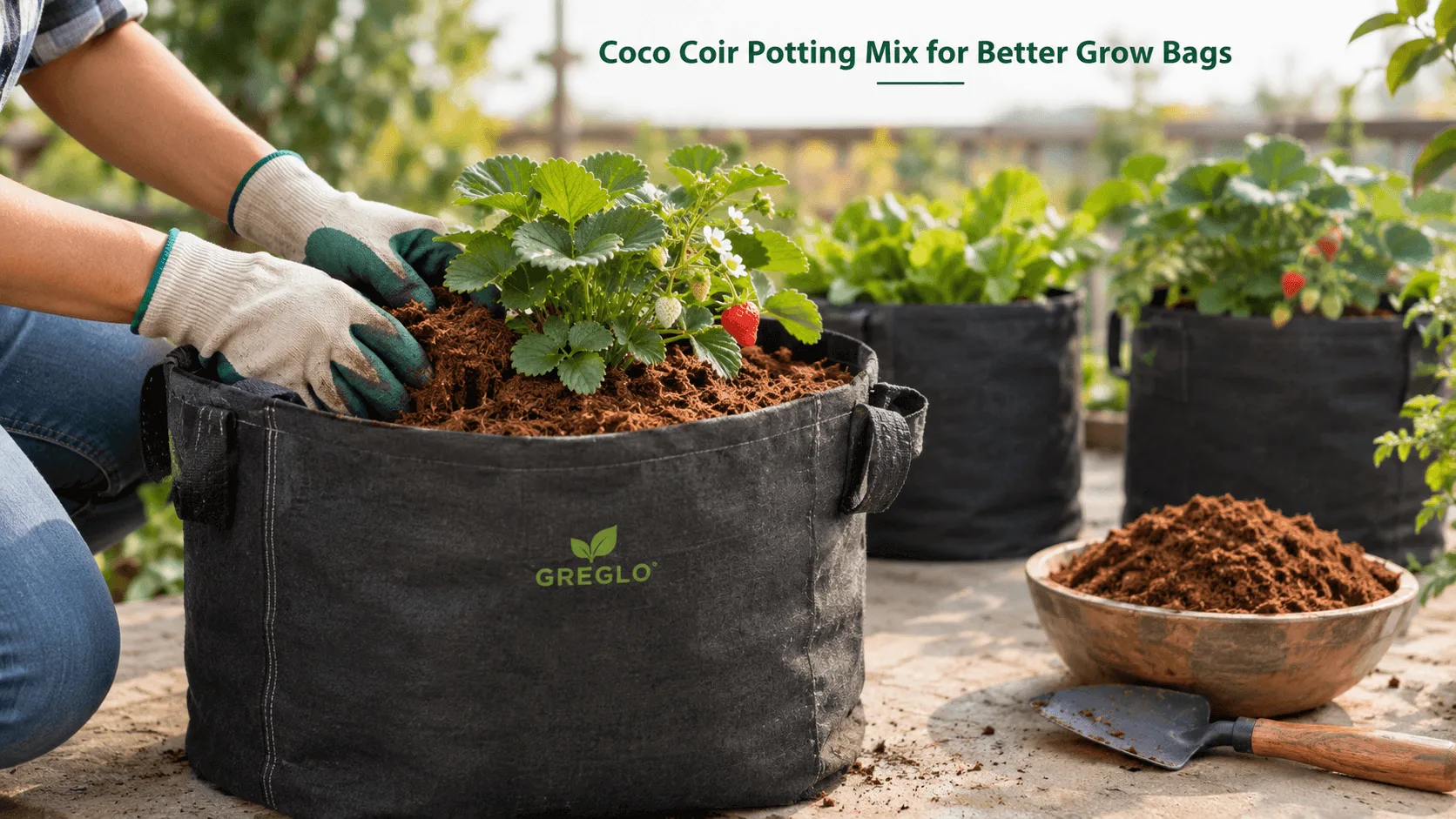
Cocopeat can retain moisture, making it useful in container growing mixes.
However, this also means you should not assume the surface dryness tells the complete story.
Check the growing medium and understand how quickly your particular container dries.
Cocopeat Watering Formula = Moisture Retention + Growing Mix + Container Size + Climate + Plant Needs
A mix containing cocopeat, compost and structural material can behave differently from ordinary garden soil.
The correct watering frequency depends on the final mix, container size, climate and plant growth.
Watering Pots vs Grow Bags
Pots and grow bags can have different moisture behaviour.
Small Pots
Small containers have less growing medium and can dry relatively quickly, especially under strong sunlight.
Large Pots
Larger containers generally hold more moisture and may take longer to dry.
Grow Bags
Grow bags provide flexible growing space, but their material and placement can influence how quickly moisture is lost.
Always check the individual container rather than applying one watering schedule to the entire garden.
Conclusion
The best answer to “how often should I water plants in India?” is not a fixed number of days.
Instead, check the growing medium, observe the plant, consider the weather and understand how quickly your container loses moisture.
During summer, containers may need more frequent checking. During the monsoon, rainfall may reduce the need for manual watering. During cooler periods, moisture may remain available for longer.
For a healthy balcony or terrace garden, focus on consistent moisture, good drainage and regular observation rather than following a rigid watering schedule.