
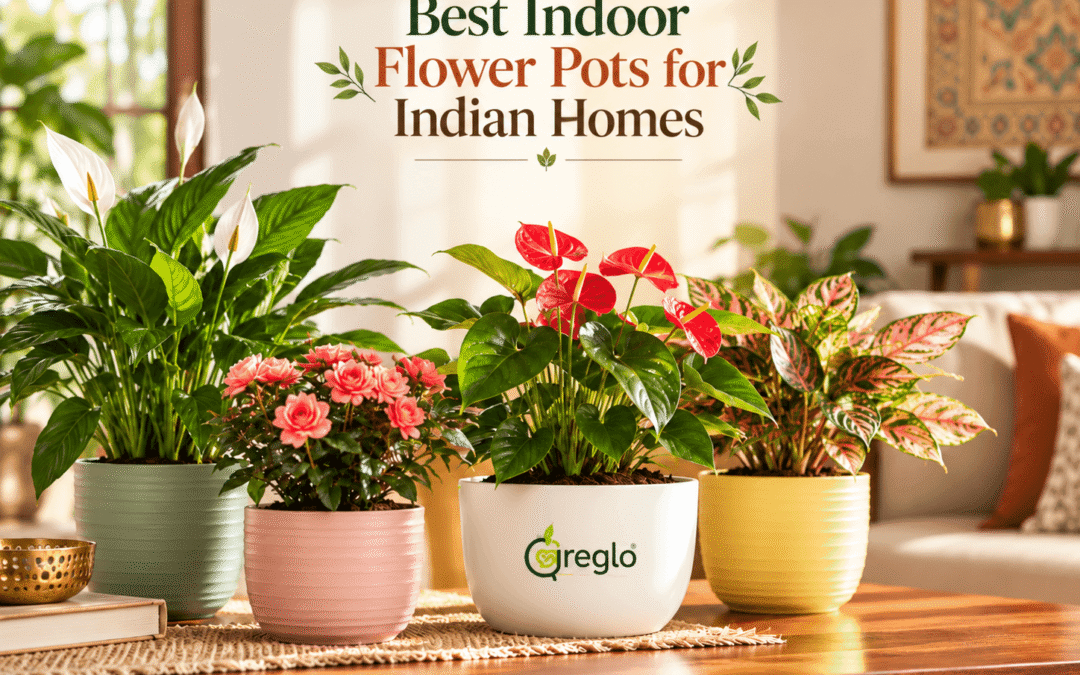
Adding flowering plants to your home is a simple way to introduce colour and natural beauty into your living space. The right best indoor flower pots can complement your interior décor while providing enough room for roots to grow.
Whether you want to decorate a living room, bedroom, balcony, or windowsill, choosing suitable pots involves more than appearance. Pot size, material, drainage, growing medium, and the plant's sunlight requirements all influence how well your flowers grow.
In this guide, learn how to choose the best flower pots for indoor plants, explore different pot styles, and discover practical tips for maintaining flowering plants in Indian homes.
🌸 Why Choose the Right Indoor Flower Pots?
A suitable pot provides space for root development and helps manage moisture around the roots. It can also make indoor gardening easier by fitting your available space and watering routine.
Here are the main benefits of choosing the right indoor plant pots:
- Healthy root growth: A suitable pot gives roots enough space to develop.
- Better moisture management: Drainage and pot material influence how quickly the growing medium dries.
- Improved home décor: Decorative pots can complement furniture, shelves, and other interior features.
- Flexible placement: Small pots work well on windowsills, while larger containers suit floor plants.
- Easier plant care: A correctly sized pot can make watering and repotting more manageable.
Remember that a beautiful pot alone cannot keep a plant healthy. Flowering plants also need suitable light, nutrients, watering, and growing conditions.
Types of Indoor Flower Pots for Home
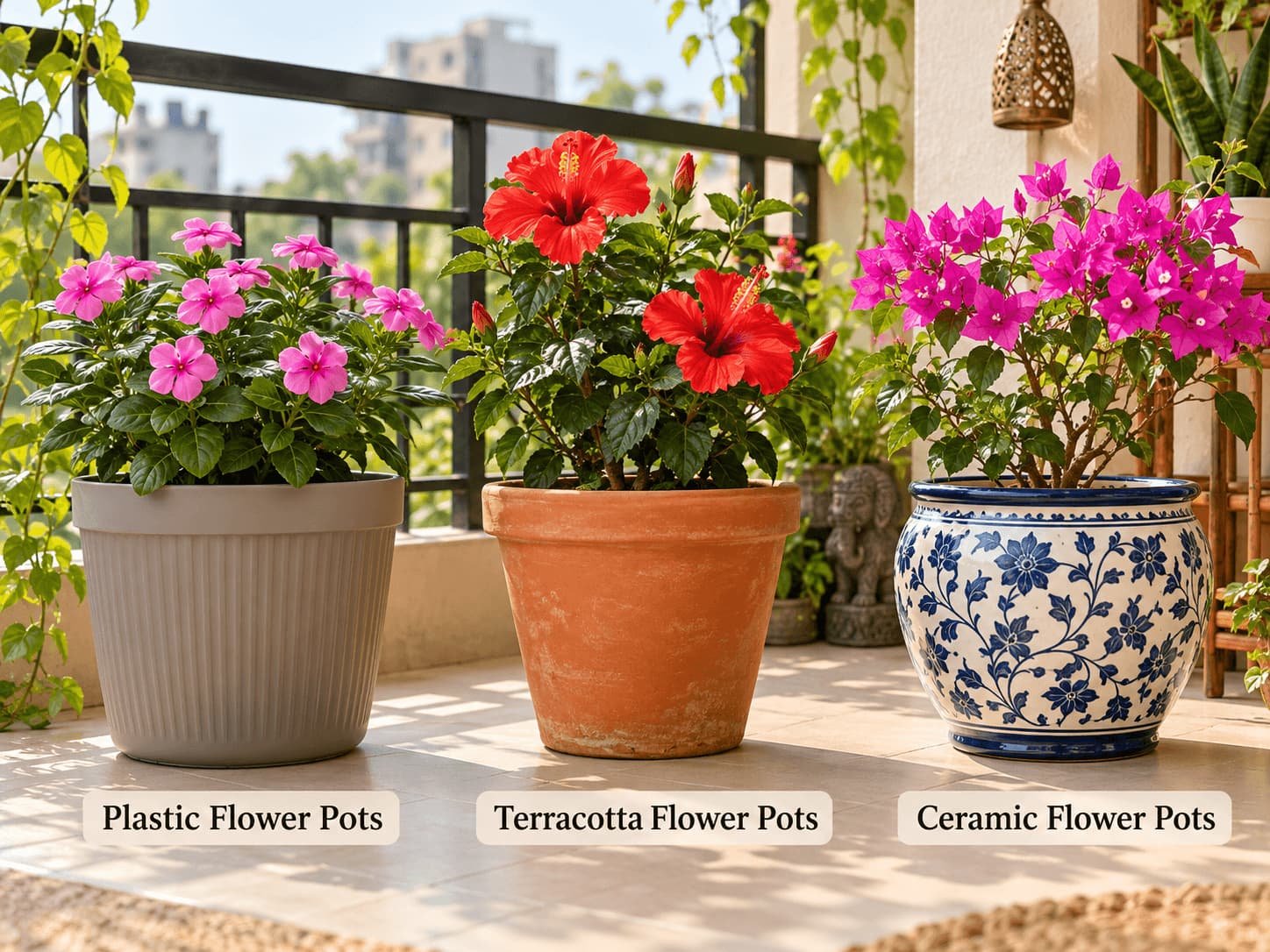
1. Plastic Flower Pots
Plastic pots are lightweight, affordable, and available in many sizes and colours. They are convenient for shelves, windowsills, and indoor gardening setups.
Plastic generally retains moisture longer than unglazed terracotta, so you may need to water less frequently depending on the plant and room conditions.
Best for: Beginners, lightweight planters, and everyday indoor gardening.
Buying tip: Choose plastic pots with drainage holes. If you use a decorative outer pot without holes, keep the plant in a removable nursery pot and empty excess water after watering.
2. Terracotta Flower Pots
Terracotta pots are made from porous clay. Their walls allow moisture to evaporate, which can help the growing medium dry more quickly.
They are suitable for plants that prefer a drying period between waterings. However, they may require more frequent watering in hot or dry conditions.
Best for: Plants that prefer well-drained growing media and traditional, natural décor.
Buying tip: Check for drainage holes and choose a size that suits the plant's root system.
3. Ceramic Flower Pots
Ceramic pots are popular for decorative indoor arrangements. They come in a variety of finishes, colours, patterns, and shapes.
Some ceramic pots have drainage holes, while others are designed as decorative containers. Glazed ceramic pots generally retain moisture more effectively than porous terracotta.
Best for: Living rooms, tables, shelves, and decorative plant displays.
Buying tip: Check the pot's weight before placing it on a shelf and make sure the planting container has suitable drainage.
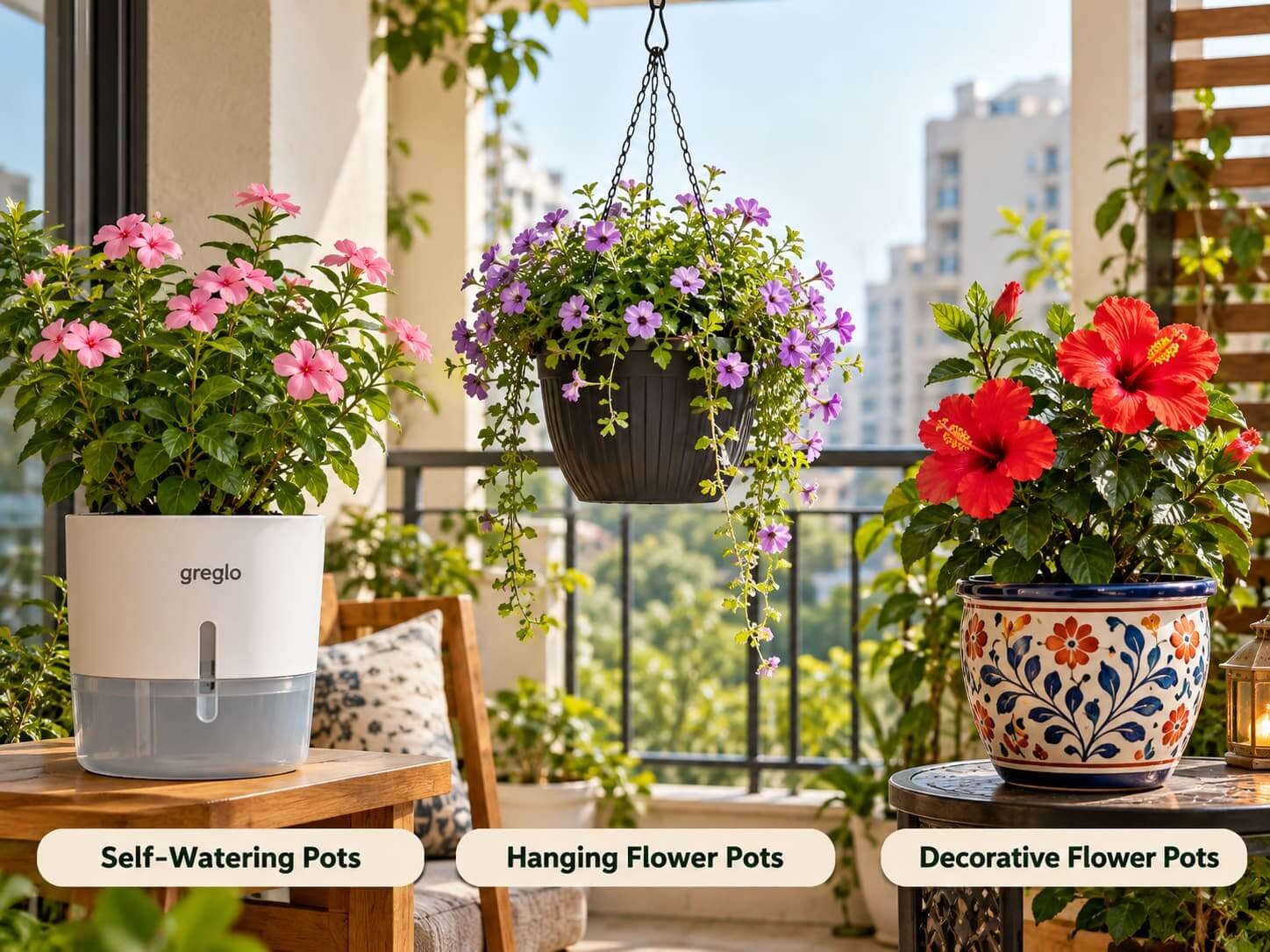
4. Self-Watering Pots
Self-watering pots usually have a water reservoir that supplies moisture to the growing medium through a wick or similar mechanism.
They can help manage watering for suitable plants, but they are not ideal for every flowering plant. Plants that prefer the growing medium to dry between waterings may struggle if the mix remains too wet.
Best for: Suitable foliage plants and selected flowering plants with consistent moisture needs.
Buying tip: Follow the manufacturer's instructions for filling and cleaning the reservoir. Check root health and moisture levels rather than assuming the reservoir removes the need for monitoring.
5. Hanging Flower Pots
Hanging pots allow you to display plants vertically without using valuable floor space. They are useful for balconies, windows near suitable light, and indoor corners.
Choose trailing flowering plants only when their light and temperature requirements match the location.
Best for: Small homes, balconies, and vertical plant displays.
Buying tip: Ensure the hanging support can bear the weight of the pot, growing medium, and water after watering.
6. Decorative Flower Pots
Decorative pots feature attractive colours, textures, patterns, and finishes. They can be used to match your home's interior style.
For healthy growth, distinguish between a decorative cover pot and the actual planting pot. The inner pot should provide drainage, and collected water should not remain trapped around the roots.
Best for: Living rooms, entryways, desks, and indoor displays.
Best Flowering Plants for Indoor Pots
Not all flowering plants thrive in dim rooms. Most need adequate light to produce flowers, so choose plants according to the brightness and temperature of your space.
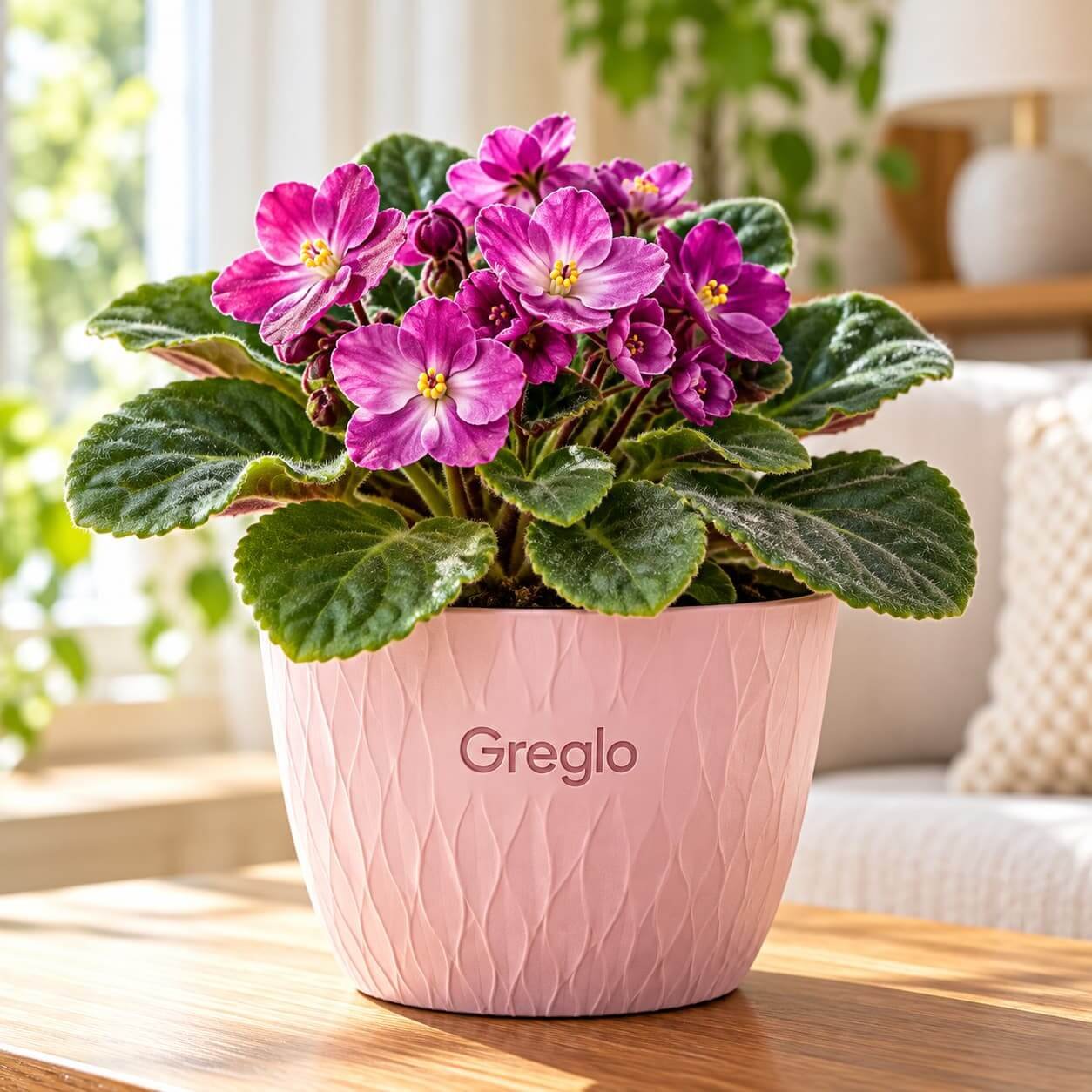
1. African Violet
African violets are compact flowering plants that can grow well indoors when given bright, indirect light.
Pot choice: A small pot suited to the root system, with appropriate drainage.
Care tip: Water carefully and avoid leaving the growing medium constantly soggy. Keep water off the leaves when possible.
2. Phalaenopsis Orchid
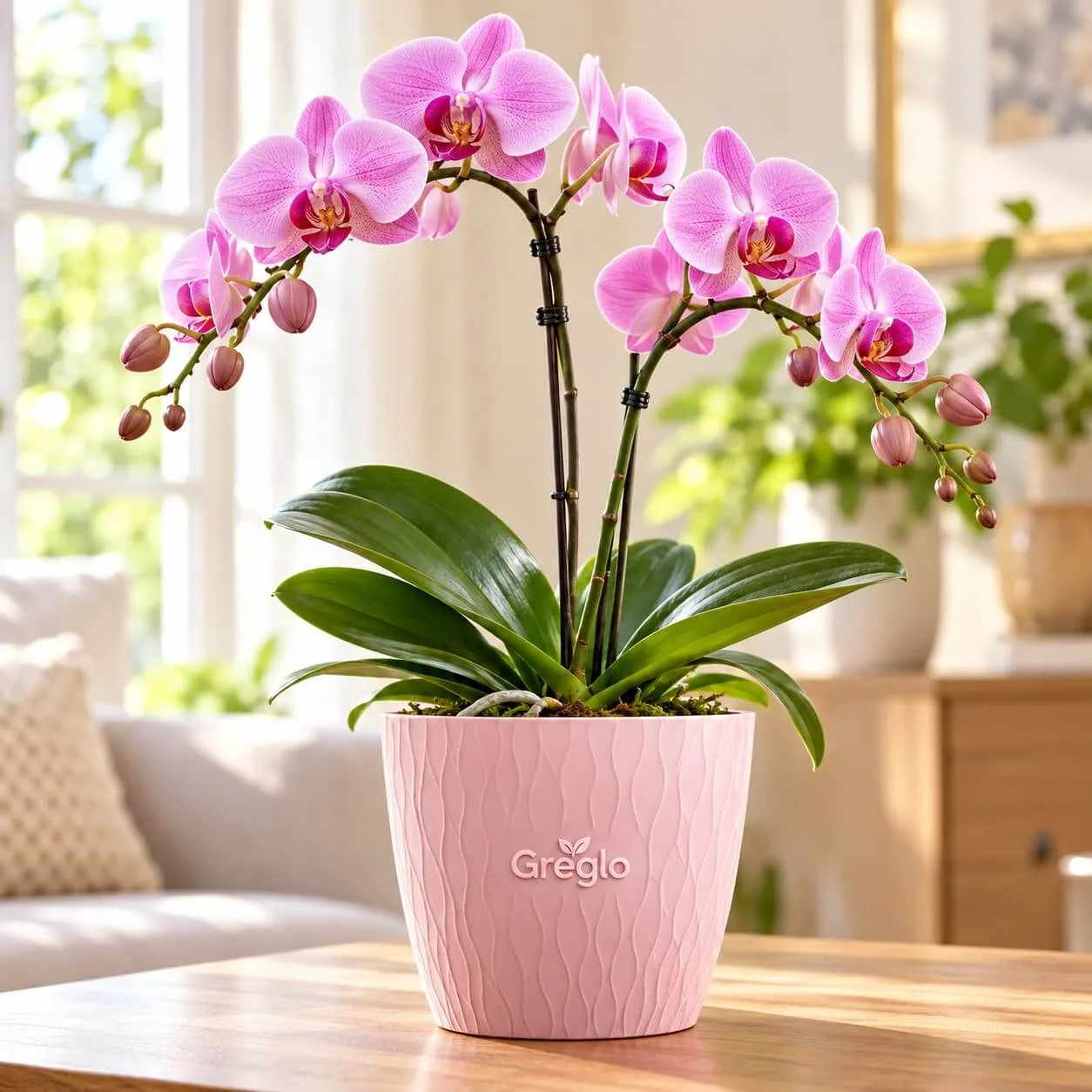
Phalaenopsis orchids can be grown indoors with suitable indirect light, humidity, and airflow. Their roots need air, so a specialised orchid pot and bark-based growing medium are often more appropriate than ordinary garden soil.
Pot choice: A well-ventilated orchid pot designed for the plant's growing medium.
Care tip: Avoid planting orchids in dense, water-retentive soil. Follow care guidance specific to the orchid variety.
3. Peace Lily
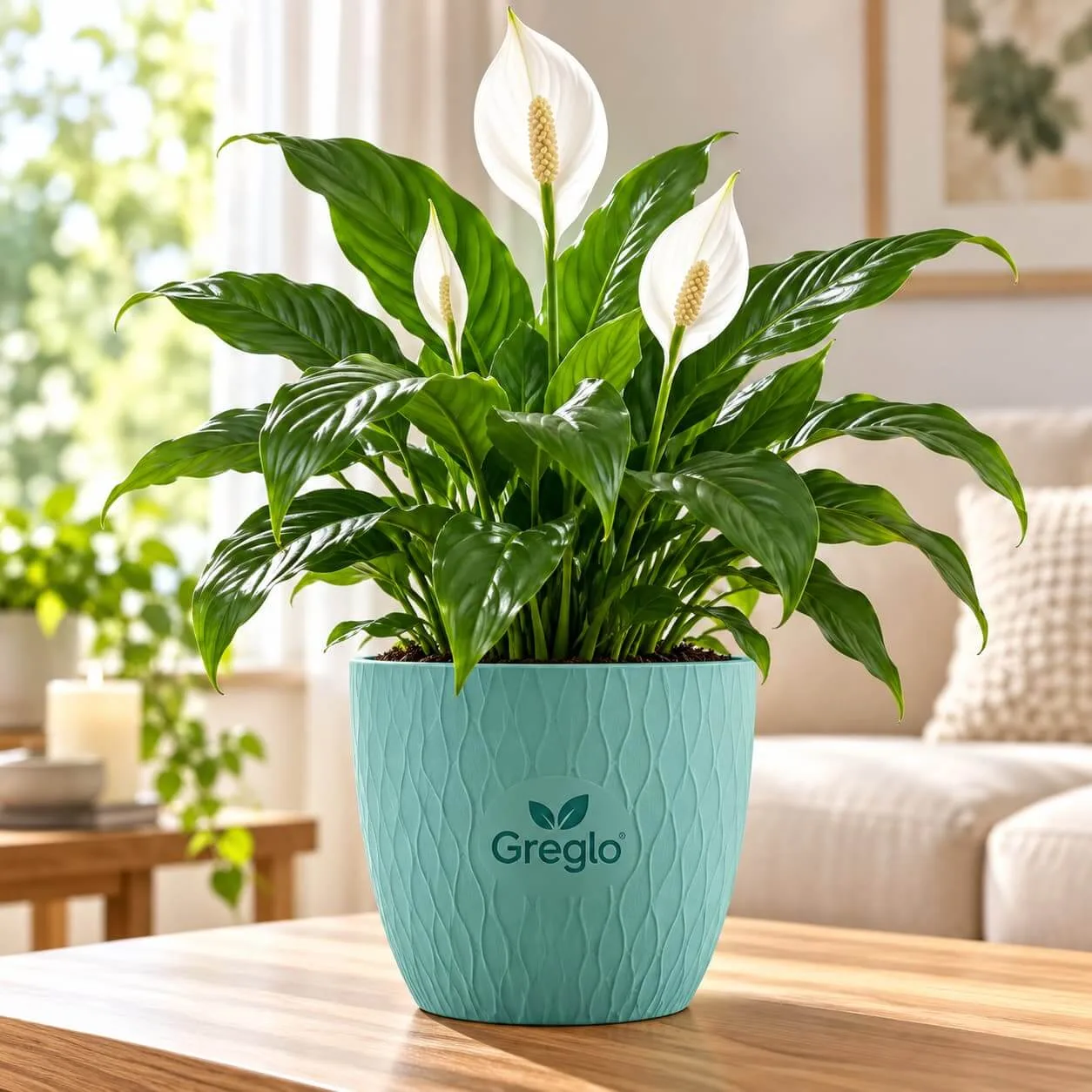
Peace lilies are known for their green leaves and white spathes, which resemble flowers. They can grow indoors with indirect light, although very low light may limit flowering.
Pot choice: A stable pot with drainage holes.
Care tip: Keep the growing medium reasonably moist without allowing the roots to sit in standing water. Peace lilies are toxic if chewed, so keep them away from children and pets.
4. Kalanchoe
Kalanchoe is a succulent that produces clusters of colourful flowers. It needs brighter light than many foliage plants and a well-draining growing medium.
Pot choice: A terracotta or other well-draining pot with drainage holes.
Care tip: Let the growing medium dry appropriately between waterings. Do not keep it constantly wet.
How to Choose the Right Pot Size
Pot size influences how quickly the growing medium dries and how much room the roots have. A pot that is too small may restrict root growth.
Use these general guidelines as a starting point:
| Plant size | General pot size | Suitable placement |
| Small flowering plant | About 10–15 cm diameter | Desk or windowsill |
| Compact indoor plant | About 15–20 cm diameter | Side table or shelf |
| Medium potted plant | About 20–30 cm diameter | Floor or larger stand |
| Larger flowering plant | About 30 cm or more, depending on roots | Balcony or spacious corner |
Signs Your Plant Needs a Larger Pot
- Roots are emerging from the drainage holes.
- The growing medium dries unusually quickly despite appropriate care.
- Roots form a dense mass around the inside of the pot.
- Growth slows even though light, watering, and nutrients are suitable.
Indoor Flower Pot Ideas for Different Spaces
Bedrooms: Choose small flower pots for windowsills, shelves, or bedside tables.
Balconies: Select sturdy pots with drainage holes for flowering plants suited to your balcony’s sunlight.
Hanging Pots: Save floor space with hanging planters and trailing plants.
Minimalist Arrangements: Group two or three pots of different heights with matching colours for a clean, stylish look.
Best Growing Medium for Indoor Flower Pots
For many common foliage plants, a mix containing cocopeat, mature compost, and a suitable aeration material can be a useful starting point.
Plants that need sharper drainage, such as succulents, require a different mix. Orchids generally need a specialised orchid medium.
How Cocopeat Helps in Indoor Pots
Cocopeat is made from processed coconut husk fibre. It can help retain moisture and create a lightweight growing medium.
However, cocopeat alone is not a complete source of nutrients for most flowering plants. Combine it with suitable nutrient sources and materials that support drainage and aeration.
Steps to Prepare a Basic Potting Mix
- Hydrate the cocopeat brick or block according to its instructions.
- Break apart the expanded material until it is loose and even.
- Mix it with mature compost and an appropriate aeration material.
- Adjust the mix to the plant's moisture and drainage requirements.
- Fill a pot with drainage holes and avoid compressing the mix too tightly.
- Water appropriately after planting and allow excess water to drain.
For more guidance, read Greglo's related article on how to use cocopeat in pots for healthy plant growth and its guide to the best cocopeat and compost mix for home gardens.
Watering Tips for Plants in Indoor Flower Pots
-
Check soil moisture before watering.
-
Adjust watering to each plant’s needs.
-
Use pots with drainage holes.
-
Empty excess water from saucers.
-
Check moisture more often during summer.
-
Reduce watering when growth slows and soil stays wet longer.
Tip: Keep moisture-loving plants evenly moist, while allowing succulents to dry between waterings.
Common Mistakes to Avoid When Buying Indoor Flower Pots
-
Poor Drainage: Choose pots with drainage holes to prevent waterlogging.
-
Oversized Pots: Match pot size to the plant’s root system.
-
Wrong Potting Mix: Use a growing medium suited to each plant type.
-
Insufficient Light: Place flowering plants where they receive adequate light.
-
Overwatering: Check soil moisture before watering.
-
Unstable Pots: Choose containers that remain stable when filled with wet growing medium.
Frequently Asked Questions
1. Which indoor flower pots are best for home use?
Plastic, terracotta, and ceramic pots can all work well. Choose based on the plant's moisture needs, the container's drainage, its size, and where you intend to place it.
2. Which pots are best for flowering plants?
The best pot depends on the plant. African violets need a suitably sized container, orchids often need specialised ventilated pots, and succulents generally benefit from fast-draining growing media and drainage holes.
3. Are plastic pots good for indoor flowers?
Yes. Plastic pots are lightweight and retain moisture well. They are suitable for many indoor flowers as long as the pot is appropriately sized and provides adequate drainage.