
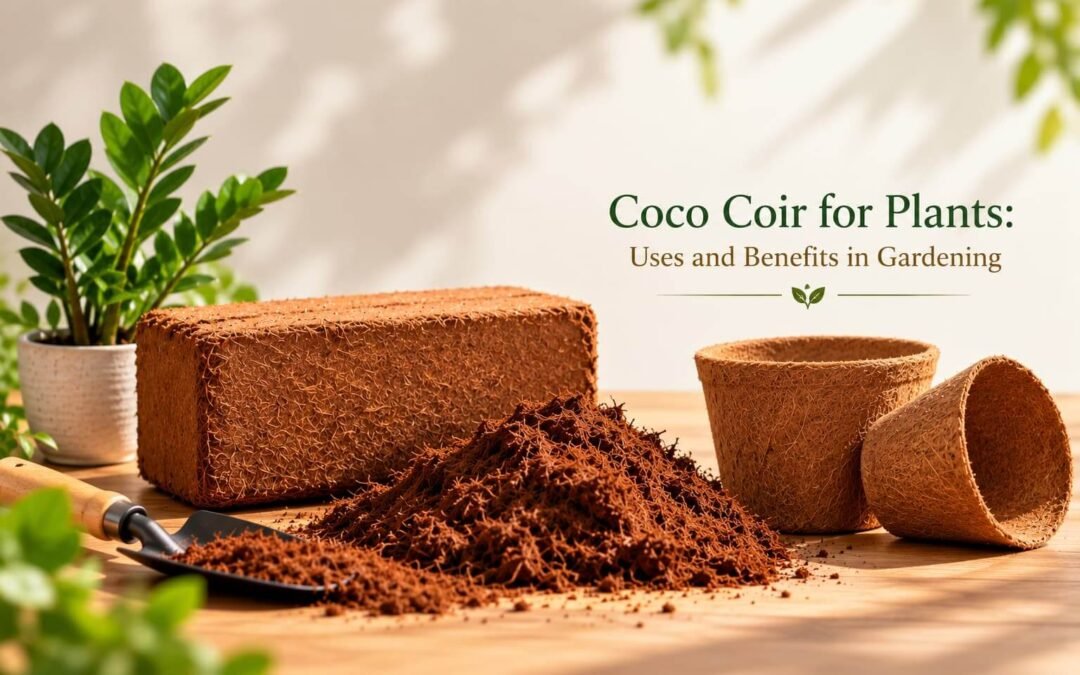
What Is Coco Coir for Plants?
Coco coir for plants is a growing material made from coconut husks. It is widely used in home gardening, nurseries, container gardening, and commercial horticulture.
Coconut coir is available in different forms, including fine cocopeat, compressed cocopeat blocks, small cocopeat bricks, and larger coir chips. Each type has different physical properties and uses.
Gardeners commonly use cocopeat for plants because it retains moisture, is relatively lightweight, and can be combined with other materials to prepare suitable growing mixes.
Benefits of Coco Coir for Plants
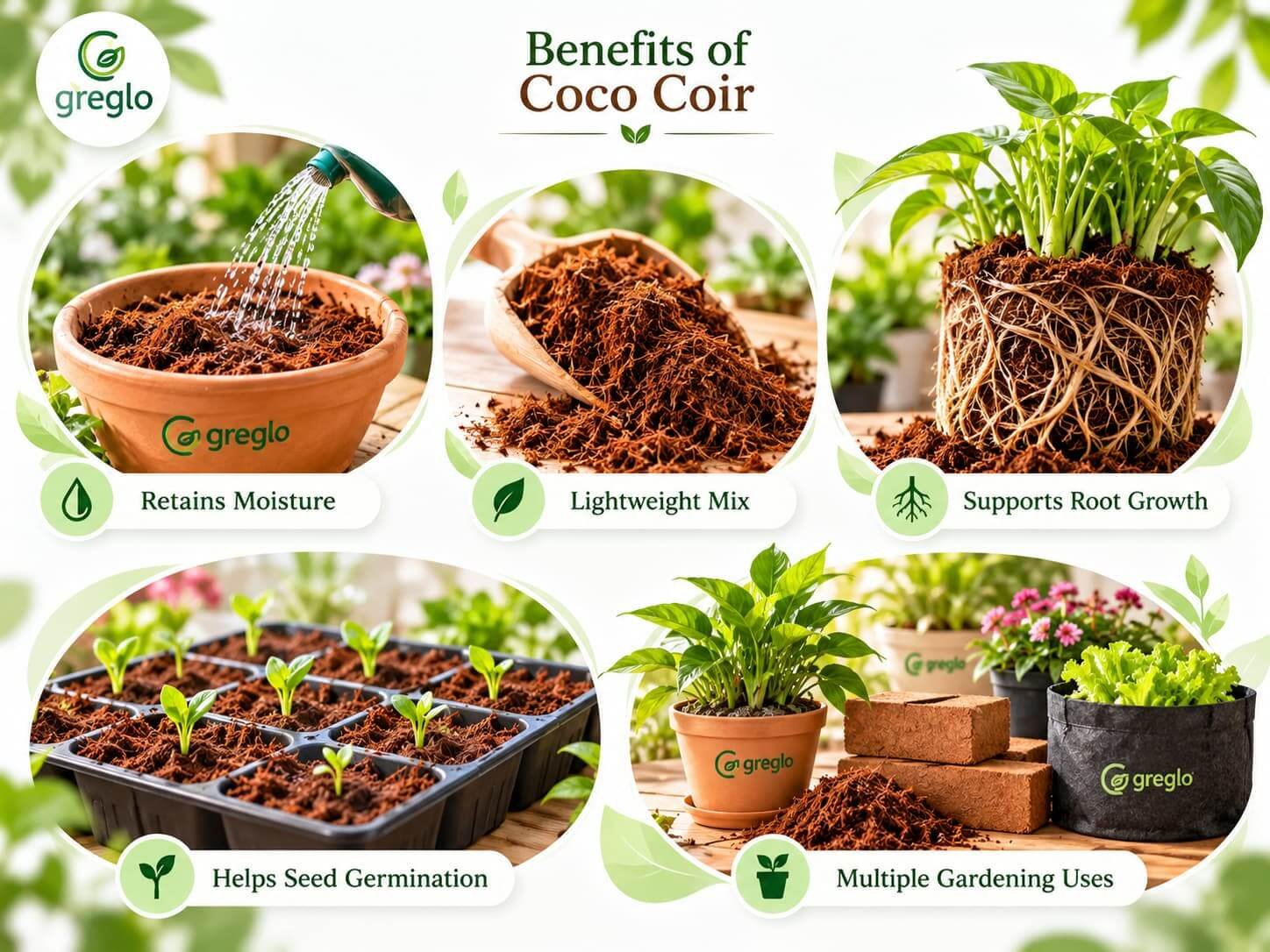
1. Helps Retain Moisture
One of the main benefits of coco coir gardening is its ability to absorb and retain water. This helps maintain moisture around plant roots and can reduce how quickly some potting mixes dry out.
However, watering frequency depends on the plant species, pot size, weather, and growing-medium composition.
2. Creates a Lightweight Growing Medium
Coco coir can help reduce the weight of container growing mixes compared with some soil-heavy alternatives. This makes it useful for balcony gardens, terrace gardens, and grow bags.
Consider the weight of the fully hydrated mix when planning larger containers.
3. Supports Root Growth
When combined with suitable materials, coco coir growing medium can provide a loose structure that allows roots to spread.
Good root growth also requires sufficient aeration, appropriate nutrients, and proper drainage.
4. Useful for Seed Germination
Cocopeat for seed germination can provide consistent moisture around seeds during the early stages of growth. Fine-textured cocopeat is commonly used in seed trays and small containers.
For continued seedling growth, provide appropriate light and nutrients.
5. Suitable for Different Gardening Applications
Coco coir can be used in pots, grow bags, indoor plant containers, seed-starting trays, and nursery growing systems.
The best formulation depends on the plant, growing conditions, and drainage requirements.
Types of Coco Coir Products for Gardening
Different coco coir products suit different gardening needs.
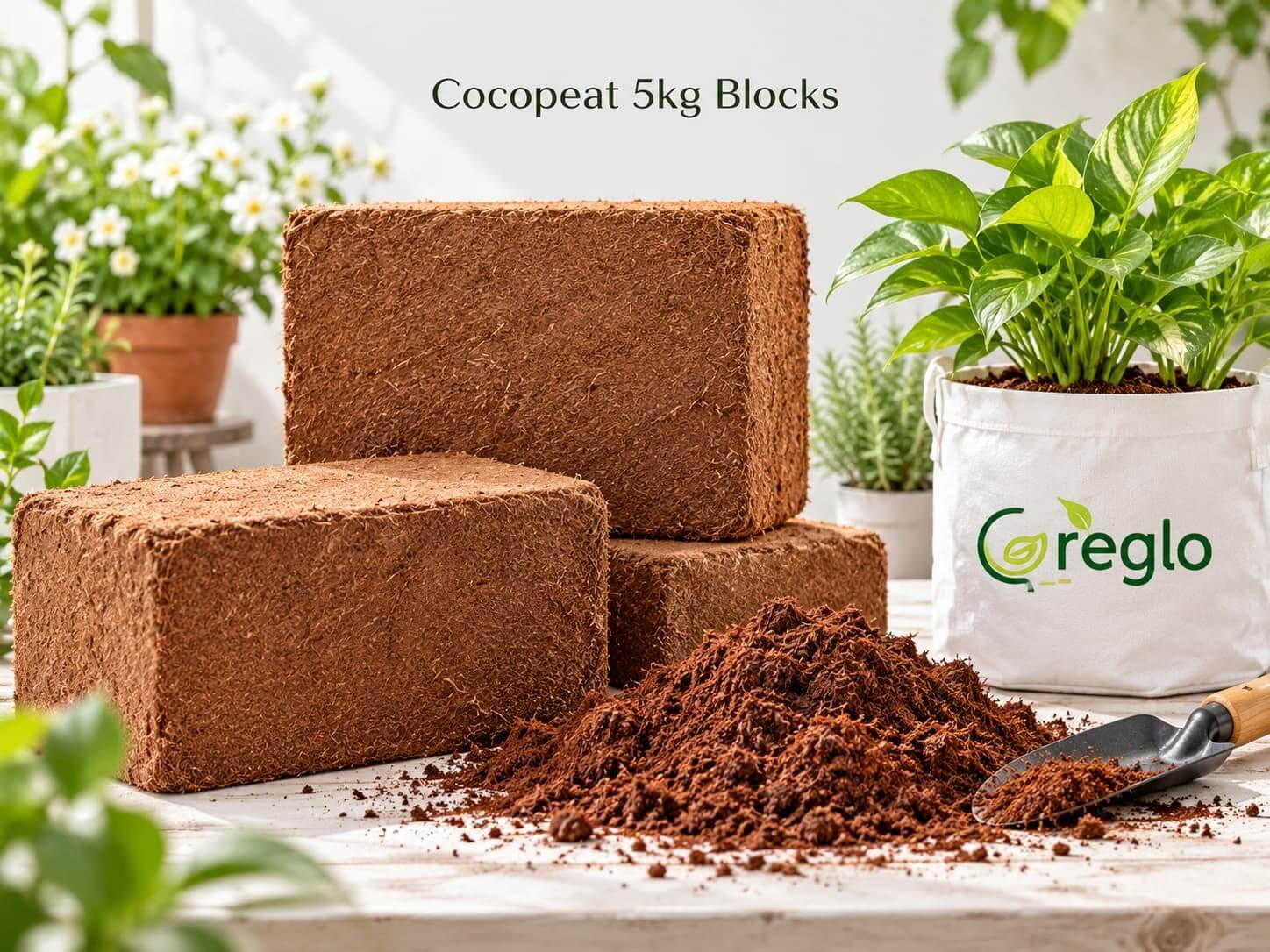
Cocopeat 5kg Blocks
Cocopeat blocks are compressed for convenient storage and transportation. After hydration, they expand into loose cocopeat that can be mixed with other growing materials.
Best for: Terrace gardens, vegetable grow bags, nurseries, and larger gardening projects.
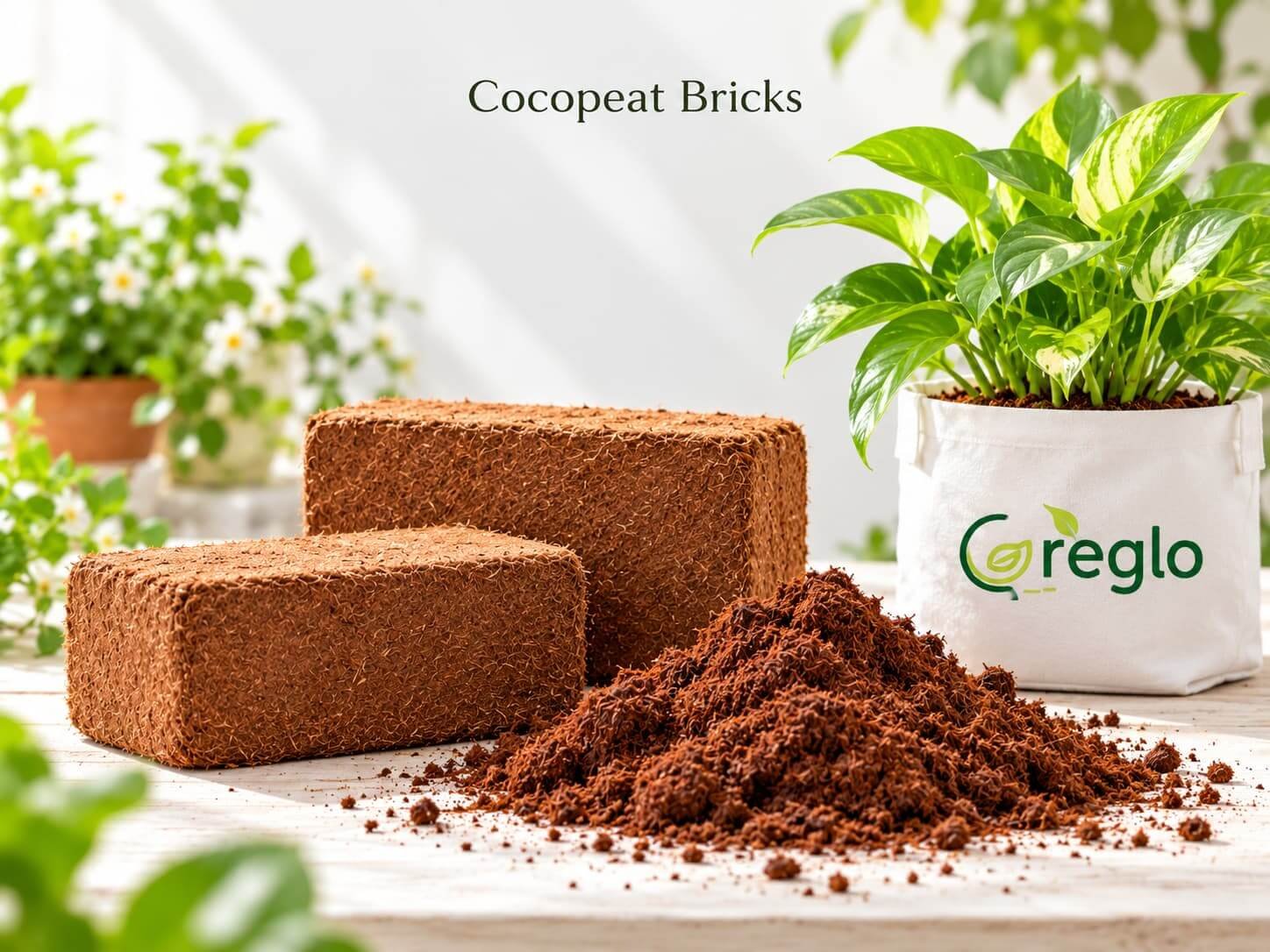
Cocopeat 5kg Blocks
Cocopeat blocks are compressed for convenient storage and transportation. After hydration, they expand into loose cocopeat that can be mixed with other growing materials.
Best for: Terrace gardens, vegetable grow bags, nurseries, and larger gardening projects.
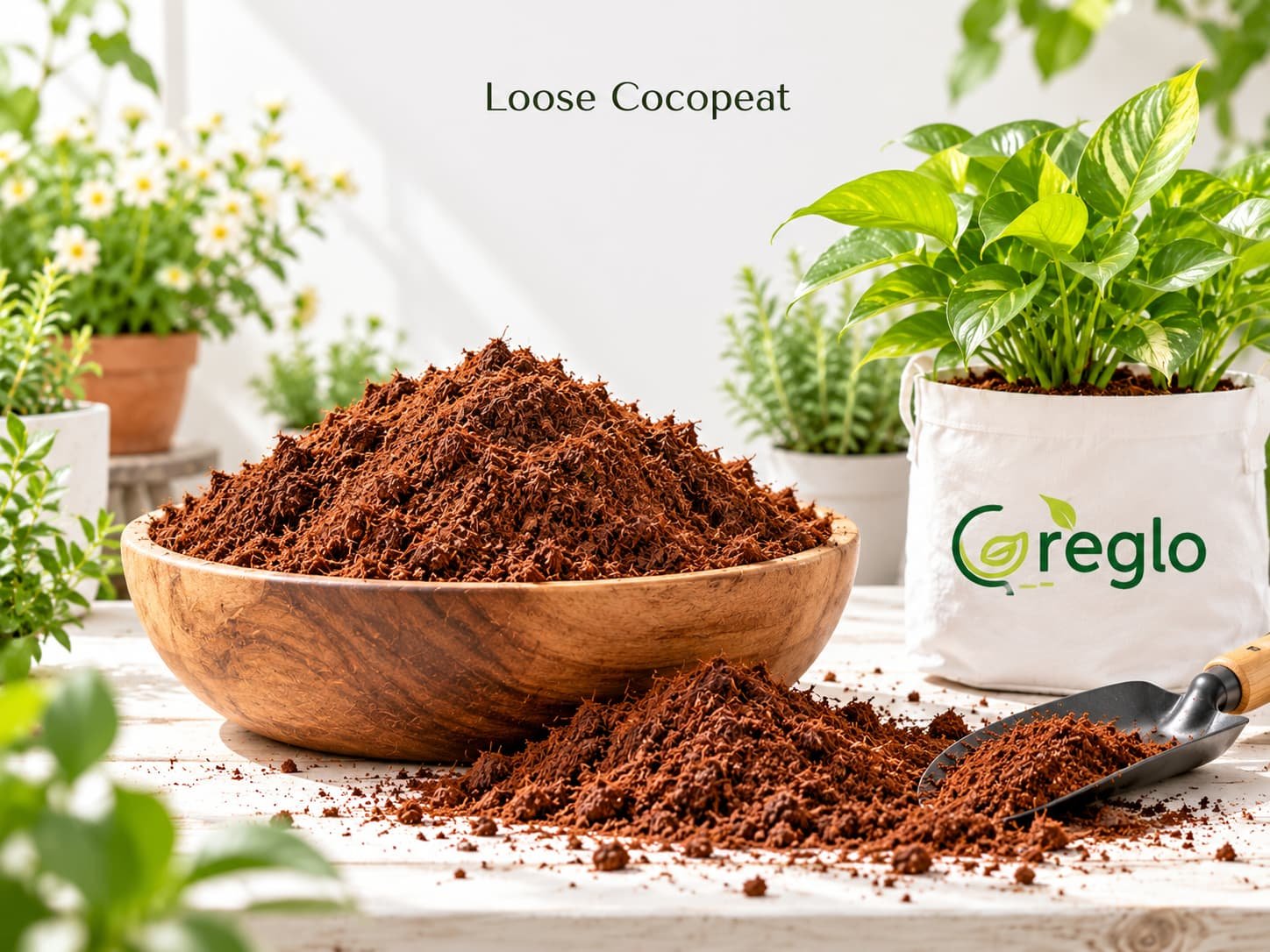
Loose Cocopeat
Loose cocopeat is ready to mix with other materials without first hydrating a compressed block or brick.
Best for: Regular potting-mix preparation and small gardening projects.
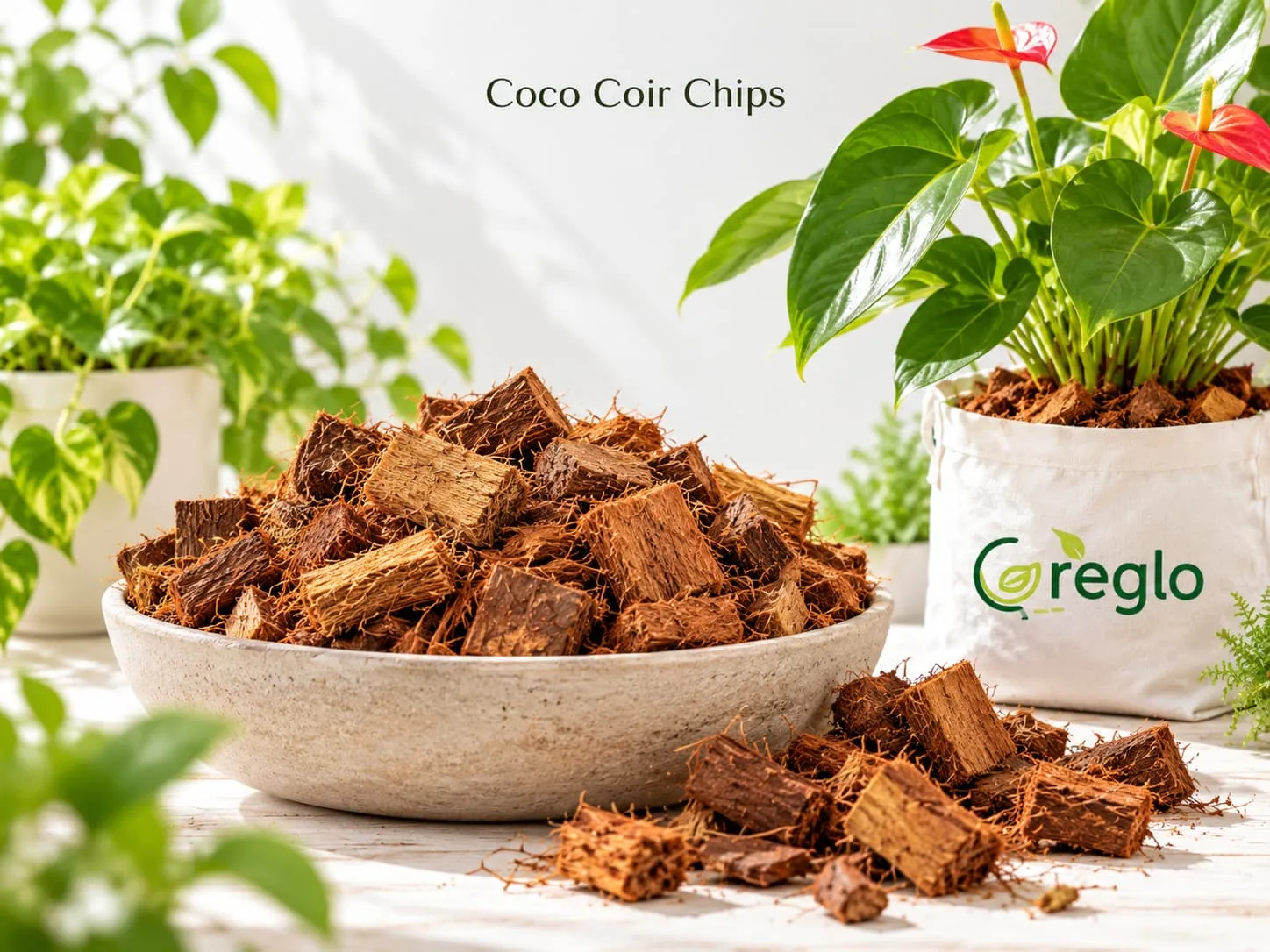
Coco Coir Chips
Coco coir chips are larger pieces of coconut husk that create a coarser growing structure than fine cocopeat.
Best for: Growing mixes that require larger particles and additional air spaces, depending on the plant and growing system.
How to Use Coco Coir for Plants
Hydrate: Add water to a compressed block or brick according to the product instructions.
Loosen: Break apart the expanded cocopeat until the texture is reasonably even.
Drain: Allow excess water to drain so the material is moist rather than waterlogged.
Prepare the mix: Combine cocopeat with suitable compost and an aeration material when needed.
Fill the container: Use a pot or grow bag with appropriate drainage holes.
Monitor moisture: Water according to the plant's needs and adjust as the growing medium dries.
Ways to Use Cocopeat in Home Gardening
1. Cocopeat in Pots
Cocopeat in pots retains moisture for plants. Mix it with suitable materials for nutrients and drainage.
2. Cocopeat for Grow Bags
Cocopeat for grow bags supports vegetables such as tomatoes, chillies, and leafy greens when combined with nutrients and aeration materials.
3. Cocopeat for Indoor Gardening
Cocopeat for indoor gardening suits many foliage plants. Check moisture before watering to prevent overwatering.
4. Cocopeat for Seed Germination
Fine cocopeat helps maintain moisture around seeds. Provide seedlings with enough light and nutrients as they grow.
5. Cocopeat for Terrace Gardens
Cocopeat works well in terrace garden mixes. Consider drainage and the weight of fully hydrated containers.
Cocopeat and Compost Mix for Plants
Cocopeat and compost serve different purposes in gardening.
- Cocopeat: Helps retain moisture and provides growing-medium structure.
- Compost: Supplies organic matter and nutrients.
- Perlite or pumice: Can improve aeration and drainage.
For many common foliage plants, you can start with a mix containing cocopeat, mature compost, and perlite or pumice. Adjust the proportions based on the plant's moisture and drainage needs.
How to Choose Coco Coir for Plants
- Small home gardens: Consider compact cocopeat bricks.
- Several pots or grow bags: A compressed 5kg block may be more practical.
- Frequent potting-mix preparation: Loose cocopeat can save preparation time.
- Seed starting: Choose a consistent, suitable-textured product.
- Commercial growing: Check EC, pH, moisture content, particle size, and crop-specific requirements.
Common Mistakes to Avoid
- Using cocopeat alone: Provide suitable nutrients for continued plant growth.
- Overwatering: Check moisture before watering.
- Ignoring drainage: Use appropriate containers and a well-aerated mix.
- Choosing the wrong texture: Match fine cocopeat or coarser coir products to the growing application.
- Ignoring product quality: For sensitive crops and commercial use, check available pH, electrical conductivity (EC), and particle-size specifications.
Frequently Asked Questions
1. Is coco coir good for plants?
Yes. Coco coir can help retain moisture and provide a useful growing-medium structure when prepared appropriately. Many plants benefit from using it with suitable nutrient sources and aeration materials.
2. Can I use cocopeat alone for plants?
Cocopeat can be used alone for certain short-term applications, including seed germination. For most long-term container growing, additional nutrients and an appropriate growing-medium structure are needed.
3. Is coco coir the same as compost?
No. Coco coir is made from coconut husks, while compost is decomposed organic material. Coco coir primarily contributes moisture retention and structure; compost can supply nutrients and organic matter.