
Growing healthy plants starts with choosing a suitable growing medium. Whether you grow vegetables on a terrace, maintain indoor plants, or raise seedlings at home, the material around the roots affects moisture retention, drainage, and root development.
Cocopeat for plants is a popular gardening material made from coconut husk. It is lightweight, holds moisture well, and can be mixed with compost and other materials to create a suitable growing medium for different plants.
In this article, you will learn what cocopeat is, its benefits, the different types available, and how to use it in pots, grow bags, and home gardens.
What Is Cocopeat?
Cocopeat is a growing material obtained from coconut husks during the processing of coconut coir. It consists mainly of fine particles and short fibres left after extracting longer coir fibres.
It is also called coco peat, coco coir pith, or coconut coir growing medium. Depending on the product, it may be sold loose or compressed into blocks, bricks, and other formats.
Cocopeat is widely used in gardening because it can absorb and retain water while providing a lightweight structure for roots. However, it is not a complete fertiliser and usually needs to be combined with suitable nutrient sources for long-term plant growth.
Benefits of Cocopeat for Plants
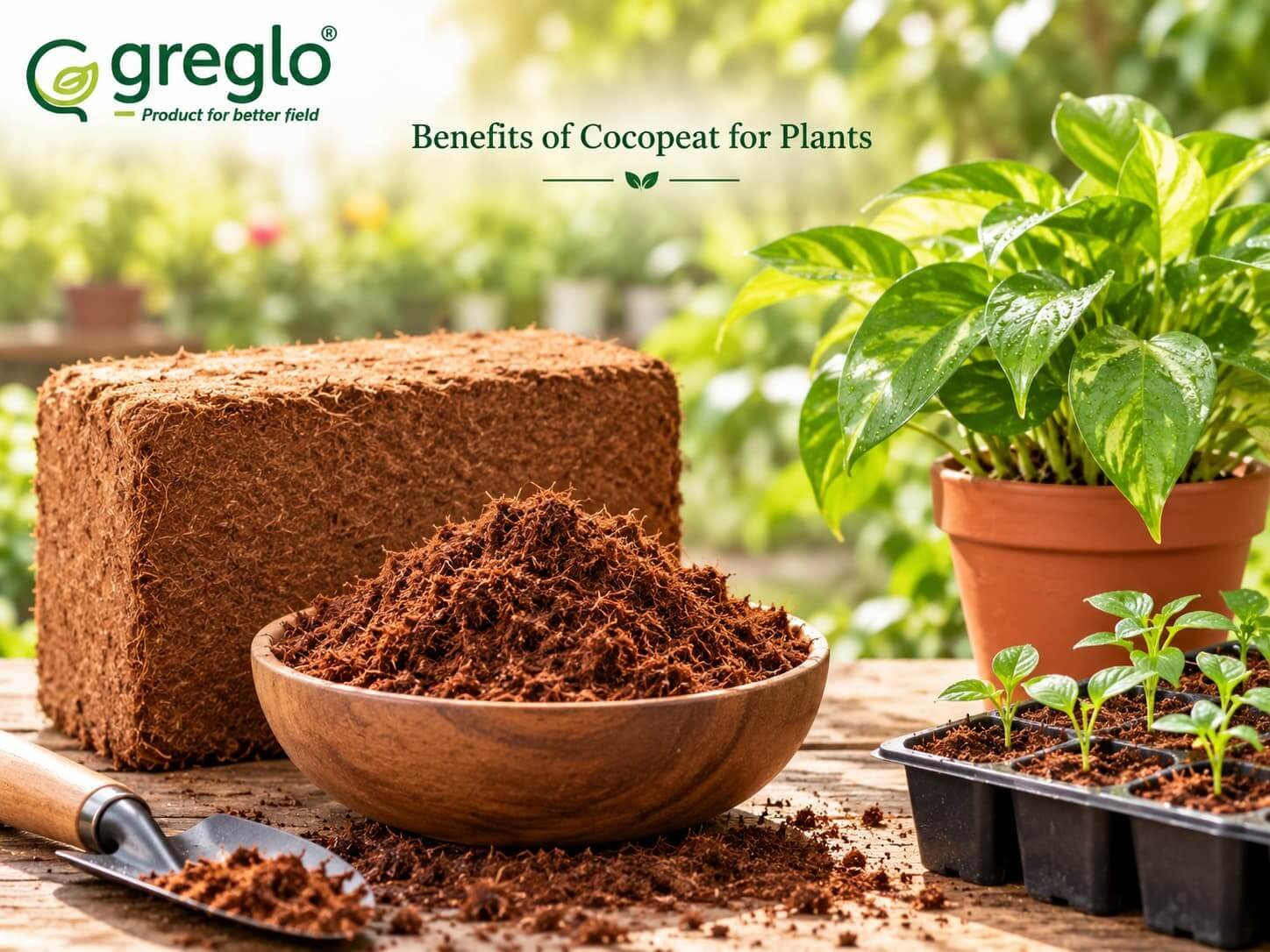
Using cocopeat for plants can make potting mixes easier to manage, particularly in containers where moisture control and growing-medium weight matter.
1. Helps Retain Moisture
Cocopeat absorbs water and releases moisture gradually as the growing medium dries.
This can help reduce rapid drying compared with some coarse, lightweight materials.
However, watering frequency still depends on the plant, pot size, temperature, humidity, and drainage.
2. Creates a Lightweight Growing Medium
Cocopeat is useful for pots, grow bags, balcony gardens, and terrace gardens because it is relatively lightweight compared with many soil-based mixes.
This makes it easier to handle when preparing containers and moving smaller pots.
3. Supports Root Development
When combined with suitable materials, cocopeat can provide a loose growing environment that allows roots to spread.
Good root development also depends on adequate aeration, drainage, nutrients, and suitable growing conditions.
4. Can Be Used for Seed Germination
Hydrated cocopeat can provide moisture around seeds during germination. It is commonly used for starting seedlings and raising young plants.
For longer-term seedling growth, add an appropriate nutrient source when needed.
Cocopeat alone generally does not supply all the nutrients seedlings require.
5. Works in Different Gardening Applications
Cocopeat can be used in containers, grow bags, nursery growing media, seed-starting mixes, and selected commercial horticulture systems.
The appropriate formulation depends on the crop, growing method, irrigation system, and product specifications.
Types of Cocopeat for Plants
1. Cocopeat 5kg Block
A compressed block that expands when hydrated, ideal for preparing larger quantities of growing medium.
Best for: Terrace gardens, grow bags, and nurseries.
2. Cocopeat Bricks
Compact bricks, such as 650g bricks, are easy to store and use for smaller gardening needs.
Best for: Indoor pots, balconies, and small gardens.
3. Loose Cocopeat
Ready-to-use cocopeat that can be mixed directly with other potting materials.
Best for: Quick potting-mix preparation.
4. Coco Coir Chips
Larger coconut husk pieces that create a coarser growing structure than fine cocopeat.
Best for: Growing mixes that need larger particles and improved aeration.
How to Use Cocopeat for Plants
- Hydrate: Add water to the cocopeat block or brick according to product instructions.
-
Loosen: Break apart the expanded cocopeat for an even texture.
-
Drain: Remove excess water until the material is moist, not dripping wet.
-
Mix: Combine with mature compost and perlite or pumice as needed.
-
Fill: Add the mix to a pot or grow bag with drainage holes.
-
Water: Water according to the plant’s needs and monitor soil moisture.
Cocopeat and Compost: What Is the Difference?
Cocopeat and compost serve different purposes in a growing medium.
| Feature | Cocopeat | Mature compost |
| Main purpose | Moisture retention and growing-medium structure | Supplies nutrients and organic matter |
| Water behaviour | Absorbs and holds water | Varies with the compost ingredients |
| Nutrient contribution | Generally limited and product-dependent | Provides nutrients in varying amounts |
| Typical use | Mixed into potting media | Added to support plant nutrition |
| Use alone | Usually not a complete long-term growing medium | Suitability depends on quality and plant needs |
Read our related article on cocopeat and compost mix to learn how to prepare a suitable potting medium.
Uses of Cocopeat in Home Gardening
-
Cocopeat for Pots: Helps retain moisture in potting mixes for foliage plants, flowers, and vegetables.
-
Cocopeat for Grow Bags Provides a lightweight growing medium with good moisture retention.
-
Cocopeat for Seed Germination: Holds moisture around seeds during germination.
-
Cocopeat for Indoor Plants: Supports moisture management when mixed with suitable potting materials.
-
Cocopeat for Terrace Gardens: Helps reduce growing-medium weight while retaining moisture in container gardens.
Common Mistakes to Avoid When Using Cocopeat
1. Using Cocopeat Alone for Every Plant
Cocopeat provides growing-medium structure and moisture retention, but it generally does not provide complete nutrition for long-term growth.
What to do: Combine it with suitable compost, fertiliser, and other materials based on the plant's needs.
2. Overwatering the Growing Medium
Cocopeat retains moisture, so pots may remain wet longer in humid or low-light conditions.
What to do: Check the moisture level before watering and ensure excess water can drain away.
3. Ignoring Drainage
A mix that remains saturated can limit oxygen around roots and encourage root problems.
What to do: Use suitable containers and adjust the mix to improve drainage and aeration.
4. Choosing the Wrong Cocopeat Product
Different products vary in texture, salinity, washing, buffering, and expansion.
What to do: Check the product specifications and choose material appropriate for your plants or growing operation.
5. Assuming All Cocopeat Has the Same Quality
Cocopeat products can differ in electrical conductivity (EC), pH, particle size, and moisture content.
What to do: For sensitive crops or commercial growing, review available specifications and request test results when necessary.
How to Choose Cocopeat for Plants
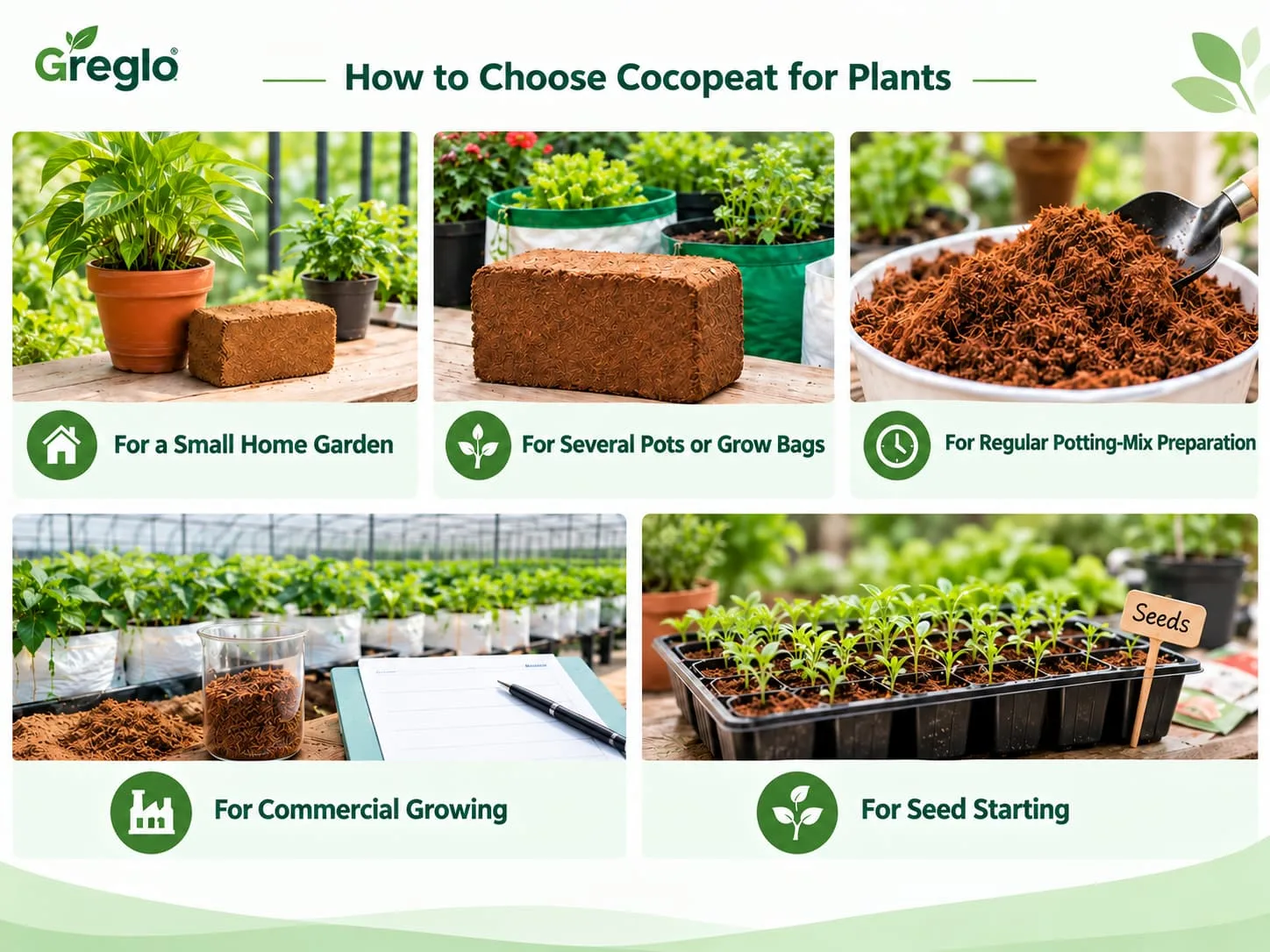
Before purchasing cocopeat, consider how you intend to use it.
- For a small home garden: A smaller cocopeat brick may be convenient.
- For several pots or grow bags: A compressed 5kg block may be more practical.
- For regular potting-mix preparation: Loose cocopeat may save preparation time.
- For commercial growing: Check EC, pH, moisture content, particle-size distribution, and any crop-specific requirements.
- For seed starting: Choose a consistent, suitable-textured product intended for growing applications.
Explore Greglo's cocopeat products to choose a format that suits your gardening needs.
🌿 Grow Better with Greglo Cocopeat
Choosing the right growing medium can make container gardening easier and help you manage water, drainage, and root development more effectively.
Whether you need a cocopeat 5kg block, convenient cocopeat bricks, or cocopeat for a compost-based potting mix, choose a product that matches your application and follow a suitable preparation routine.
Frequently Asked Questions
1. Is cocopeat good for all plants?
Cocopeat can be useful for many plants, but it is not ideal as a standalone growing medium for every species. Adjust the mix to the plant's drainage, aeration, and nutrient requirements.
2. Can I use cocopeat without soil?
Yes. Cocopeat can be used in soil-free growing systems when the complete growing medium and nutrient supply are properly managed. For ordinary home gardening, it is often combined with compost and other suitable materials.
3. Is cocopeat the same as coconut coir?
Cocopeat is one type of coconut coir material, mainly consisting of fine pith and short fibres. The broader term coconut coir can also include long fibres and coarser chips.