
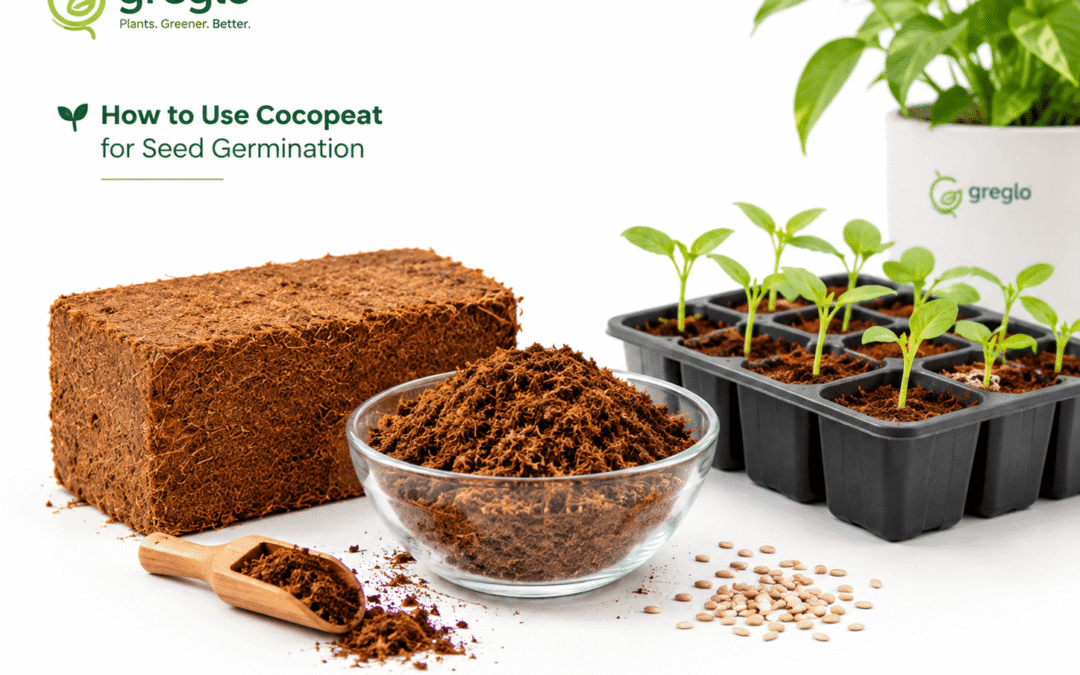
Starting seeds at home is an affordable way to grow vegetables, herbs, and flowering plants. Cocopeat for seed germination is a popular option because it holds moisture and provides a lightweight medium for young roots to develop.
Whether you are starting tomato seeds in small trays or growing coriander on your balcony, preparing cocopeat correctly can help create suitable conditions for germination.
Why Use Cocopeat for Seed Germination?
Cocopeat is made from processed coconut husk fibre and is commonly sold in compressed blocks and bricks. Once hydrated, it becomes a loose growing medium that can be used in seed-starting mixes.
Its benefits include:
- Moisture retention: Helps keep seeds moist during germination.
- Lightweight texture: Makes seed trays easier to handle and move.
- Root-friendly structure: A loose medium can help young roots grow when aeration is adequate.
- Convenient preparation: Compressed cocopeat expands when water is added.
- Versatile use: Suitable for starting many vegetable, herb, and flower seeds.
Cocopeat contains limited plant nutrients compared with a complete seedling-growing mix. As seedlings develop, they may need an appropriate nutrient source or transplanting into a nutrient-supporting medium.
How to Prepare Cocopeat for Seed Germination
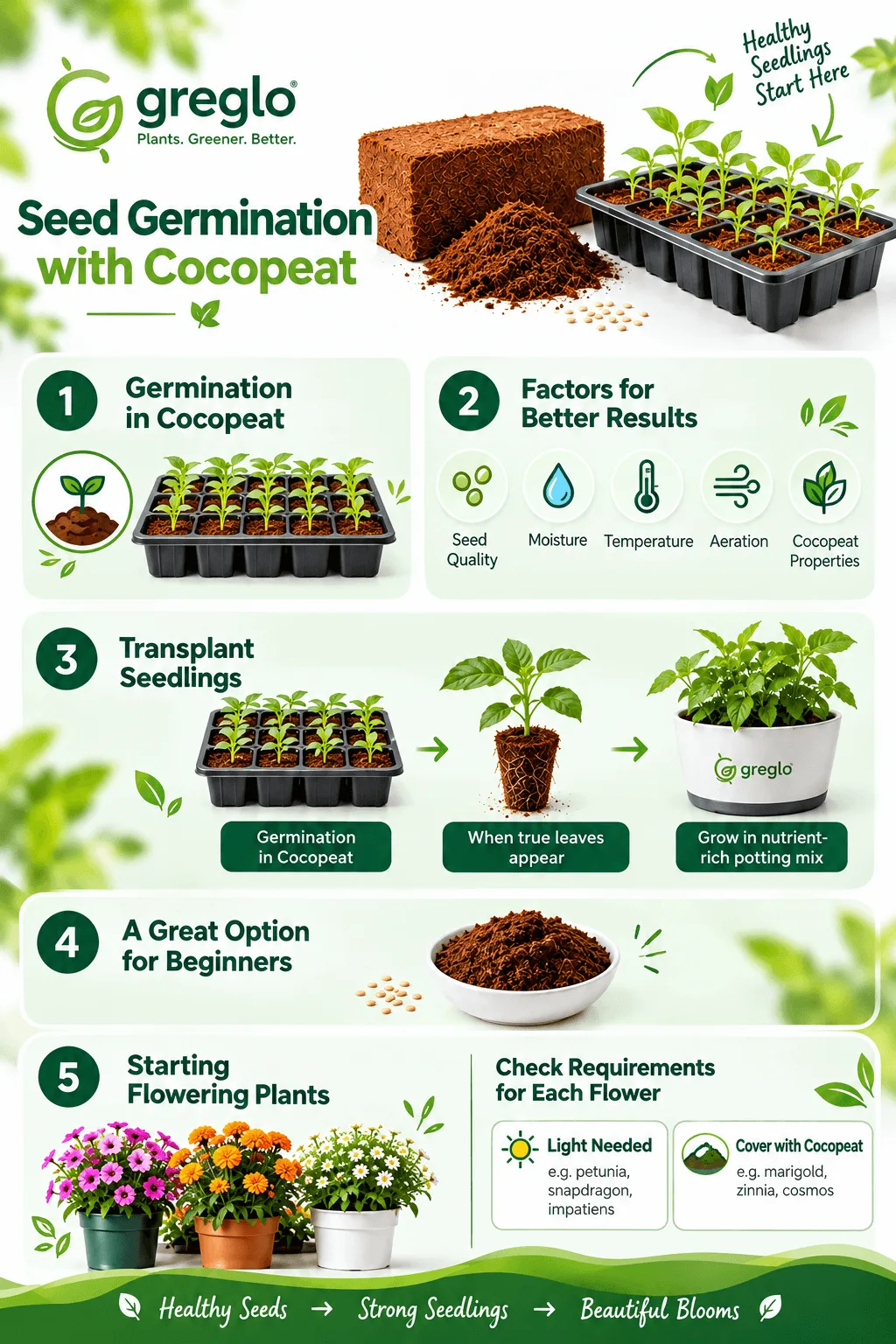
Step 1: Choose Suitable Cocopeat
Select cocopeat intended for horticultural use. If product specifications are available, check information about electrical conductivity (EC), pH, and washing or buffering.
For seed starting, a fine-textured, clean medium is generally easier to work with than one containing large, coarse pieces.
Step 2: Hydrate the Cocopeat
Place the compressed cocopeat brick or block in a clean container. Add water gradually and allow it to expand according to the product instructions.
Break apart compacted pieces until the material is loose and evenly hydrated. Drain excess water before filling seed trays.
The cocopeat should feel moist but should not release excess water when lightly squeezed.
Step 3: Fill the Seed Tray
Fill a clean seed tray or small pots with the prepared cocopeat. Spread it evenly and tap the container gently to settle the medium.
Avoid pressing it down too firmly because compacted medium can reduce air circulation around developing roots.
Use containers with suitable drainage holes so excess water can escape.
Step 4: Sow the Seeds
Follow the seed packet for sowing depth and spacing. Some small seeds need only a light covering, while larger seeds are generally planted deeper.
Place the seeds carefully and cover them with a thin layer of the appropriate medium when required.
Label each tray with the seed variety and sowing date, particularly if you are growing several types of vegetables.
Step 5: Maintain Moisture
Keep the cocopeat evenly moist throughout germination. Use a gentle spray or careful bottom watering to avoid displacing seeds.
Check the tray regularly. Cocopeat can hold moisture, so do not add water automatically if the medium is still wet.
Step 6: Provide Suitable Light and Temperature
Follow the temperature and light requirements for the specific seed variety. Some seeds germinate best in warm conditions, while others prefer cooler temperatures.
Once seedlings emerge, provide appropriate light to encourage compact growth. Gradually expose indoor-started seedlings to outdoor conditions before transplanting, where needed.
- Convenient preparation: Compressed cocopeat expands when water is added.
- Versatile use: Suitable for starting many vegetable, herb, and flower seeds.
Cocopeat contains limited plant nutrients compared with a complete seedling-growing mix. As seedlings develop, they may need an appropriate nutrient source or transplanting into a nutrient-supporting medium.
Which Seeds Can You Germinate in Cocopeat?
1. Vegetable Seeds
Cocopeat can be used to start many vegetable seeds, including tomatoes, chillies, brinjal, and leafy greens. Follow each variety's recommended sowing depth, temperature, and light requirements.
2. Herb Seeds
Coriander and basil can be started in suitable cocopeat-based media. Keep the medium moist without making it waterlogged, and provide appropriate light after emergence.
3. Flower Seeds
Many flowering plants can be started in a fine, clean seed-starting mix containing cocopeat. Check the requirements of each flower because some seeds need light to germinate while others require covering.
Can You Use 100% Cocopeat for Seed Germination?
Yes, many seeds can germinate in clean, suitable cocopeat alone because germination initially relies on the seed's stored reserves. However, results depend on seed quality, moisture, temperature, aeration, and the cocopeat's properties.
Cocopeat alone is not a complete long-term growing medium for developing seedlings. Once true leaves appear and the seedlings grow, transplant them into a suitable nutrient-supporting potting mix or provide appropriate nutrition.
For beginners, a quality seed-starting mix containing cocopeat can be a practical option.
Many flowering plants can be started in a fine, clean seed-starting mix containing cocopeat. Check the requirements of each flower because some seeds need light to germinate while others require covering.
Common Mistakes to Avoid
- Keeping cocopeat too wet: Waterlogged conditions reduce air availability around seeds and roots.
- Letting the medium dry out completely: Drying during germination can interrupt the process.
- Sowing seeds too deeply: Follow the recommended depth for each variety.
- Using dirty containers: Clean seed trays before reuse to reduce the risk of disease.
- Ignoring light after germination: Many seedlings need adequate light as soon as they emerge.
- Leaving seedlings in plain cocopeat indefinitely: Young plants eventually need suitable nutrition and room for root growth.
When Should You Transplant Seedlings?
Transplanting time depends on the crop. Many seedlings are ready when they have developed true leaves and are strong enough to handle, but check the requirements of the specific variety.
Before transplanting:
- Prepare pots or grow bags with a suitable potting mix.
- Moisten the new medium lightly.
- Lift seedlings carefully to avoid damaging delicate roots.
- Place each seedling at the appropriate depth.
- Water gently and provide suitable light while the plant adjusts.
Avoid pulling seedlings out by their stems. Handle them gently, preferably by the leaves or root ball.
Start Seeds at Home with Greglo Cocopeat
Want to start vegetables, herbs, or flowers in your home garden? Explore Greglo cocopeat bricks and blocks and prepare a suitable medium for your seed trays and containers.
For better results, use clean trays, maintain consistent moisture, follow the seed variety's requirements, and transplant growing seedlings into a suitable potting mix when needed.
Frequently Asked Questions
1. Is cocopeat good for seed germination?
Yes. Suitable cocopeat can retain moisture and provide a lightweight medium for many seeds. Germination also depends on seed quality, temperature, sowing depth, and proper watering.
2. Should I mix compost with cocopeat for seeds?
Not always. Seeds generally do not need added compost to begin germinating because they contain stored reserves. A suitable seed-starting mix may be preferable, especially for delicate or small seeds. Nutrients become more important as seedlings develop.
3. How often should I water cocopeat in seed trays?
There is no fixed schedule. Check the moisture regularly and water when needed to maintain even moisture without waterlogging. Tray size, airflow, temperature, and sunlight all affect how quickly the medium dries.