
Flat Bed Grow Bags: An Overview
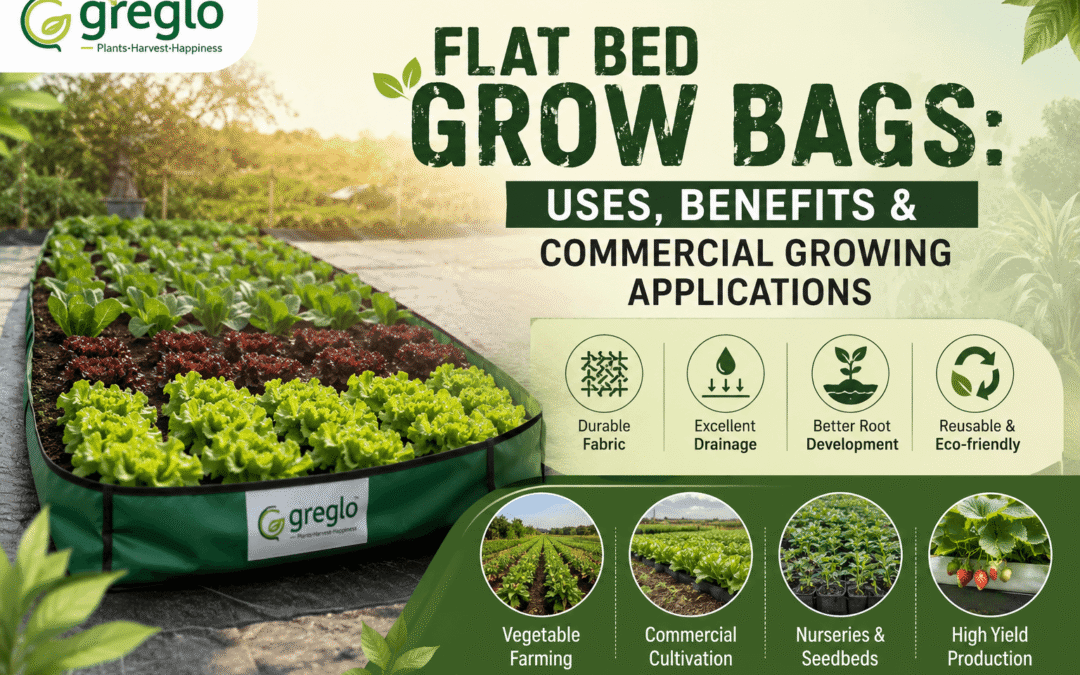
Flat bed grow bags are flexible growing containers designed in a horizontal format for specific plant-growing and cultivation arrangements. They can be used in greenhouse systems, commercial cultivation and other horticultural applications where a horizontal growing layout is preferred.
For commercial growers, selecting a flat bed grow bag involves more than comparing price. Dimensions, material, thickness, growing volume, drainage, crop spacing and the overall cultivation system all need to be considered.
The right bag should work with the growing medium, irrigation arrangement and available growing area.
This guide explains what flat bed grow bags are, where they can be used, their potential benefits, important specifications and what buyers should check before placing an order.
Why Are Flat Bed Grow Bags Used?
The main reason to consider flat bed grow bags is their horizontal format.
This can help growers organize plants according to a planned cultivation layout.
Potential advantages include:
1. Organized Growing Layout
The elongated format can support planned plant placement and spacing.
2. Efficient Use of Growing Areas
The dimensions can be selected according to the available cultivation area.
3. Flexible Container Format
Unlike rigid containers, grow bags provide a flexible format that can be incorporated into certain growing systems.
4. Suitable for Commercial Applications
Depending on the specification, flat bed bags can be considered for greenhouse and commercial growing environments.
However, these benefits depend on the specific product and cultivation system. The bag should always be evaluated according to the intended crop and growing method.
Where Are Flat Bed Grow Bags Used?
Greenhouse Cultivation
Greenhouses can benefit from organized growing arrangements where space, irrigation and crop placement are carefully planned.
When using flat bed grow bags, consider:
- Crop spacing
- Irrigation method
- Growing medium
- Drainage
- Bag dimensions
- Greenhouse layout
The bags should fit into the overall growing system without interfering with access or irrigation.
Commercial Cultivation
Commercial growers may use horizontal growing arrangements for specific crops and cultivation systems.
When purchasing commercial grow bags, buyers should prioritize:
- Consistent dimensions
- Material specification
- Thickness
- Drainage
- Quantity availability
- Supply consistency
- Delivery
Large-scale cultivation requires greater attention to consistency because differences between bags can affect the overall setup.
Nurseries
Depending on the crop and growing method, nurseries may also consider flat bed formats for specific cultivation arrangements.
The bag should be selected based on plant size, growing volume and the nursery's handling system.
How to Choose the Right Flat Bed Grow Bag
Choosing flat bed grow bags should begin with the cultivation system.
1. Consider the Crop
Determine what crop you intend to grow and understand its growing requirements.
Consider:
- Root development
- Plant size
- Growing period
- Plant spacing
- Growing medium requirements
2. Determine the Required Dimensions
The length and width should fit the intended growing layout.
Avoid selecting a bag based only on general descriptions such as "large" or "commercial."
Request exact dimensions from the supplier.
3. Check Growing Volume
The bag should hold an appropriate quantity of growing medium for the crop.
4. Check Material
Ask the supplier for the material specification.
The material should be suitable for the intended growing environment and handling requirements.
5. Check Thickness or GSM
Where applicable, confirm the thickness or GSM.
This gives buyers a measurable specification when comparing products.
Drainage Requirements for Flat Bed Grow Bags
Drainage is an important consideration in any growing container.
A flat bed design should have a drainage arrangement that is appropriate for the growing medium and irrigation system.
Before purchasing, ask:
- Where are the drainage openings positioned?
- How many openings are provided?
- Is the drainage suitable for the growing medium?
- Does it work with the planned irrigation system?
- Is the drainage specification consistent across the order?
For commercial cultivation, drainage should be considered as part of the complete growing system rather than as an isolated bag feature.
Flat Bed Grow Bags vs Open Top Grow Bags
Both products can be used for plant cultivation, but their formats are different.
| Feature | Flat Bed Grow Bags | Open Top Grow Bags |
| General format | Horizontal/elongated | Individual container |
| Layout | Designed for horizontal arrangements | Individual plant/container arrangement |
| Commercial use | Application-dependent | Application-dependent |
| Greenhouse use | Application-dependent | Application-dependent |
| Size selection | Based on growing layout and crop | Based on plant and root-space needs |
| Best selection method | Match cultivation system | Match plant requirements |
Buying Flat Bed Grow Bags in Bulk
Commercial buyers often need larger quantities and consistent product specifications.
Before requesting a quotation, prepare a product requirement such as:
Bag Type
+
Length & Width
+
Material
+
Thickness/GSM
+
Growing Volume
+
Drainage
+
Quantity
+
Delivery Location
Provide the same specification to different suppliers so that quotations can be compared fairly.
How to Order Flat Bed Grow Bags
A structured buying process can reduce mistakes.
Step 1: Identify the Crop
Determine the crop and its growing requirements.
↓
Step 2: Plan the Growing Layout
Determine plant spacing and available growing area.
↓
Step 3: Determine Bag Dimensions
Select the required length, width and growing volume.
↓
Step 4: Confirm Material and Thickness
Obtain the product specification from the supplier.
↓
Step 5: Confirm Drainage
Make sure the drainage arrangement suits the growing medium and irrigation.
↓
Step 6: Calculate Quantity
Determine the number of bags required for the complete growing area.
↓
Step 7: Request Quotations
Send the same specification to potential suppliers.
↓
Step 8: Evaluate Total Cost
Compare product cost, packaging and transportation.
↓
Step 9: Confirm the Order
Verify the final specification and delivery requirements before production.
Frequently Asked Questions
1. What are flat bed grow bags?
Flat bed grow bags are flexible growing containers designed in a horizontal or elongated format for holding growing media and supporting plants.
2. What are flat bed grow bags used for?
They can be considered for greenhouse cultivation, commercial growing, horticultural applications and specific nursery systems where a horizontal growing arrangement is suitable.
3. Are flat bed grow bags suitable for commercial cultivation?
Suitable products can be used in commercial cultivation. Buyers should select dimensions, material, drainage and growing volume according to the crop and cultivation system.
4. How do I choose the right flat bed grow bag size?
Consider the crop, root-space requirements, growing-medium volume, plant spacing and available growing area before selecting dimensions.
5. What affects the price of flat bed grow bags?
Dimensions, material, thickness, growing volume, drainage, quantity, customization, packaging and transportation can influence the final price.
Conclusion
Flat bed grow bags can be a practical option for specific horizontal growing arrangements, particularly in greenhouse and commercial cultivation systems.
The right product should be selected according to the crop, plant spacing, growing-medium requirements, bag dimensions, material, thickness, drainage and irrigation system.
For commercial buyers, product consistency and total delivered cost should be considered alongside the unit grow bag price.
If you are planning a greenhouse or commercial growing project, define your required specifications before requesting quotations. This makes it easier to compare suppliers and select a grow bag that fits your cultivation system.
Greglo offers Flat Bed Grow Bags designed for growers looking for a suitable flexible growing format. Review the available product specifications and discuss your cultivation requirements before placing a bulk order.