
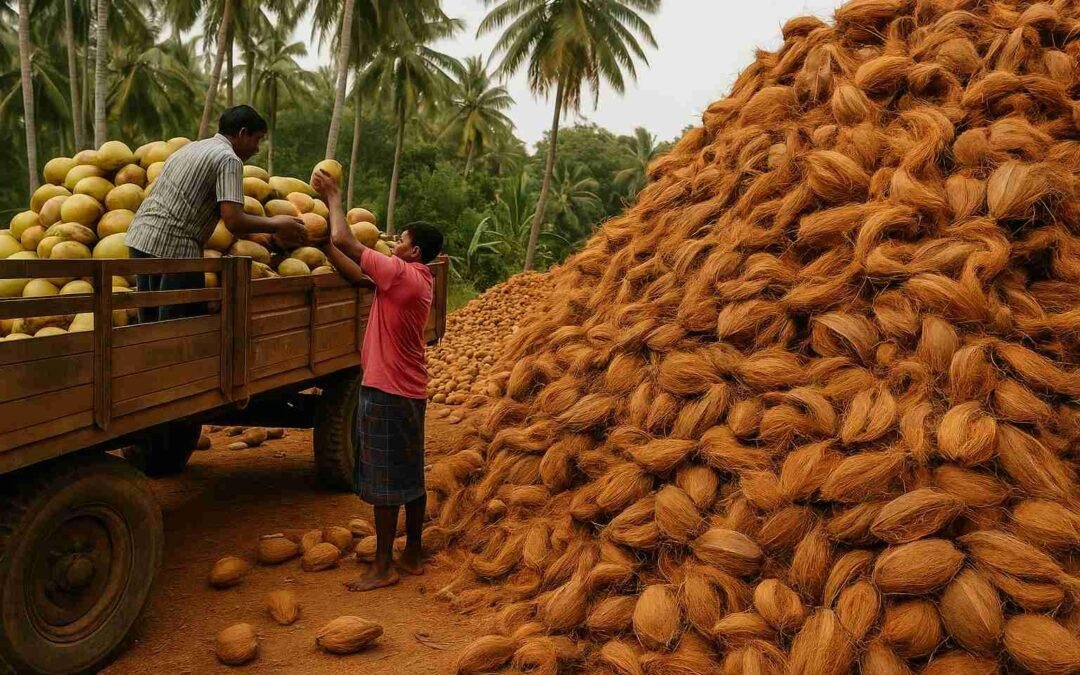
Pollachi has earned a global reputation as one of India’s most important coconut-growing regions. With abundant raw material, skilled labor, and a strong export ecosystem, the town has become a trusted sourcing hub for high-quality cocopeat products. Today, international buyers rely heavily on Cocopeat exporters in pollachi for consistent supply, premium quality, and strict adherence to global standards.
Brands like GREGLO understand that exporting cocopeat is not just about compressing coconut husk into blocks. It requires precise processing, quality monitoring, testing, documentation, and packaging that meet international agricultural and horticultural requirements. This article explains in detail how exporters in Pollachi maintain world-class standards and ensure their products meet the expectations of global markets.
Raw Material Selection from Premium Coconut Husk Sources
The foundation of quality cocopeat begins with the raw material. Pollachi’s surrounding regions produce high-grade coconuts, making the husk fiber naturally suitable for premium cocopeat production. Professional Cocopeat exporters in pollachi carefully select matured coconut husks to ensure strong fiber content and optimal pith quality.
Quality control begins at the sourcing stage. Husk selection involves checking moisture levels, maturity stage, and fiber strength. Poorly matured husks can result in inferior water retention and inconsistent texture. Companies like GREGLO work directly with reliable coconut processing units to secure uniform raw materials.
This first step is critical because international buyers demand consistency across bulk shipments. A slight variation in raw material can affect EC levels, expansion ratio, and overall product performance in horticultural applications.
Advanced Processing Techniques for Uniform Cocopeat Quality
After sourcing, husks undergo retting and fiber extraction. Modern facilities in Pollachi use controlled processing systems to ensure uniform texture and purity. Reputed Cocopeat exporters in pollachi invest in automated sieving and grading machines that remove large fibers and unwanted particles.
Proper decomposition and aging of cocopeat is another key factor. Fresh cocopeat may contain higher salt levels, which can negatively impact plant growth. Therefore, exporters follow a controlled aging process before washing and buffering.
GREGLO follows a systematic production workflow to maintain consistency in particle size, moisture percentage, and expansion volume. These technical controls ensure that each compressed block performs exactly as specified when rehydrated by the end user.
Strict EC and pH Control for Global Market Compliance
Electrical Conductivity (EC) and pH levels are among the most critical parameters for cocopeat used in horticulture and hydroponics. International growers expect specific EC ranges depending on crop requirements.
Leading Cocopeat exporters in pollachi conduct laboratory testing to measure EC and pH at multiple production stages. Washing processes are repeated until the salt concentration meets international specifications.
Buffered cocopeat requires additional calcium nitrate treatment to reduce sodium and potassium content. Exporters like GREGLO ensure that buffered variants are thoroughly treated and lab-tested before shipment. Maintaining proper EC and pH standards helps prevent crop damage and builds long-term trust with overseas buyers.
International Certifications and Quality Management Systems
Compliance with global standards is essential for export success. Professional Cocopeat exporters in pollachi obtain certifications that validate product quality and manufacturing practices.
Common certifications include ISO quality management systems, phytosanitary certifications, and compliance documents required by importing countries. These documents confirm that the cocopeat is free from harmful pests, pathogens, and contaminants.
GREGLO ensures documentation accuracy and transparent communication with buyers. Proper certification not only facilitates customs clearance but also strengthens credibility in competitive international markets.
Laboratory Testing and Batch-Wise Quality Verification Process
Quality testing does not end with a single inspection. Reputed Cocopeat exporters in pollachi perform batch-wise testing to maintain uniformity across shipments.
Testing parameters typically include:
- EC level
- pH value
- Moisture percentage
- Expansion ratio
- Fiber percentage
- Impurity content
By verifying each batch before compression and export, exporters minimize the risk of quality complaints. GREGLO follows internal testing protocols that ensure every container load meets client specifications.
This systematic approach reduces rejection rates and ensures repeat orders from international buyers.
Hygienic Manufacturing and Contamination Prevention Methods
Clean production facilities are critical when exporting agricultural substrates. International buyers expect contamination-free growing media suitable for greenhouse and hydroponic applications.
Professional Cocopeat exporters in pollachi maintain dedicated processing zones, clean storage yards, and controlled drying areas. Proper flooring prevents soil contamination. Covered storage areas protect raw and processed cocopeat from rain and dust.
GREGLO prioritizes hygiene throughout production and storage. This ensures the final product remains free from foreign particles and meets strict phytosanitary standards required in Europe, the USA, and other regulated markets.
Precision Compression and Standardized Block Manufacturing
Compression plays a major role in international shipping efficiency. Cocopeat blocks must expand uniformly when soaked. Variations in compression can affect expansion ratio and product performance.
Experienced Cocopeat exporters in pollachi use hydraulic compression machines calibrated for precise weight and density control. Standard block sizes such as 5 kg, briquettes, and grow bags are produced according to client requirements.
GREGLO ensures consistent compression ratios so that each block expands to the expected volume. This reliability improves planting efficiency for farmers and commercial growers worldwide.
Export-Grade Packaging for Safe Global Transportation
Packaging quality is equally important in maintaining international standards. Cocopeat must withstand long transit times without moisture damage or contamination.
Trusted Cocopeat exporters in pollachi use high-strength polyethylene covers and UV-stabilized packaging materials. Palletization and container loading techniques are optimized to prevent shifting during transportation.
GREGLO follows export-grade packing methods that maintain product integrity during sea freight. Proper labeling and documentation further streamline customs processes at destination ports.
Sustainable Production and Environmental Responsibility
Sustainability is a key factor influencing international buyers. Cocopeat itself is an eco-friendly by-product of coconut processing, but responsible manufacturing enhances its value.
Modern Cocopeat exporters in pollachi implement water recycling systems for washing processes. Waste fiber is reused in other coconut-based products. Energy-efficient machinery reduces carbon footprint.
GREGLO integrates sustainable practices into its operations, aligning with global environmental standards. This commitment enhances brand trust and meets the sustainability goals of international agricultural companies.
Strong Supply Chain Management and Timely Delivery Standards
Quality is not limited to the product alone. Timely delivery and consistent supply volumes are equally important in global trade.
Established Cocopeat exporters in pollachi maintain strong logistics partnerships and efficient container management systems. Real-time coordination with shipping lines ensures on-time dispatch.
GREGLO emphasizes supply chain transparency, enabling buyers to plan inventory without delays. Reliable delivery strengthens long-term business relationships and reinforces international credibility.
Continuous Improvement and Customer Feedback Integration
International markets evolve constantly, and quality expectations change over time. Successful Cocopeat exporters in pollachi actively collect feedback from buyers and improve their processes accordingly.
Whether it involves customized EC levels, specific block sizes, or special packaging requirements, exporters adapt to client needs. GREGLO works closely with global distributors to refine product specifications and maintain consistent excellence.
Continuous improvement ensures that quality standards remain competitive and aligned with global horticultural trends.
Conclusion
Pollachi has become a global hub for premium cocopeat production due to its raw material strength, advanced processing capabilities, and strict adherence to international standards. The success of Cocopeat exporters in pollachi lies in their systematic approach to quality control, certification compliance, laboratory testing, hygienic manufacturing, and export-grade packaging.
Companies like GREGLO demonstrate that maintaining international standards is not a one-time effort but a continuous commitment. From raw material selection to final container dispatch, every stage of production is monitored carefully to ensure consistency and reliability.
As global demand for sustainable growing media continues to grow, exporters in Pollachi remain at the forefront by combining traditional coconut expertise with modern quality management systems. This dedication to excellence ensures that cocopeat products from Pollachi meet the expectations of growers, distributors, and agricultural enterprises around the world.