

Adding greenery to an office can make the workspace feel more welcoming and comfortable. From small plants on a desk to larger plants near reception areas, the right greenery can complement office interiors without taking up too much space.
Choosing suitable best indoor plants depends on the amount of natural light, available space, air-conditioning, and the time you can spend on plant care. Some plants tolerate lower light and occasional missed watering, while others need brighter conditions to remain healthy.
In this guide, explore the best indoor plants for office spaces in India, learn how to choose suitable pots, and discover practical watering and growing-medium tips for maintaining healthy plants at work.
Why Add Indoor Office Plants?
Plants can add natural colour and visual interest to an office. They can also help create a more inviting environment for employees, clients, and visitors.
Here are some reasons to consider adding plants to your workspace:
- Improve office appearance: Green foliage can soften desks, shelves, and reception areas.
- Make better use of space: Small pots can fit on desks, while taller plants can fill empty corners.
- Create a natural atmosphere: Plants introduce a touch of nature into indoor environments.
- Support a pleasant workspace: Greenery can make an office feel more personal and welcoming.
- Offer flexible decorating options: Different plant shapes, pot colours, and sizes suit different office styles.
Plants should not be treated as a replacement for proper ventilation or air filtration. Their main practical benefit in an office is adding greenery and creating an attractive indoor setting.
10 Best Indoor Office Plants for Indian Workspaces
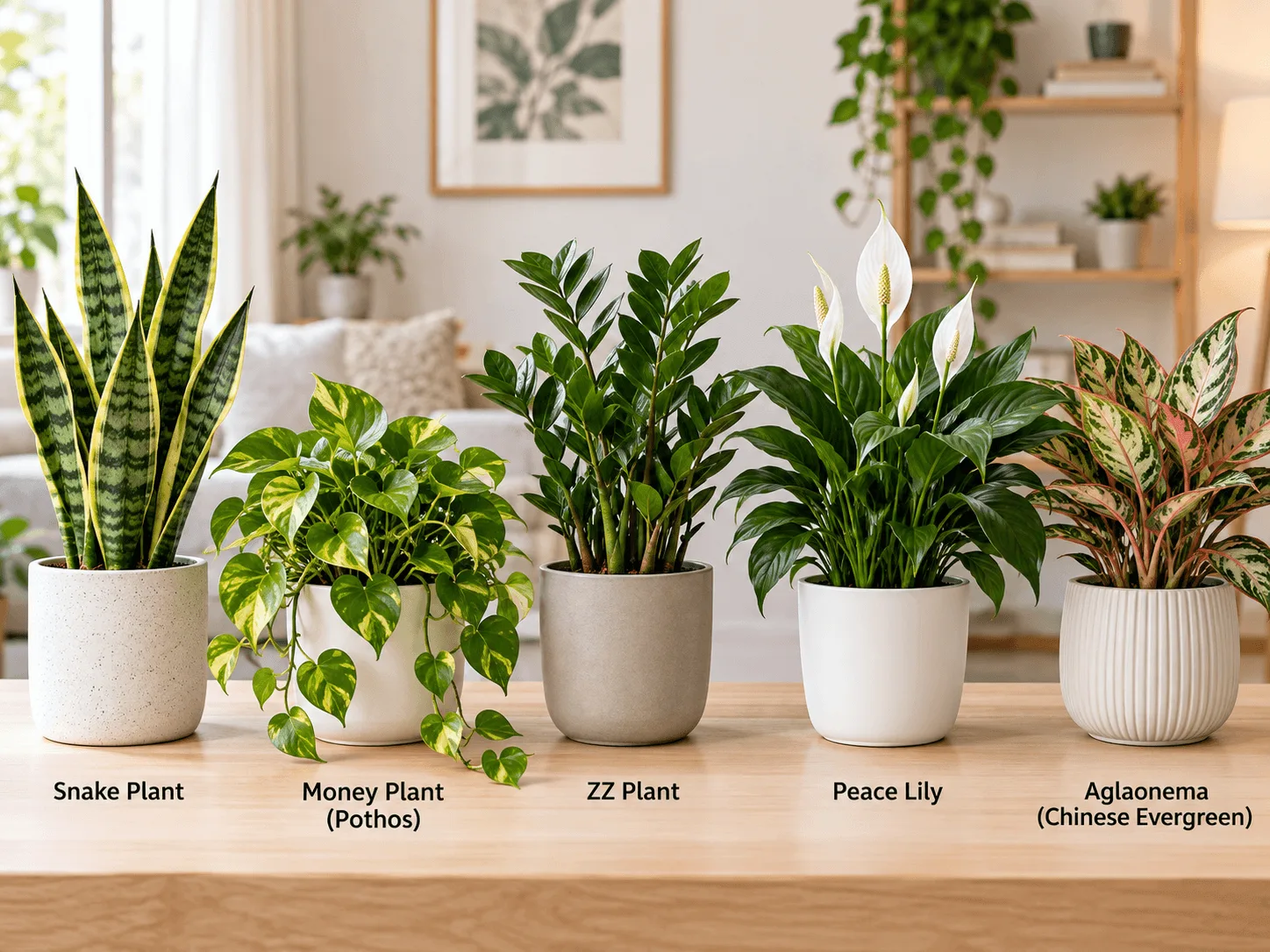
1. Snake Plant
An upright, low-maintenance plant that tolerates lower light.
-
Care: Let the soil dry between waterings.
-
Best for: Office corners and workstations.
2. Money Plant (Pothos)
A trailing plant ideal for shelves and desks.
-
Care: Provide indirect light and water when the topsoil begins to dry.
-
Best for: Workstations and home offices.
-
Note: Toxic if chewed by children or pets.
3. ZZ Plant
A hardy plant that tolerates lower light and infrequent watering.
-
Care: Let the growing medium dry well between waterings.
-
Best for: Reception areas and meeting rooms.
-
Note: Toxic if chewed.
4. Peace Lily
An attractive plant with green leaves and white blooms.
-
Care: Provide indirect light and keep the soil lightly moist.
-
Best for: Reception desks and shared office spaces.
-
Note: Toxic if chewed.
5. Aglaonema (Chinese Evergreen)
A decorative foliage plant with green, silver, pink, or red patterns.
-
Care: Provide indirect light and water when the topsoil begins to dry.
-
Best for: Office tables and decorative corners.
-
Note: Toxic if chewed.
Tip: Choose office plants based on available light, space, and watering needs.
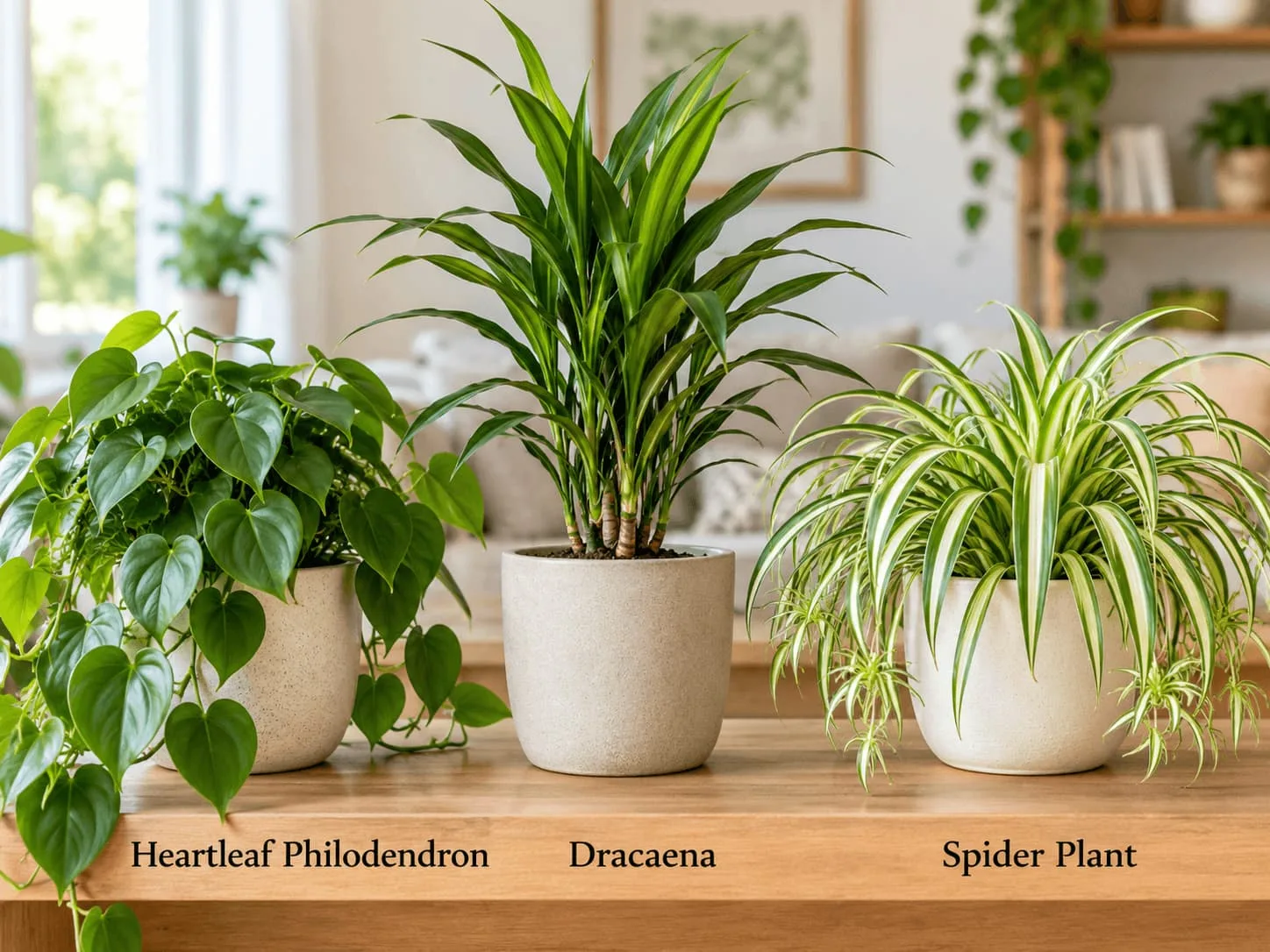
6. Spider Plant
A leafy plant with arching leaves, ideal for shelves and hanging pots.
-
Care: Provide indirect light and water when the topsoil begins to dry.
-
Best for: Home offices and shared workspaces.
7. Parlor Palm
A compact tropical plant that adds soft greenery to office interiors.
-
Care: Provide indirect light and avoid waterlogging.
-
Best for: Office corners and reception areas.
8. Rubber Plant
A bold foliage plant suited to bright, spacious offices.
-
Care: Provide bright, indirect light and well-drained soil.
-
Best for: Reception areas and home offices.
-
Note: Toxic if chewed; sap may irritate skin.
9. Heartleaf Philodendron
A trailing plant with heart-shaped leaves, perfect for shelves and hanging planters.
-
Care: Provide indirect light and water when the topsoil begins to dry.
-
Best for: Desks and compact workspaces.
-
Note: Toxic if chewed.
10. Jade Plant
A compact succulent ideal for sunny desks and windowsills.
-
Care: Provide bright light and allow the soil to dry between waterings.
-
Best for: Bright offices and sunny workstations.
Best Office Desk Plants for Small Workspaces
A desk plant should fit comfortably without blocking your screen, workspace, or daily tasks. Compact pots are generally easier to manage than large floor containers.
| Desk plant | Why consider it? | Light preference |
| Small snake plant | Upright shape takes up relatively little space | Low to bright indirect light |
| ZZ plant | Tolerates lower light and infrequent watering | Low to moderate indirect light |
| Money plant | Can be trained or trimmed to fit the desk | Moderate indirect light is preferable |
| Compact aglaonema | Attractive patterned foliage | Low to moderate indirect light, depending on variety |
| Jade plant | Compact, fleshy leaves | Bright light |
| Spider plant | Arching foliage adds visual interest | Moderate indirect light is preferable |
Best Indoor Plants for Different Office Areas
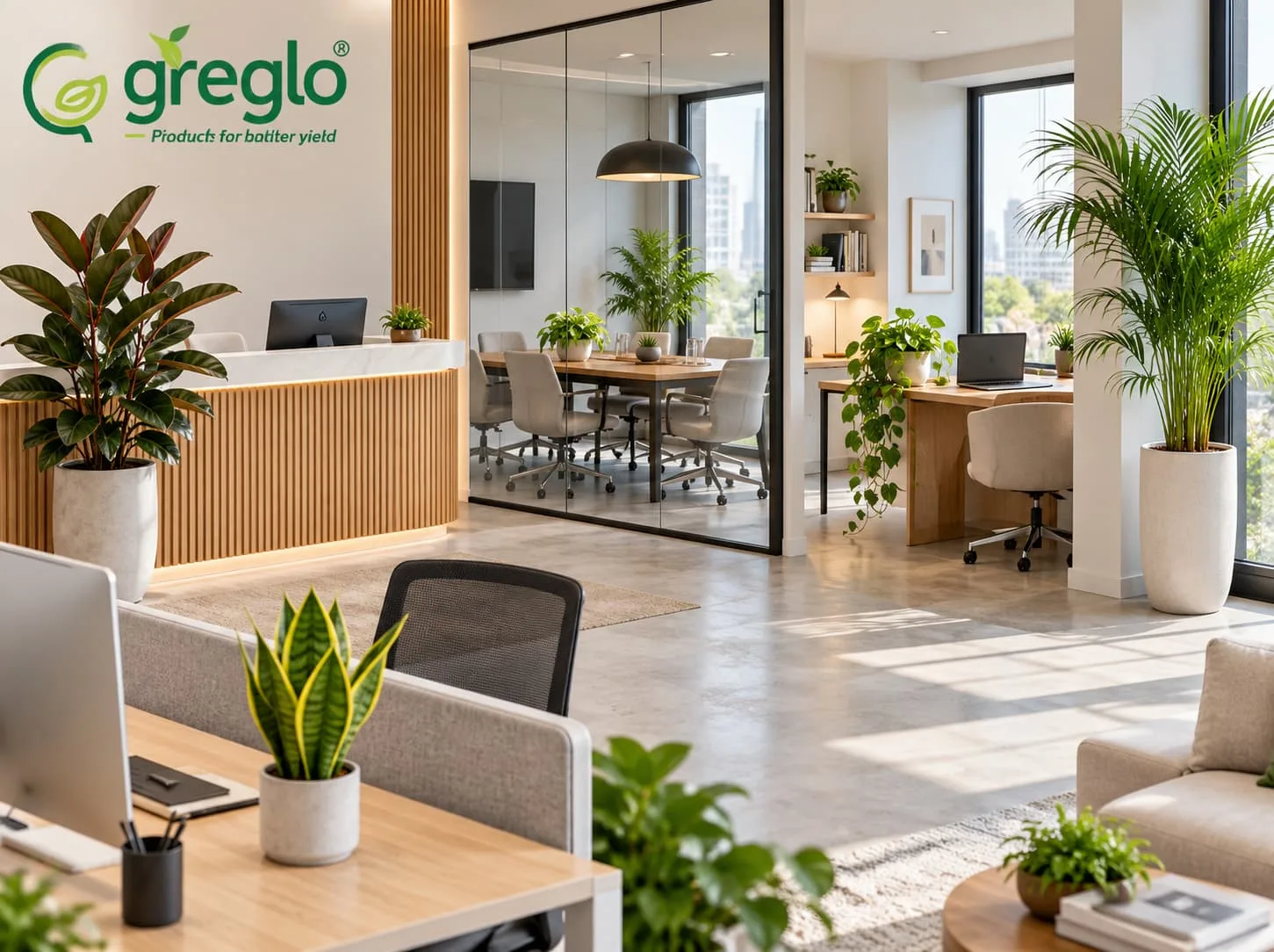
Different parts of an office may receive different levels of light and experience different temperatures.
1.Reception Area
Choose plants that complement the size and appearance of the space.
A rubber plant may suit a bright reception area, while a ZZ plant or aglaonema can be considered for a location with less light.
2. Employee Desks
Small snake plants, compact ZZ plants, and manageable money plants can suit individual workstations.
Select a pot that leaves enough space for normal desk activities.
3. Meeting Rooms
Choose compact, low-maintenance plants that will not block walkways or require frequent attention.
Ensure the room has enough daylight or suitable artificial lighting.
4. Home Office
Home offices offer more flexibility because you can place plants near a window.
Choose the plant based on the actual light level rather than the room's appearance alone.
5. Office Corridors and Corners
Larger plants can fill empty areas, but check the mature size, pot stability, and available light.
Do not place pots where they obstruct exits or walking routes.
How to Choose Indoor Office Plants Based on Light
Light is one of the most important factors when selecting low light indoor plants.
- Low-light spaces: Consider snake plants, ZZ plants, or suitable green-leaved aglaonema varieties.
- Moderate indirect light: Money plants, spider plants, and peace lilies may be suitable.
- Bright indirect light: Rubber plants and many foliage varieties can perform well.
- Sunny windowsills: Jade plants may thrive when they receive sufficient bright light.
Best Potting Mix for Indoor Office Plants
-
Hydrate the cocopeat and loosen it.
-
Mix with compost and an aeration material.
-
Adjust drainage according to the plant type.
-
Fill a pot with drainage holes and water after planting.
Tip: For more information, link to Greglo's existing articles on how to use cocopeat in pots for healthy plant growth and the best cocopeat and compost mix for home gardens.
Watering and Maintaining Office Plants
-
Check soil moisture before watering.
-
Adjust watering to each plant’s needs.
-
Empty excess water from saucers.
-
Inspect leaves for pests and yellowing.
-
Wipe dusty leaves when needed.
-
Fertilise according to the product instructions.
-
Check plants more often during hot weather.
Tip: Maintain a simple watering checklist to prevent overwatering and neglect.
Common Mistakes to Avoid
- Choosing Appearance Over Needs: Check light requirements before buying a plant.
-
Overwatering: Check soil moisture before watering.
-
Poor Drainage: Use pots with drainage holes to prevent root problems.
-
AC Drafts: Keep plants away from direct air-conditioning airflow.
-
Oversized Plants: Choose plants that fit your available space.
-
Ignoring Plant Safety: Check toxicity if children or pets visit the office.
Frequently Asked Questions
1. Which are the best indoor office plants in India?
Snake plants, ZZ plants, money plants, aglaonema, and spider plants are useful options to consider. The best choice depends on available light, space, and watering requirements.
2. Which office plants need less maintenance?
Snake plants and ZZ plants are often suitable for people who cannot water plants frequently. They still need appropriate light, drainage, and occasional checks.
3. Which plants are suitable for office desks?
Small snake plants, compact ZZ plants, and manageable money plants can work well on desks. Choose a pot that fits the available space and protects the surface from water.